
Arbitrum is a Layer-2 scaling solution for Ethereum that aims to improve the speed and efficiency of transactions on the Ethereum blockchain while lowering associated transaction fees.
Smart contract platforms are blockchain-based protocols that enable the creation and execution of self-executing digital contracts (smart contracts) without intermediaries. These networks allow for the automation of various financial transactions, making them faster, more efficient, and more secure. However, these platforms can encounter scalability issues due to the limited processing power of the underlying blockchain technology. Layer 2 solutions are technologies designed to address these scalability issues by processing transactions outside of the main blockchain. This article provides an overview of the rapid growth of this technology using the leading Layer 2 network, Arbitrum, as an example.
Optimistic rollups as leading technology
There are several Layer 2 technologies that aim to solve the scalability problems of blockchain technology, including optimistic rollups, zk-rollups, state channels, plasma, and more. Optimistic rollups use fraud proofs to ensure the validity of transactions, while zk-rollups use zero-knowledge proofs to enable private and efficient processing. State channels enable off-chain transactions between parties, and plasma creates a network of sub-chains that can handle transactions more efficiently than the main chain. Each solution has its own advantages and limitations, and their adoption largely depends on the specific use case and blockchain platform used.
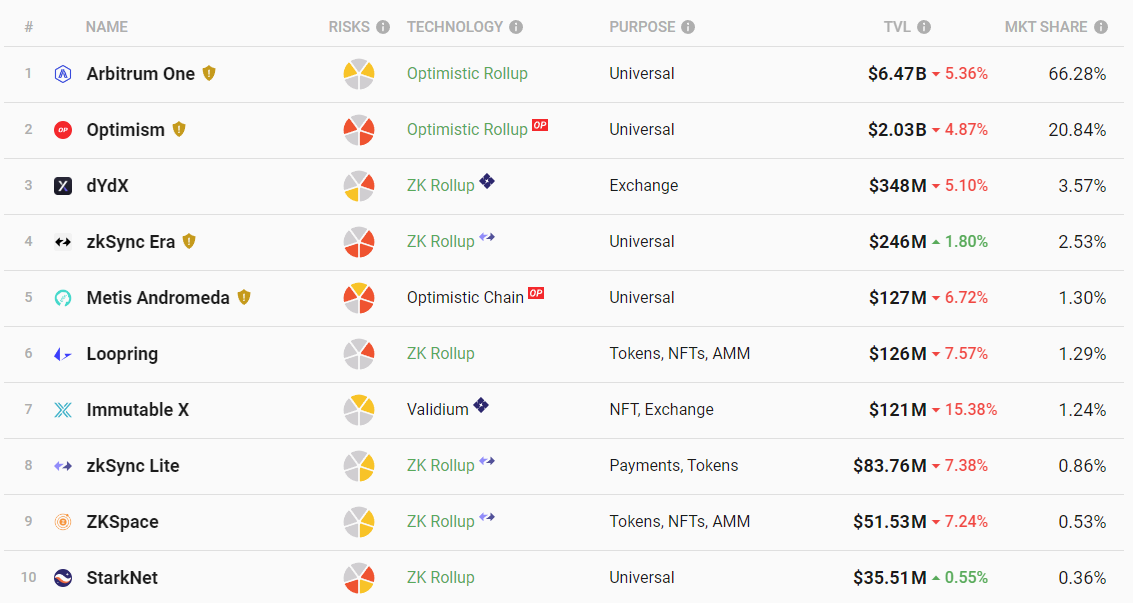
Looking at the state of the Layer 2 market, optimistic rollups currently dominate the sector. The two leading networks, Arbitrum and Optimism, have more liquidity in terms of Total Value Locked (TVL) in the billions than all other solutions combined. However, it should be noted that zk-rollups are technically more complex and have only recently entered the market. Both technologies bundle a certain number of transactions and send them in a batch (called a rollup) to the main blockchain. The difference lies only in how the validity of the bundled transfer is verified.
Arbitrum: the organically growing flagship
Over the past few years, dozens of new blockchain platforms have emerged. Some of them as competitors for Ethereum (Layer 1), others as scaling solutions (Layer 2). A key feature of most of these platforms is their compatibility with the Ethereum Virtual Machine (EVM). This allows developers to easily copy existing Ethereum applications and smart contracts to a new network. This is an advantage for existing projects, as they can move into additional ecosystems without much extra effort. However, this EVM compatibility of new blockchain networks has fostered a certain culture of copying existing projects instead of supporting innovation and the creation of novel concepts.



Arbitrum has distinguished itself from other Layer 1 and Layer 2 networks early on. Established Ethereum projects like Uniswap were quickly overtaken by an innovative decentralized derivatives exchange called GMX. The trading platform allows users to speculate with leverage on futures contracts of various cryptocurrencies in a permissionless way. Liquidity is provided by other market participants in the form of Bitcoin, Ethereum, and USDC, with the protocol paying trading fees and liquidation amounts directly to liquidity providers.
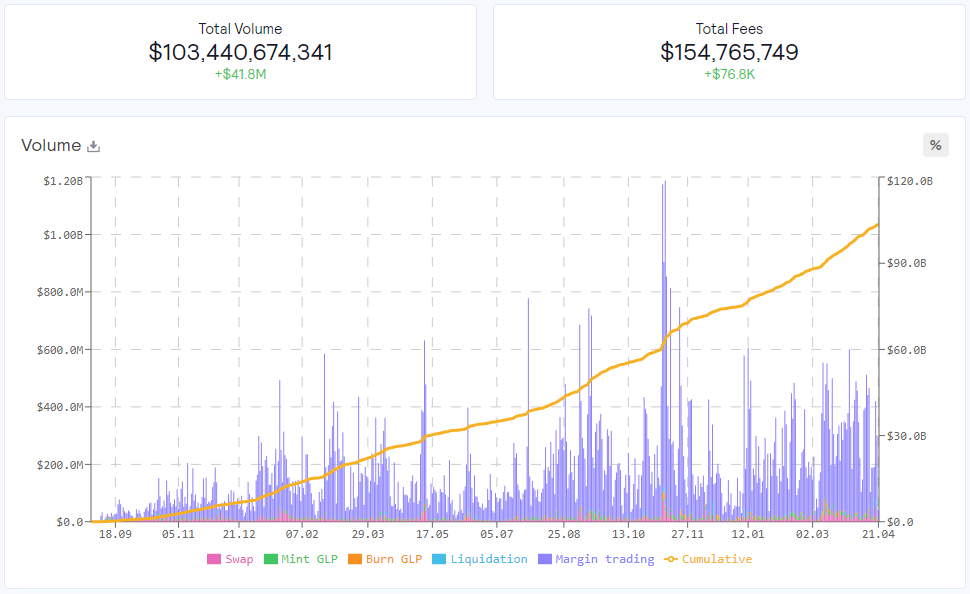
Within a few months, an organic ecosystem developed around the flagship project GMX, with credit platforms accepting GMX liquidity tokens (GLP) as collateral, leveraged GLP products, and other derivative platforms enriching the Arbitrum trading ecosystem with decentralized options contracts. This happened without any token incentivization from the Arbitrum Foundation, a strategy previously used by many Layer 1 platforms to attract (temporary) capital.
Decentralization of the Arbitrum network
In mid-March, amidst rapid growth for the network, the founding team announced the next step in the decentralization of Arbitrum. Decision-making about future developments of the scaling solution should gradually be handed over to users. In the form of a governance token, distributed for free to active Arbitrum users (airdrop), there were now votes on new proposals. The resident projects also received their share of the pie, sometimes in the high double-digit million range.
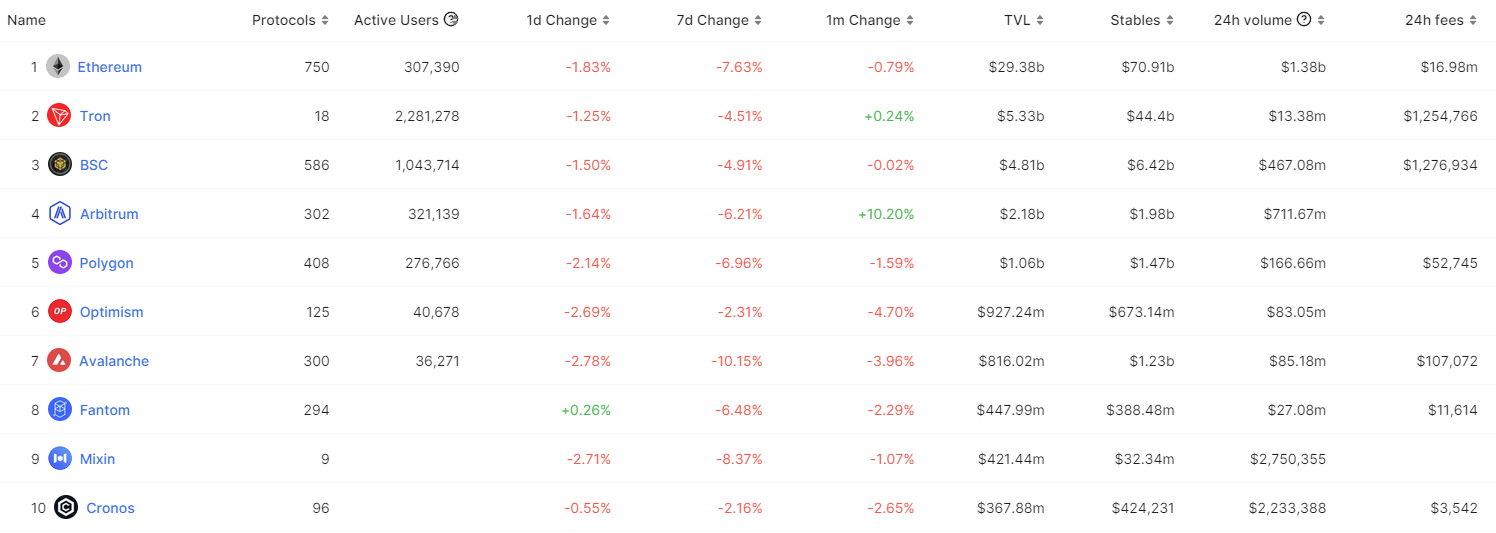
Meanwhile, Arbitrum ranks fourth among the largest blockchains by total value locked. Nevertheless, the network's trading volume is consistently behind that of Ethereum, while being on par with it on certain days. The trend shows a clear migration of users to Layer 2 platforms, which is expected to increase as the Arbitrum technology continues to improve.