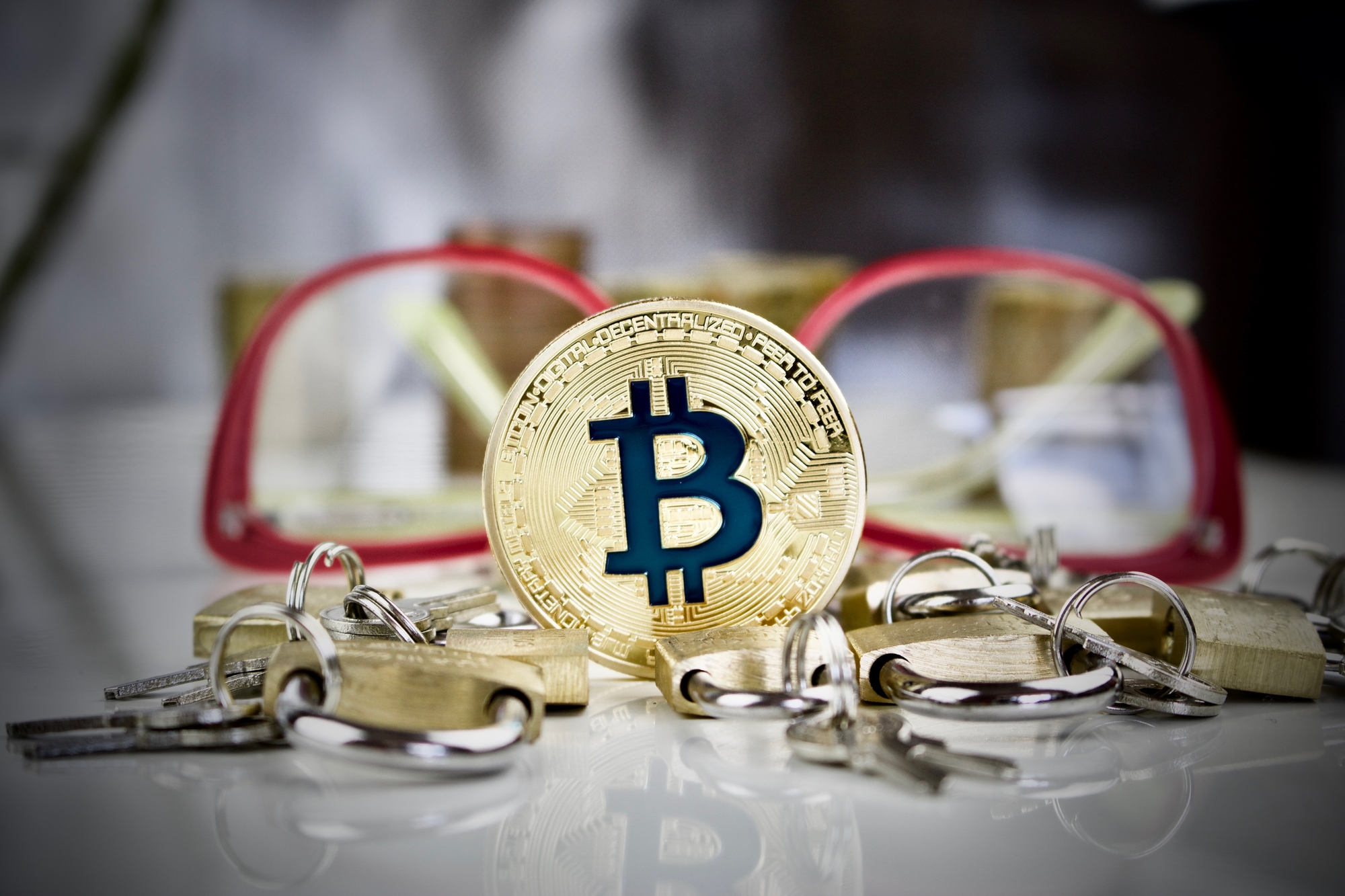
The implosion of the entangled construct of centralized providers - from Celsius, to BlockFi, to FTX and its collateral damage - confirms the ancient Bitcoin credo once again. After all, "Not your Keys, not your Coins" means nothing other than independence from centralized providers and counterparties.
Bitcoin's pseudonymous founder Satoshi Nakamoto wanted to eliminate the intermediaries of a transaction with his creation, so that the use between two parties is permission-free and censorship-resistant for everyone. The respective owners of the "crypto wallets" are also responsible for their safekeeping. Thus, the use of the digital assets does not depend on any third party and - as long as an Internet connection is guaranteed - cannot be limited. The use of centralized services compromises this vision to a certain extent. A return to the underlying values of blockchain technology should still protect users from some future danger.
Self-custody: an unrealistic ideal?
Mt. Gox, Celsius, BlockFi, FTX...the list of failed central securities depositories grows every year. Yet crypto holders keep turning to these services - FTX alone had over 1 million active users before its collapse. The reason is obvious: self-custody is not only cumbersome, it also prevents active trading of different cryptocurrencies - Bitcoin, Ether, Solana, etc. are not all based on the same blockchain, after all. Thus, crypto exchanges have taken a key role in the blockchain ecosystem early on. What was initially seen as a contact point for trading quickly established itself as a custodian for customers' crypto holdings as well.
This offers additional risks for users despite increased convenience. Finally, in addition to responsibility, control and ultimate ownership over cryptocurrencies is transferred to a third party. In this context, crypto exchanges are vulnerable to malicious/negligent practices by executives (FTX debacle) on the one hand. On the other hand, they are also popular targets for hackers and can be subject to easily overlooked errors. In the end, the customer pays the price.
Lack of regulation in the area
Banking law provides significant protection for the safekeeping of securities, commodities or cash deposits by securities and commodities brokers or banks. Any custodial relationship can potentially be characterized as a debtor-creditor relationship between the custodian and the customer, rather than a trust of property. And if any measures fail, the central bank is always available to intervene. There are no clear regulations for the custody of cryptocurrencies, nor is there a central bank-like authority.
Instead, bankruptcy courts might well consider the custody assets to be the property of the insolvent exchange rather than the property of its customers. In that case, the customers would be merely general, unsecured creditors of the exchange, entitled only to a pro rata distribution of the exchange's remaining assets. Even if the holdings were ultimately considered the property of the customers, access to their holdings would be impaired in the longer term. The Mt. Gox example - which is still ongoing after nine years of court proceedings - clearly demonstrates this fact.



Exchanges and third-party providers dilute proprietary ownership
The trend toward trusting third-party providers is antithetical to the philosophy and purpose of Bitcoins. The business sector that developed around Bitcoin and the underlying blockchain technology does not seem to have stayed true to the origins of the cypherpunk. Exchanges and other providers hold the private keys for the account holder, the customer, and sometimes third-party companies. Exchanges are then subject to withdrawal limits, account freezes and other ways to arbitrarily restrict users' access to their funds. The end customer is dependent on a central entity and its business policy, which has recently been proven true in the bankruptcies of well-known providers.
Blockchain technology democratizes commerce and creates an alternative for people without banking relationships. It enables a decentralized safe deposit box for digital assets that is accessible 24/7. The key to this vault can consist of 12 words (seed phrase), which are stored somewhere secure and are only used in an emergency. Self-custody is thus a privilege that users should make active use of. Total losses due to stock market insolvencies are ultimately not only tragic and financially devastating, but actually also avoidable (not your keys, not your coins).
Possibilities for self-custody
Bitcoin and other digital assets are stored in a digital wallet. There are roughly three categories of use, which are also differentiated by the type of wallet. A hot wallet is usually operated via a browser, smartphone app or open source software and is permanently connected to the Internet. It is used in everyday use to carry out transactions or execute special functions of smart contracts. It is called "hot" because external attackers can theoretically take over the computer or make the owner believe false facts.
A cold wallet is separated from the Internet. A general distinction is made between two types: hardware wallets and paper wallets. A hardware wallet is a device on which the private keys of the cryptocurrencies are securely stored. Theoretically, this can be a simple USB stick, which, however, does not bring any additional functionalities. Well-known hardware wallets like Trezor, Ledger and Bitbox offer various web interfaces to online services. Here, an app from the manufacturers acts as a proxy so that the actual wallet is never directly connected to the Internet. The software initiates a secure request to the device, which must be confirmed by the user before a transaction is signed by the device. The web browser only receives signed and thus unalterable commands from the software.
With an OpenDime or a Paper Wallet, it is possible to execute a transaction without the internet and blockchain. A paper wallet is an offline mechanism for storing cryptocurrencies. The public address and private key are printed offline or written down on a piece of paper. It is also referred to as a physical wallet because there is no interface to the digital world. However, if the piece of paper is lost, so are the assets, which is why the hardware wallet has become the common standard.