Close Menu
Crypto Valley Journal
    Facebook X (Twitter) Instagram
    Crypto Valley Journal
    • Hot Topics
      • News
      • Minds
    • Focus
      • Background
      • Blockchain
      • Legal & Compliance
      • Non-Fungible Token (NFTs)
    • Investing
      • Markets
      • Financial Products
      • Decentralized Finance (DeFi)
      • Exchange overview
    • Education
      • Basics
      • Glossary
      • Politicians on crypto
    • Statistics
      • Bitcoin-ETF-Flows
      • Ethereum-ETF-Flows
      • Crypto market data
      • On-chain data
    • Academy
      • Overview
      • Part 1: Blockchain
      • Part 2: Money
      • Part 3: Bitcoin
      • Part 4: Cryptocurrencies
      • Part 5: Decentralized Finance
      • Part 6: Investing
    • English
      • Deutsch
    Crypto Valley Journal
    You are at:Home»Focus»Background»Crypto economy challenges the banking industry
    Cryptoeconomy

    Crypto economy challenges the banking industry

    By Daniel Blatter on 15. July 2020 Background

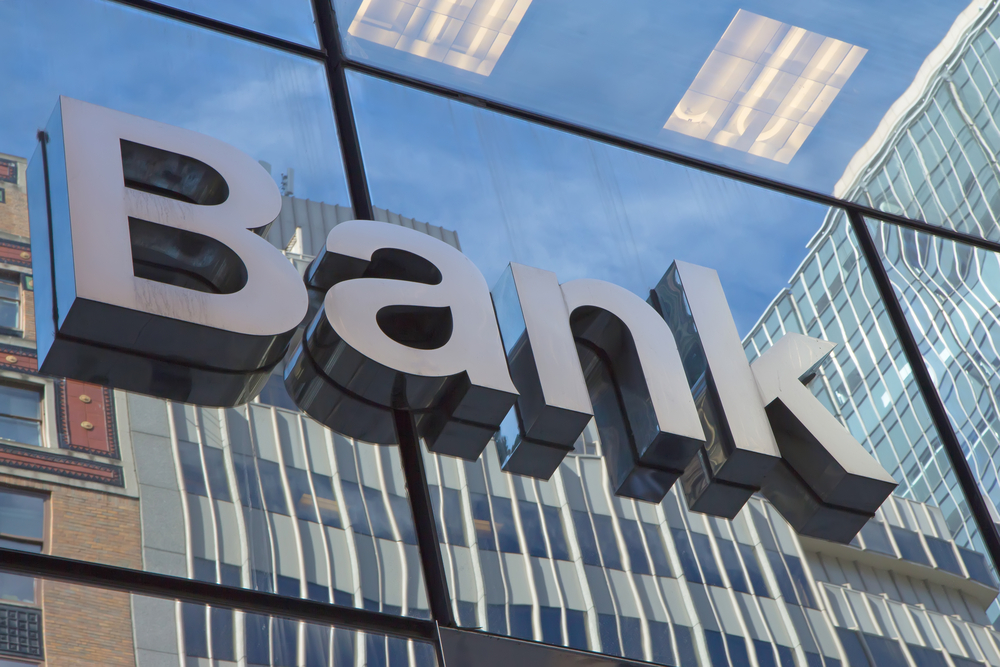
    The five current technological megatrends for banks include block chain technology and the resulting crypto economy. After initial hesitation about block chaining in the banking sector, most leading financial institutions now recognize the opportunities along with it.

    Last winter, the Institute for Financial Services IFZ presented the Banking Trend-Map 2019. In a professional article based on this, a focus on the technical megatrends shows the challenges facing the financial industry and the options for action that appear to be appropriate. Blockchain is one of the five current technological megatrends. This is in line with the observations of our industry experts.

    Considerable challenges for banks

    As a term associated with Bitcoin, the term block chain has become a familiar concept in the financial industry. Block chain is a distributed ledger that lays the foundation for new types of investments within the crypto economy, such as Bitcoin. If a bank wants to offer these types of investments to interested customers, we believe it is faced with considerable challenges. In an interview, our CEO Mark Dambacher points out four challenges:

    • The front-line employees need to have knowledge in the crypto area to ensure continuing optimal customer service.
    • The bank requires an adequate and secure technical infrastructure as well as adequately trained personnel.
    • Costly extensions must be made to the core banking systems to enable the processing of crypto transactions.
    • Regulatory requirements, particularly with regard to capital requirements and money laundering, must be taken into account.


    Change in the bank's business model

    According to Dr. Urs Blattmann, lecturer and project manager at IFZ and author of the IFZ article, the following three steps are essential for a successful path into the future:

    • Recognizing that future success will only be possible through sourcing, cooperation and platforms, where the bank should be guided by a customer-focused view.
    • Change in the bank's own business model by focusing on the core business and by building up sourcing and partner management competences.
    • Implementation of practical solutions in cooperation with partners.

    Our banking experts at InCore Bank describe blockchain as a groundbreaking innovation that has the ability to completely change the banking landscape in the coming years. In our view, the bank of the future is a technology company that will serve as a digital platform for the production and marketing of customer-specific financial services.


    Share. Facebook Twitter LinkedIn Email Telegram WhatsApp

    About the author

    Daniel Blatter

      Daniel Blatter ist seit 2015 für InCore Bank als Head Digital Services tätig. Sein Team brachte das Angebot im Bereich digitaler Vermögenswerte zur Marktreife. Er war lange Jahre in der Entwicklung und im Produktma-nagement für den Core-Banking-Hersteller Finnova tätig, verfügt unter anderem über Abschlüsse an der ETH und der Universität Zürich und mehr als 20 Jahre Erfahrung im Bereich der IT- und Finanzindustrie.

      Related Articles

      Analysis by Bitget Research on Bitcoin quantum computing risks, ECDSA exposure, NIST post-quantum standards, and BIP-360 migration paths.

      Bitcoin quantum computing: What recent developments mean for network security

      XRPL validator analyzes quantum risk: only 0.03% of XRP supply is exposed, compared to up to 35% for Bitcoin. Google sets 2029 deadline.

      Quantum risk: Is XRP more secure than Bitcoin?

      Power Shift in Crypto Exchanges: Retail Overtakes Institutional

      Hoskinson calls support of the CLARITY Act by Garlinghouse and the XRP community insanity and accuses Ripple of harming the industry.
      28. April 2026

      XRP vs. Cardano: Hoskinson calls CLARITY Act support “insanity”

      Trump would sign the CLARITY Act immediately. But the Senate is blocking it, and a May deadline could push the law back to 2030.
      27. April 2026

      Trump wants to sign CLARITY Act immediately, but chances drop to 50%

      CVJ.CH Weekly review calendar week
      25. April 2026

      Weekly review calendar week 17 – 2026

      twitter image button instagram image button linkedin image button youtube image button

      About Crypto Valley Journal
      About Crypto Valley Journal

      On the pulse of the movement

      • Academy
      • Contact
      • Advertising
      • About us
      • Partner
      • Imprint
      • Privacy
      • Disclaimer
      Search

      Type above and press Enter to search. Press Esc to cancel.