
Since the successful integration of the Ethereum mainnet with the Beacon Chain - also known as Merge- the Proof of Stake (PoS) consensus algorithm secures the largest smart contract network. The Shanghai upgrade (EIP-4895) in the coming weeks will allow stakers to withdraw their Ether.
The Proof of Stake algorithm uses so-called validators instead of miners, who have to deposit a "stake" in the form of the native cryptocurrency to verify blocks. In the case of Ethereum, each validator requires 32 ETH; currently over $50,000 USD. Currently, nearly 14 percent of all Ether (ETH) - about $27 billion USD - is tied up in such stakes and cannot be withdrawn. The Ethereum Shanghai Upgrade (EIP-4895) will enable these withdrawals in March 2023. The sharding-related improvements to the network originally envisioned for the Shanghai Upgrade, on the other hand, will come in later upgrades.
Withdrawals for ETH Stakers with EIP-4895
The Shanghai upgrade is a major change for the Ethereum Blockchain. The network improvement allows validators to withdraw their Ether tied up in stakes. This upgrade is represented by Ethereum Improvement Proposal 4895 (EIP-4895). Currently, validators have staked around 16 million ETH to secure the network. A steadily growing percentage of the total Ether supply.

Since the September 2022 merge, validators with a stake of 32 ETH could participate in block validation and increase their chances of receiving block rewards. However, the rules after the merge required validators to lock their ETH and rewards until a later chain update. Some stakers locked their Ether as early as the December 2020 launch of the Beacon chain - so far without a withdrawal option. The EIP-4895 central to the Shanghai upgrade unlocks this ETH.
More improvements in the Shanghai Upgrade
The "Shandong" test environment started the journey to the Shanghai upgrade as early as October 18, 2022. Known as "Shadow Fork," test runs are designed to ensure that significant upgrades can prevent malicious attacks. After all, faulty implementations on a blockchain with hundreds of billions of USD in deposited assets would have devastating consequences. In addition to staking withdrawals (EIP-4895), the Shanghai upgrade includes the following network improvements:
- EIP-3540: EVM Object Format (EOF) v1
- EIP-3651: Warm Coinbase
- EIP-3670: EOF - Code Validation
- EIP-3855: PUSH0 Instruction
- EIP-3860: Limit and Meter Initcode
These innovations are primarily interesting for developers and only indirectly affect end users. The most significant change is the introduction of the "Warm Coinbase" feature (EIP-3651). The Ethereum Improvement Proposal will significantly reduce network fees for smart contract developers and NFT creators who need to access the "Coinbase" function. The name of the function should not be confused with the crypto exchange Coinbase. The other upgrades will improve the Ethereum virtual machine (EVM) with the upgrade and facilitate future upgrades. The hotly anticipated preparation for Danksharding (EIP-4844) was removed from the Shanghai upgrade after a few test runs.
Load distribution through sharding
Sharding is a well-known concept in computer science that distributes the load by splitting a database horizontally. In the Ethereum context, sharding will work synergistically with Layer 2 rollups by distributing the processing of large amounts of data from the rollup solutions across the network. This will further reduce network congestion and increase the number of transactions per second. This is important not only for scalability reasons, but also improves the throughput of rollups such as Optimism and Arbitrum.
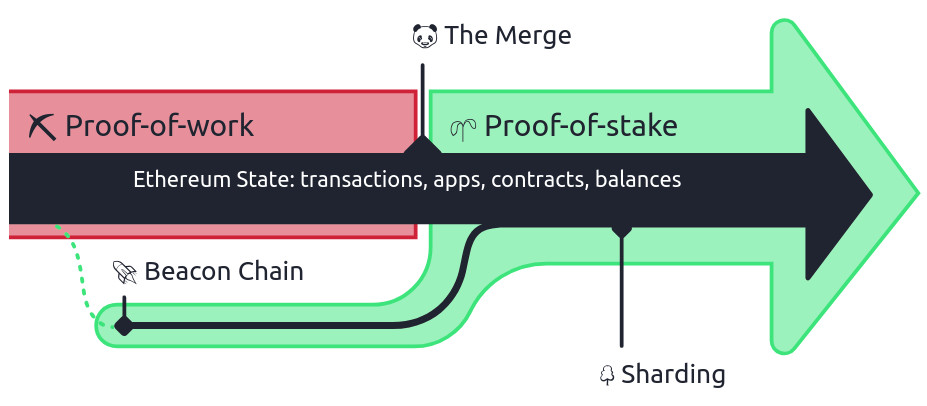
Originally, sharding was to be the next network change after the switch to Proof of Stake (Merge). However, more efficient ways to scale have been developed in the meantime. So-called "Danksharding" is a new approach that does not use the concept of shard chains, but instead uses shard "blobs" to share the data load. This change of plan solves the same original problem more efficiently. Due to this, Ethereum developers decided to postpone the implementation of features like proto-thanksharding until later upgrades after Shanghai.
What does the Shanghai Upgrade mean for staking derivatives?
Liquid Staking Derivatives (LSDs) refer to crypto tokens created by DeFi protocols or centralized services to reward users for staking ETH on their platform. These protocols do not have prohibitive minimum requirements of 32 ETH. This makes staking derivatives enticing for smaller ETH holders who want to participate in staking and reap rewards. LSDs also give users a token that represents the stake and can be used effortlessly in decentralized applications (DeFi).
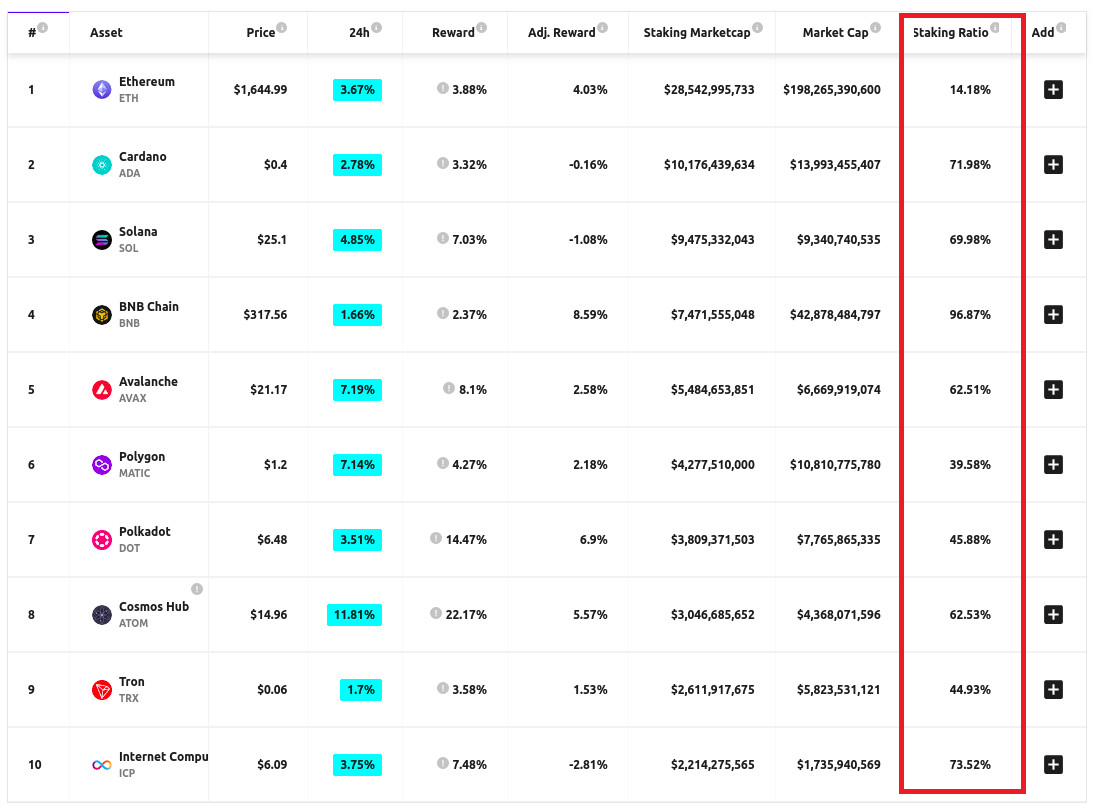
Ethereum currently has a weak staking ratio - at least compared to other PoS blockchains - and can only maintain its position in the top 10 of staking market capitalization thanks to its high unit price. The limiting factor here is also the illiquidity of Ether stakes. After the Shanghai upgrade, Ethereum's staking ratio should reach parity with other leading blockchains. Finally, thanks to EIP-4895, Liquid Staking Derivatives (LSDs) will no longer represent IOUs, but rather freely withdrawable ETH. A residual risk due to potential errors in the smart contracts remains, of course.