The Markets in Crypto-Assets Regulation (MiCA), partly effective as of June 30, 2024, is a comprehensive regulatory framework established by the European Union. MiCA aims to foster innovation, ensure market stability and protect investors in the multi-trillion crypto markets - with an emphasis on stablecoins.
The framework meticulously lays out how stablecoins and their issuers should be regulated in the European Economic Area. MiCA classifies stablecoins as either asset-referenced tokens (ARTs) or e-money tokens (EMTs) based on their underlying value and stabilization mechanism. ARTs are backed by a basket of assets, while EMTs are backed by a single fiat currency. This detailed approach to stablecoins reflects a nuanced anticipation of market evolution and aims to prevent regulatory circumvention. MiCA has the potential to serve as a global model for setting new standards, influencing other jurisdictions that are expected to follow suit.
How MiCA is impacting the stablecoin landscape
In a report, the Digital Euro Association (DEA) examines the transformative impact of MiCA on the stablecoin landscape. The DEA is a think tank focused on the study and development of various forms of digital money, including central bank digital currencies (CBDCs), in particular the digital euro, and stablecoins. In the report, the DEA challenges MiCA's viewpoint, questioning whether the regulations are truly commensurate with the level of systemic risk that stablecoins pose. Especially when compared to the much larger and more systemically important global banking institutions. DEA sees the following opportunities and challenges of stablecoins and the MiCA regulatory framework.
Opportunities
- A clear regulatory framework can attract issuers to the EU, providing market stability and consumer protection.
- Increased stability and reliability of EUR stablecoins under MiCA could attract traders.
- Regulatory clarity may encourage the adoption of EUR stablecoins for cross-border transactions.
- Peer-to-peer (P2P) and e-commerce payments and prospects as a means of payment for DeFi, Metaverse and NFTs
Challenges
- Increased reserve requirements, which can act as a barrier to entry for smaller issuers.
- AML, KYC and global compliance challenges that complicate operations for global stablecoin issuers.
- Limited ability of Euro-backed stablecoins to perform a similar hedging function as USD-denominated stablecoins due to the strict compliance requirements and the prohibition of interest accrual
- Stringent requirements, could pose significant hurdles particularly for smaller issuers. Stifling innovation and leading to regulatory arbitrage.
- Create more appropriate thresholds for stablecoins that fall under the "significant stablecoin regime" so as not to stifle innovation.
Can Switzerland position itself as a leader in Europe?
The DEA recognizes Switzerland's risk-based regulatory approach, which is known for its appropriate and flexible regulations. This approach has helped it become a leading hub for the Web3 industry. Specifically, Swiss regulations allow crypto-to-fiat transactions without Know Your Customer (KYC) obligations for amounts below CHF 5,000 per 24 hours. This approach is designed to meet the needs of the mass market while promoting economic benefits and innovation within the digital finance sector.
However, the Swiss Financial Market Supervisory Authority (FINMA) does not seem to see these requirements as beneficial. Its recently released guidelines impose strict regulations on stablecoin issuers. They are required to obtain a banking license and implement KYC procedures for all users - regardless of transaction size. Despite criticism that FINMA's regulations could stifle the stablecoin industry, the authority is enforcing current Swiss laws rather than working toward a novel framework. Currently, Switzerland is not open to innovative crypto payment services. Critics argue that instead of relying on outdated fintech licenses, Switzerland should update its legislation to include a new payment service provider license, similar to measures taken by the European Union.




How regulations affect the market
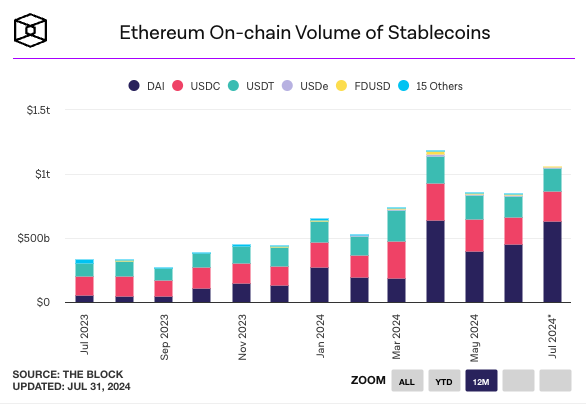
MiCA focused on stablecoins because they account for the lion's share of all crypto transactions and hold a significant amount of wealth. Overall, stablecoins accounted for approximately 60% of all crypto transaction volume in 2023. The main effects of the regulation can be summarized as follows: stablecoin issuers must obtain a MiCA license, ensure transparency through detailed white papers, maintain low risk, issuers must deposit 30-60% of their reserves with commercial banks, and adhere to strict anti-money laundering and consumer protection standards. Non-euro stablecoins will face further restrictions if their daily transactions exceed €200 million. These measures are aimed at preserving the EU's monetary stability.
These stringent restrictions have prompted reactions from major crypto exchanges such as Binance and OKX, which have adjusted their services to comply with the regulations. Binance has restricted certain services to EEA users, and OKX has delisted tether trading pairs. This regulatory shift has created uncertainty, prompting exchanges and crypto businesses to reevaluate their compliance strategies. USDC stablecoin issuer Circle has already taken a proactive response to MiCA. Circle has successfully registered as an Electronic Money Institution (EMI) in France. This increases their operational scope within the EU, potentially increasing USDC's market presence and becoming a serious competitor to Tether. So far, the MiCA regulations do not seem to have dampened the use of Tether. On the other hand, USDC volume has increased significantly, especially in the months leading up to MiCA's implementation in June.