Close Menu
Crypto Valley Journal
    Facebook X (Twitter) Instagram
    Crypto Valley Journal
    • Hot Topics
      • News
      • Minds
    • Focus
      • Background
      • Blockchain
      • Legal & Compliance
      • Non-Fungible Token (NFTs)
    • Investing
      • Markets
      • Financial Products
      • Decentralized Finance (DeFi)
      • Exchange overview
    • Education
      • Basics
      • Glossary
      • Politicians on crypto
    • Statistics
      • Bitcoin-ETF-Flows
      • Ethereum-ETF-Flows
      • Crypto market data
      • On-chain data
    • Academy
      • Overview
      • Part 1: Blockchain
      • Part 2: Money
      • Part 3: Bitcoin
      • Part 4: Cryptocurrencies
      • Part 5: Decentralized Finance
      • Part 6: Investing
    • English
      • Deutsch
    Crypto Valley Journal
    You are at:Home»Focus»Legal & Compliance»US Congress plans tax safe harbor for stablecoins and staking
    US Congress plans tax safe harbor for stablecoins and staking

    US Congress plans tax safe harbor for stablecoins and staking

    By Editorial Office CVJ.CH on 22. December 2025 Legal & Compliance

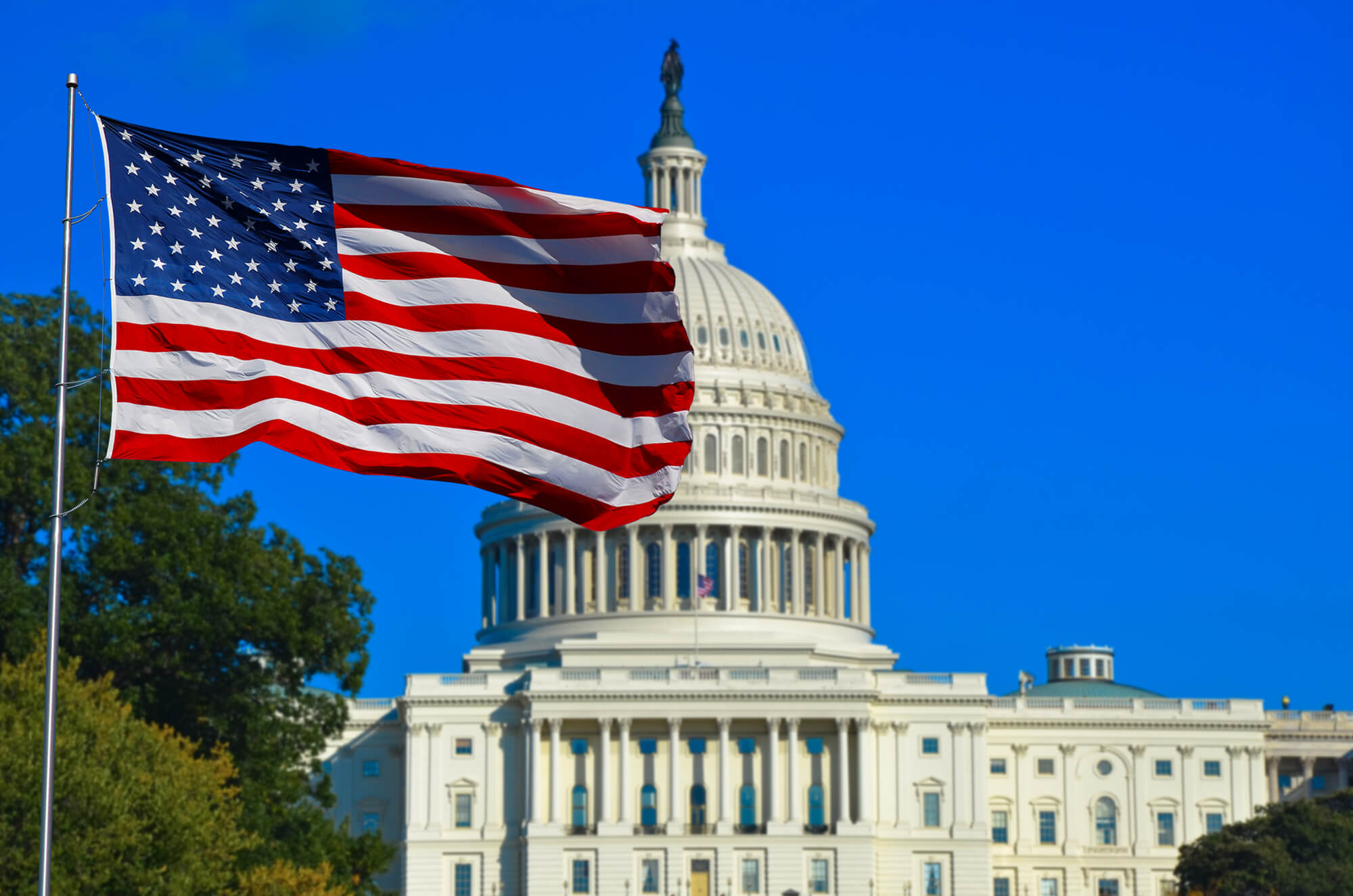
    In the US House of Representatives, two bipartisan lawmakers have introduced a draft for a new tax framework for cryptocurrencies. The proposal includes, among other things, tax relief for certain stablecoin transactions and a redefinition of how staking rewards are taxed.

    The draft introduces a so-called safe harbor rule for small stablecoin payments, under which transactions involving regulated, dollar-pegged stablecoins below a certain threshold would not be subject to capital gains tax. At the same time, the proposal allows for the deferral of taxation on staking and mining rewards, permitting taxable income to be assessed at a later point in time.

    Subscribe to our newsletter

    The best articles of the week, directly delivered into your mailbox.

    Safe harbor for stablecoin transactions

    At the core of the proposal is a tax exemption for regulated stablecoin payments that do not exceed a fixed threshold amount. According to Bloomberg, payments made with certain federally approved dollar stablecoins of up to around 200 US dollars would be exempt from capital gains tax. This would simplify everyday digital payments - for example for goods or services - from a tax perspective, as currently every movement of a crypto token can theoretically trigger a taxable gain or loss. This threshold is modeled on comparable tax rules in the traditional foreign exchange market.

    Safe harbor status would be subject to several conditions: the stablecoin must be issued by a regulator-approved issuer and must remain stably pegged to the US dollar over an extended period, for example under the framework of the GENIUS Act, which established a more comprehensive legal framework for stablecoins in 2025.


    Ray Dalio’s Bridgewater Associates Minds

    Star investor Ray Dalio considers Bitcoin inferior to gold

    Analysis by Bitget Research on Bitcoin quantum computing risks, ECDSA exposure, NIST post-quantum standards, and BIP-360 migration paths. Background

    Bitcoin quantum computing: What recent developments mean for network security

    JPMorgan warns: Recurring DeFi exploits and stagnant ETH-denominated TVL curb institutional engagement in the DeFi sector. DeFi

    JPMorgan: DeFi hacks and TVL losses weigh on institutional investors

    Basics

    Unit bias in crypto: Why cheap coins mislead investors

    Ray Dalio’s Bridgewater Associates Minds

    Star investor Ray Dalio considers Bitcoin inferior to gold

    Analysis by Bitget Research on Bitcoin quantum computing risks, ECDSA exposure, NIST post-quantum standards, and BIP-360 migration paths. Background

    Bitcoin quantum computing: What recent developments mean for network security

    Reclassification of the taxation of staking rewards

    Another key element of the proposal concerns the tax treatment of rewards from staking and mining. Currently, such rewards in the US are often considered taxable income at the time they are credited, even if recipients have not sold or realized them. This leads to complex calculations and liquidity constraints, as taxes become due before any sale proceeds are generated.

    The new draft proposes that taxpayers be given the option to defer taxation of such rewards until they actually gain economic control and disposal over the assets - for example upon sale or a later transaction. Some versions of the proposal provide for a deferral period of up to five years. This rule would give network validators, developers, and DeFi participants greater planning certainty.

    Context within the broader legislative framework

    The initiative comes at a time when the US Congress is increasingly working on establishing a more comprehensive regulatory framework for digital assets. A broader draft aimed at defining the market structure for cryptocurrencies - including the delineation of jurisdiction between the SEC and the CFTC - is planned for early 2026. Together with the safe harbor proposal, this could form a more coherent foundation for the everyday use of digital assets.

    While the current draft is still considered a discussion paper and has not yet been enacted into law, it is regarded as one of the most concrete examples to date of how the US Congress is seeking to reduce tax-related barriers to cryptocurrencies and integrate stable digital payment instruments into the mainstream.


    Share. Facebook Twitter LinkedIn Email Telegram WhatsApp

    About the author

    Editorial Office CVJ.CH

      The CVJ editorial staff consists of a team of Blockchain experts and informs daily and independently about the most exciting news.

      Related Articles

      Canada announces national crypto ATM ban. Roughly 4,000 machines are affected as Ottawa targets fraud and money laundering.

      Canada bans crypto ATMs

      New York sues Coinbase and Gemini over prediction markets. AG James demands 3.4 billion USD. COIN stock falls 6 percent.

      New York sues Coinbase and Gemini over prediction markets

      CLARITY Act removed from US Senate calendar on 15 April 2026: Stablecoin yield compromise in place since March, but markup blocked.

      US Senate removes CLARITY Act from calendar

      Canada announces national crypto ATM ban. Roughly 4,000 machines are affected as Ottawa targets fraud and money laundering.
      29. April 2026

      Canada bans crypto ATMs

      OKX, BlackRock and Standard Chartered launch a joint framework that makes tokenized RWAs usable as margin collateral under G-SIB custody.
      29. April 2026

      OKX, BlackRock and Standard Chartered use tokenized treasuries as collateral

      Hoskinson calls support of the CLARITY Act by Garlinghouse and the XRP community insanity and accuses Ripple of harming the industry.
      28. April 2026

      XRP vs. Cardano: Hoskinson calls CLARITY Act support “insanity”

      twitter image button instagram image button linkedin image button youtube image button

      About Crypto Valley Journal
      About Crypto Valley Journal

      On the pulse of the movement

      • Academy
      • Contact
      • Advertising
      • About us
      • Partner
      • Imprint
      • Privacy
      • Disclaimer
      Search

      Type above and press Enter to search. Press Esc to cancel.