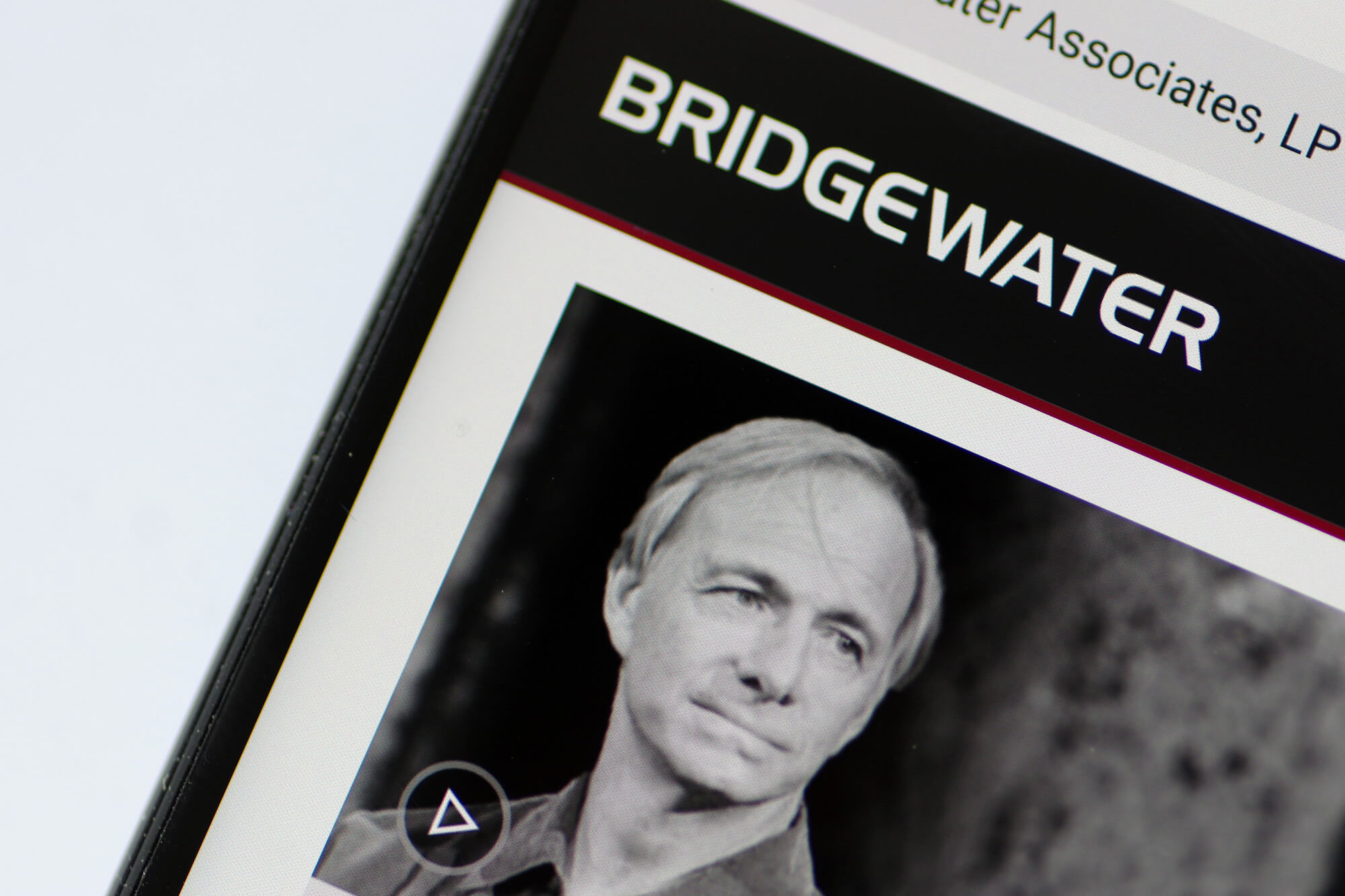
Bridgewater founder Ray Dalio expressed critical views on Bitcoin in an interview. While the billionaire personally holds around one percent of his wealth in BTC, he considers the cryptocurrency unsuitable as a reserve asset.
Dalio identifies three core weaknesses: the public traceability of transactions, potential security risks from quantum computers, and the resulting lack of appeal for central banks. Gold remains, in his view, the superior store of value. His remarks come against the backdrop of a US sovereign debt crisis. US government debt reached approximately USD 38.4 trillion in December 2025. Nevertheless, Dalio recommends that investors allocate 15 percent of their portfolios to hard assets - clearly prioritizing gold over Bitcoin.
Transparency as a systemic risk
In a conversation with Nikhil Kamath, co-founder of Zerodha, Dalio elaborated on his reservations about Bitcoin as a reserve currency. The public blockchain creates a structural problem for institutional investors and central banks.
"Transactions can all be tracked on Bitcoin. You can monitor what the transactions are, governments can monitor what the transactions are, and governments can interfere with those transactions" - Ray Dalio
This transparency fundamentally distinguishes Bitcoin from gold. While physical gold is difficult to control outside the traditional financial system, the Bitcoin blockchain enables pseudonymous tracking of all wallet addresses and transactions. For reserve managers, this represents a risk, as transactions can potentially be blocked or monitored. Dalio emphasized that gold is "the only asset you can own that they can't mess with and control." Bitcoin, he argued, lacks this characteristic.
Technical vulnerability and central bank adoption
Beyond the transparency issue, Dalio also highlighted technological risks. He referred to the possibility that Bitcoin could one day be "hacked, broken, or controlled." Quantum computers, in particular, pose a potential threat. Dalio drew a comparison to synthetic diamonds: just as these imitate natural diamonds, future technologies could undermine Bitcoin’s scarcity.
According to Dalio, these structural weaknesses make Bitcoin unattractive as a reserve asset for central banks. He explained that while Bitcoin is "limited in supply and perceived as money," it is "unlikely to be held in significant amounts by central banks and many others, because of the number of problems it has." Limited institutional adoption, in turn, constrains its long-term appreciation potential.
Dalio also expressed skepticism toward stablecoins. These are pegged to fiat currencies and would therefore "devalue like the fiat currency." In addition, they do not generate interest income. Stablecoins are currently "mainly used for immediate, fast transactions and not as a store of value."




Portfolio recommendation despite criticism
Despite his criticism, Dalio personally holds Bitcoin and recommends a strategic allocation. In earlier statements in November 2025, he confirmed to CNBC that around one percent of his portfolio was invested in Bitcoin, a position he has held for several years.
In July 2025, however, Dalio significantly increased his recommendation for hard assets. In light of rising US debt, he advised investors to allocate 15 percent of their portfolios to gold or Bitcoin. This marked a shift from his previous recommendation of one to two percent. The backdrop includes projections from the US Treasury, which forecast additional borrowing of USD 1 trillion for the third quarter of 2025.
Dalio warned that the "economic heart attack" likely to be triggered by rising debt levels had not yet been priced into currency and bond markets. US government debt surpassed USD 38 trillion for the first time in October 2025 and reached USD 38.4 trillion in early December. Annual interest payments totaled around USD 980 billion in fiscal year 2025 - nearly three times the USD 345 billion recorded in 2020.
Gold as the preferred asset
Within his 15 percent allocation recommendation, Dalio clearly prioritizes gold over Bitcoin. He described gold as the "cornerstone of non-traditional wealth preservation" and reiterated that an allocation of five to 15 percent in gold is generally appropriate. In the interview with Kamath, he stated his position unequivocally: "I hold a little Bitcoin. I have a little Bitcoin. But for me, it’s not as attractive as gold."
This preference is based on gold’s 5,000-year history as a store of value. Bitcoin, while having demonstrated its continued existence, still ranks second among hard assets. Dalio emphasized that, unlike Bitcoin, gold cannot be controlled or manipulated by governments once it is in an investor’s possession.
Counterarguments: where Dalio’s criticism falls short
Several of Dalio’s arguments do not withstand closer scrutiny. His claim that gold, unlike Bitcoin, cannot be controlled by governments ignores historical precedents. In 1933, the US government confiscated private gold through Executive Order 6102, forcing citizens to sell it to the Federal Reserve under threat of penalty. Bitcoin held in self-custody, by contrast, can be stored as a seed phrase in one’s memory and transported invisibly across borders. The frequently cited seizure of USD 15 billion in Bitcoin referred to the Bitfinex hack - that is, criminally obtained assets, not legitimate investor holdings. With proper self-custody, Bitcoin remains practically non-confiscable. Gold, on the other hand, requires physical storage, third-party verification, and is easily identifiable during transport.
The quantum computing threat also appears less severe upon closer examination. Quantum computers capable of breaking Bitcoin’s cryptography are, according to expert assessments, still at least a decade away. Moreover, such a breakthrough would endanger not only Bitcoin, but the entire global banking system, military communications, and critical infrastructure. Bitcoin developers are already working on quantum-resistant signatures and could update the protocol if necessary. Nevertheless, the threat exists, and Bitcoin must reach consensus on a solution to the quantum risk, which is no trivial challenge for a decentralized network.
Dalio’s transparency argument also overlooks technological developments. Solutions such as the Lightning Network enable transactions outside the main blockchain that are not publicly visible. Dedicated protocols also mix transactions from multiple users, significantly complicating traceability. Finally, Bitcoin clearly outperforms gold in terms of portability: billions in value can theoretically be transported in a wallet on a USB stick or even as a memorized seed phrase - invisible and without physical trace. Large quantities of gold, by contrast, require armored transport, insurance, and leave documented traces at every border crossing.