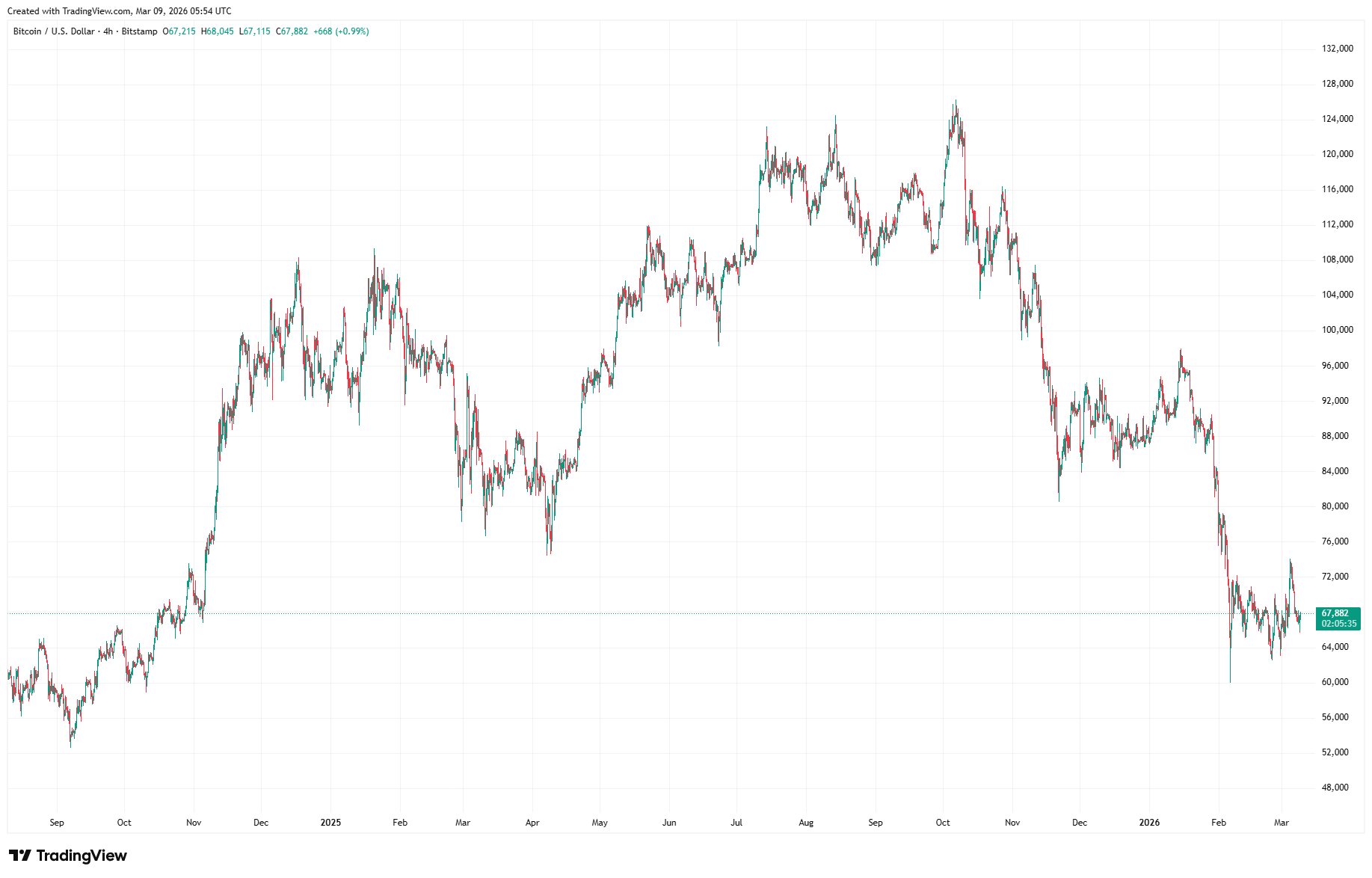
Bitcoin fell as much as 2.4 percent on Monday to $65,633. The largest cryptocurrency hit a new 7-day low while Brent Crude climbed to $118.73 per barrel, its highest level since June 2022.
Since its all-time high above $126,000 in October 2025, Bitcoin has lost nearly half its value. Five consecutive red months paint a clear picture. This sell-off extends across the entire crypto market. Total market capitalization dropped 3.4 percent to $2.33 trillion. Ethereum lost up to 4.75 percent, Solana 4.4 percent, XRP 2.67 percent. Liquidations totaled over $302 million within 24 hours. As a result, the Fear & Greed Index stands at 8, deep in extreme fear territory.
Hormuz blockade pushes oil prices to crisis levels
The joint US-Israeli strikes on Iran, which began on February 28, triggered the market turmoil. Crude oil prices have since surged roughly 50 percent. Brent Crude broke above $100 per barrel for the first time since Russia's invasion of Ukraine in 2022.
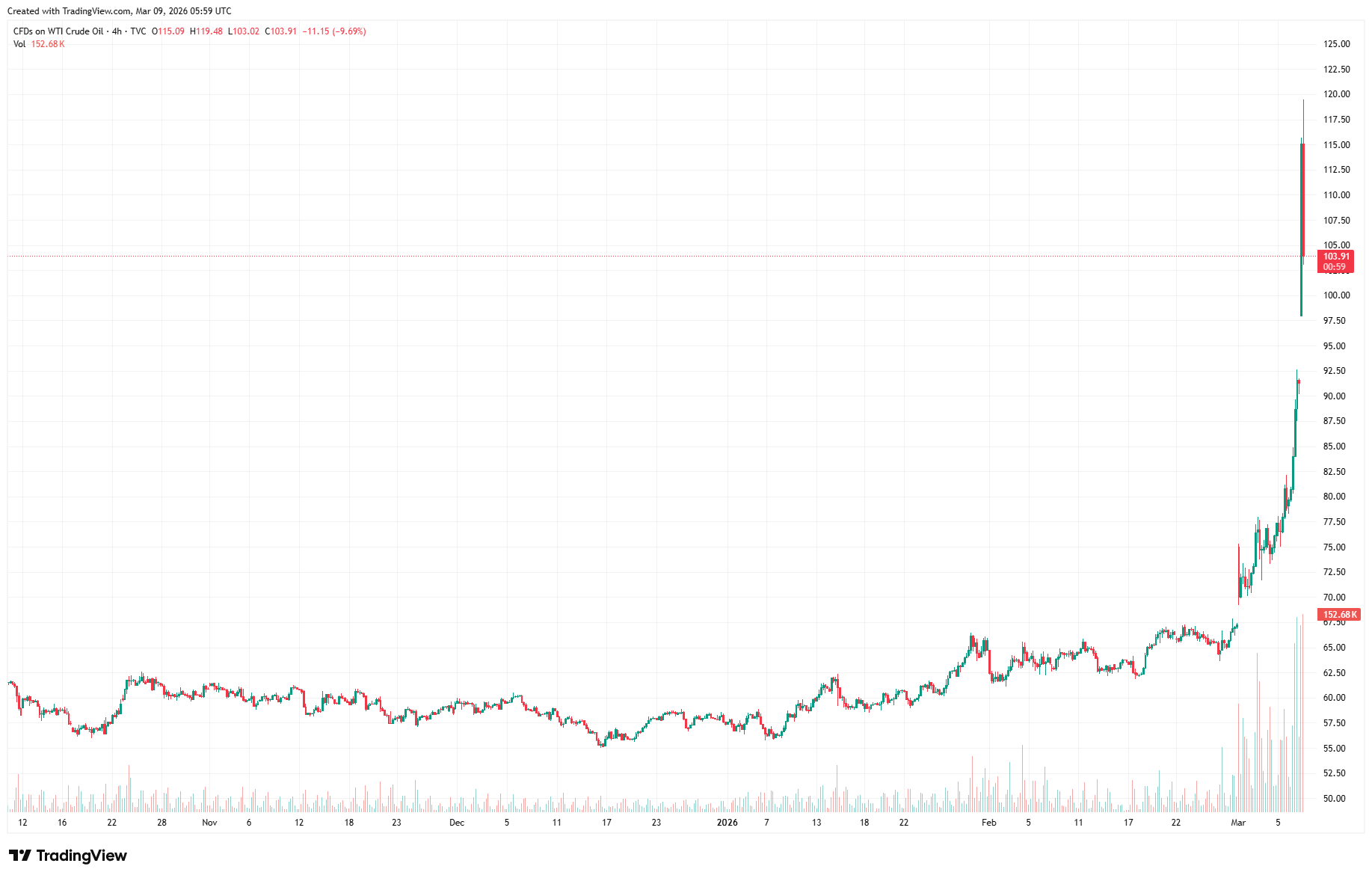
The blockade now disrupts about one-fifth of global oil supply, roughly 20 million barrels per day. Iraq, the UAE, and Kuwait cut production as a barrel backlog formed. Saudi Aramco's Ras Tanura refinery and export terminal also closed.
Qatar declared force majeure on gas exports after Iranian drone strikes hit infrastructure. A return to normal production will take at least one month, according to officials. Qatar supplies around 20 percent of global LNG. The Qatari energy minister warned of prices reaching $150 per barrel if regional disruptions persist.
Bitcoin behaves as a risk asset, not a safe haven
The 30-day correlation between Bitcoin and the S&P 500 sits at 0.55. Bitcoin is moving in lockstep with traditional risk assets. Yet the narrative of digital gold that benefits during geopolitical crises finds no support right now. Instead, capital is flowing into physical gold. Gold ETFs recorded $16 billion in inflows over the past three months.
Asian equity markets took heavy losses. South Korea's Kospi fell 8.1 percent. Japan's Nikkei 225 dropped 7 percent, and Hong Kong's Hang Seng lost 3 percent. US futures also pointed lower. S&P 500 futures declined 1.7 percent, Nasdaq futures 1.9 percent. At the same time, the US dollar strengthened against nearly all currencies.
Still, the relatively moderate decline suggests that speculative positions have already been largely unwound. After five consecutive losing months, the leverage that could trigger a cascade crash simply is not there.




ETF outflows accelerate the downturn
Institutional investors have been systematically pulling out of Bitcoin for months. US-listed spot Bitcoin ETFs recorded nearly $6 billion in net outflows since November. November and December 2025 alone saw $4.57 billion in outflows, the worst two-month period in ETF history.
In 2026, the trend continued. Through February 22, another $4.5 billion drained out over six consecutive outflow weeks. BlackRock's iShares Bitcoin Trust (IBIT) lost over $2.1 billion in five weeks. Fidelity's Wise Origin Bitcoin Fund (FBTC) saw outflows exceeding $954 million.
A few players from the Middle East are swimming against the current. Mubadala Investment Company and Al Warda Investments, both based in Abu Dhabi, built spot Bitcoin ETF positions in mid-February. These are relatively small countermoves compared to the broad institutional retreat.
Inflation, the Fed, and the macroeconomic trap
The oil price shock compounds an existing dilemma for the US Federal Reserve. According to the IMF, every sustained 10 percent increase in oil prices raises inflation by 0.4 percentage points. Global economic growth then falls by 0.15 percentage points. With a 50 percent price surge since the war began, the impact is substantial.
US gasoline prices rose to an average of $3.45 per gallon, up 16 percent from the prior week. Diesel reached $4.51 per gallon. For crypto markets, oil-driven inflation means the Fed can hardly cut rates, even as the economy weakens. At the same time, the rising dollar puts additional pressure on dollar-denominated assets like Bitcoin.
Europe, meanwhile, stands on the brink of recession due to elevated energy prices. As a result, the global environment for risk assets is deteriorating across the board. Markets are positioning defensively, with capital flowing out of equities and crypto into gold and US Treasuries. US 10-year yields have turned positive for the year.