Due to the proactive role of the domestic regulator, Switzerland is in a unique situation for cryptocurrency companies. Favorable framework conditions enabled a thriving ecosystem around digital assets early on, with hundreds of companies still joining every year.
In August 2019, Sygnum became one of the first financial service providers in the digital asset space to receive a banking license from the Swiss Financial Market Supervisory Authority (FINMA), alongside SEBA Bank. Since then, the crypto bank has expanded internationally and is fully regulated in both Switzerland and Singapore. At the Crypto Valley Conference 2022, Thomas Brunner - Head of Custody & Staking - spoke to CVJ.CH about the regulation of crypto firms, developments in the DeFi space, and the future of digital assets.
CVJ.CH: Sygnum was one of the first crypto start-ups with a FINMA banking licence. What doors did this certification open?
Thomas Brunner: From the very beginning, it was very important to us to fulfill all regulatory requirements and not to make any compromises that would impact our clients in this respect. For institutional clients in particular, having a banking licence is often a very important criterion or requirement when choosing a partner institution. The banking licence ensures the security and confidence in working with a regulated counterparty.
With the recent bankruptcies of unregulated crypto service providers such as Celsius, regulation and investor protection also gained relevance among private investors, and in particular the question if customer deposits are exempt from bankruptcy assets, e.g., with Celsius and other unregulated digital asset service providers. In comparison, customer deposits at a regulated bank, such as Sygnum, are fully protected in the event of bankruptcy. In the past the focus was on user experience and equity returns, but investors have suddenly become very aware of counterparty and other risks again.
How have you experienced the cooperation with the Swiss regulator so far?
As we are breaking new regulatory ground in many areas with our broad portfolio of products and services related to digital assets, cooperation with FINMA is of central importance to us. The ongoing regulatory dialogue allows us to find a viable middle ground that enables innovation without compromising, for example, on anti-money laundering processes or investor protection. I think in Switzerland this balancing act has been mastered successfully to create a clear legal and regulatory framework. Minimising the legal and regulatory uncertainty regarding investments in cryptocurrencies and tokenised assets is essential to further promote the adoption of this constantly growing asset class. Switzerland's pioneering role in this area is certainly an important reason why we have become one of the leading nations in the field of crypto investments.
In addition to Switzerland, Sygnum is also based in Singapore. Are there any key differences between these jurisdictions for crypto companies?
Similar to Switzerland, the regulator in Singapore is open to innovation and aims to create the relevant framework conditions to enable new innovative offerings. We have very consciously chosen Singapore as the location for our headquarters in the Asian region, not least because of this advantageous regulatory framework. I would say that Singapore has a slightly stronger focus on investor protection, especially in the retail sector. Since January 2022, the MAS Guidelines prohibit providers from advertising crypto investments to the public.



Which services are most in demand at the moment?
We see continued high demand in almost all areas. In the area of "Digital Asset Banking", net new money inflows in the custody business, as well as trading and lending volumes, are developing well. Our fund and structured products and our tokenisation services continue to be in high demand.
How do you assess the field of decentralised financial applications (DeFi) and will this area merge with the traditional financial world?
We believe that applications in the area of decentralised financial services (DeFi) have enormous potential. The potential for managing risk is massive, as demonstrated with the bankruptcies of Celsius and other centralised market participants. Interestingly, decentralised protocols such as Aave or MakerDAO survived this market turmoil unscathed and demonstrate the resilience and robustness decentralised systems can provide. At the moment, however, regulators are cautious about DeFi and DeFi regulation likely will increase strongly. This could slow down short-term growth; I am convinced that a regulatory framework and the security that comes with it will have a positive mid-term impact and it will boost interest from institutional investors.
How should the recent Terra ecosystem collapse be assessed regarding the long-term development of the DeFi sector?
Stablecoins are undoubtedly an important part of the DeFi ecosystem. However, the collapse of the Terra ecosystem is, in my opinion, primarily the result of poor design. The mechanism of creating new LUNA tokens when users exchanged UST tokens led to a negative spiral that resulted in the collapse of LUNA and UST. The question remains whether under-collateralised algorithmic stablecoins can function at all. The most important stablecoins are more than 100% collateralised and have proven to be very robust. Regulation will likely establish stricter rules for the issuance and operation of stablecoins in future, and the market has already moved towards stablecoins with transparent reserves. The Terra ecosystem collapse had a strong impact on the DeFi sector, but I think the reasons were isolated, and I do not expect a negative impact on the DeFi ecosystem in the long run.
What is missing for large-scale adoption of crypto assets and applications?
The most important thing, in my opinion, is adoption of existing and new use cases. Today, people primarily buy crypto assets to make speculative gains. But this alone is not enough to achieve truly large-scale and sustainable adoption. Many use cases such as DeFi or NFTs have already achieved widespread adoption and have made the benefits of blockchain technology obvious. Other use cases such as blockchain-based identities, payment transactions, blockchain-based social media platforms or even the metaverse have not yet achieved widespread adoption. In addition, the legal and regulatory framework and closer links to existing Web2 platforms will be important drivers for further adoption.
Where do you see the sector in five to ten years?
I expect that in the area of financial services, a large part of the infrastructure will be blockchain-based, and we will no longer distinguish between decentralised and traditional financial solutions. And this will require significant parts of financial infrastructure to be decentralised. I feel this will also lead to greater transparency and resilience across the financial system. With open and programmable architecture in financial services, an ecosystem of innovative financial services will emerge, and this will become a key growth driver for the financial industry. I also expect that outside the financial industry, significant parts of the future digital infrastructure will be based on public blockchains, and the internet will not be dominated by a small number of giant tech corporations, but by smaller agile companies and projects built on public blockchain infrastructure.
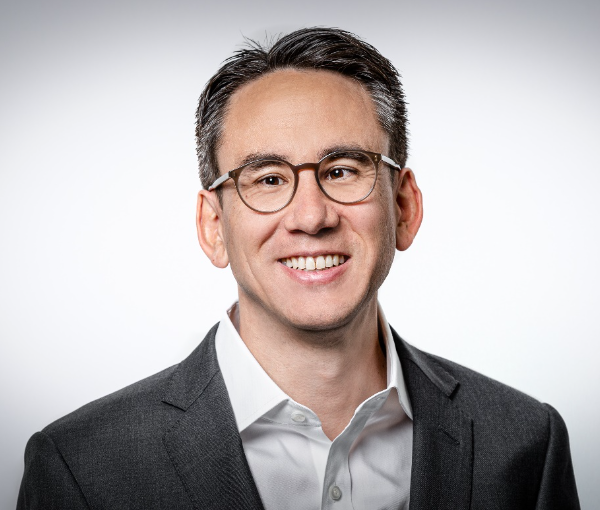
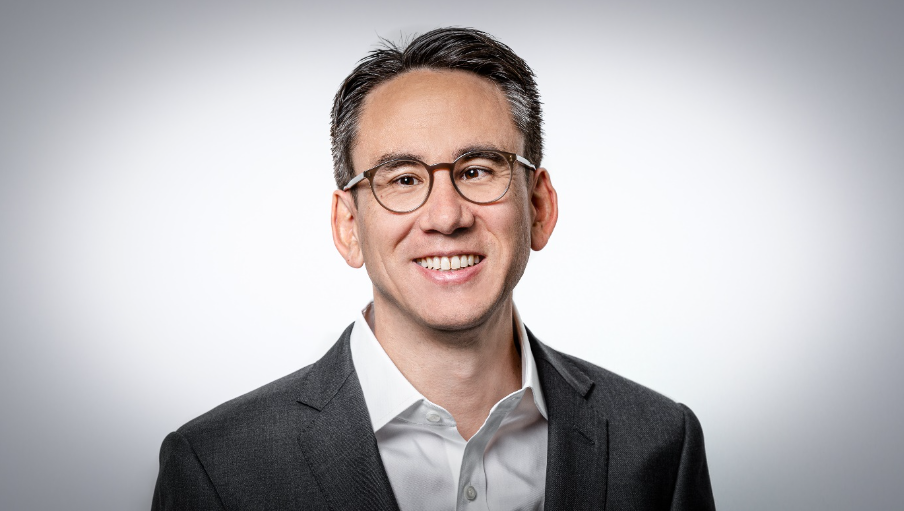 Thomas Brunner is Head of Custody & Staking at Sygnum. Before joining Sygnum in early 2021, he gained over 15 years of experience in traditional financial institutions such as Julius Baer, Credit Suisse and Vontobel and worked as a consultant for PwC. He holds an MSc in Computer Science from ETH Zurich and an MBA from INSEAD Business School.