
Strategy, formerly MicroStrategy, recorded a net loss of $12.6 billion for common shareholders in the fourth quarter of 2025. This loss amounts to $42.93 per diluted share and is almost entirely attributable to unrealized losses on Bitcoin holdings.
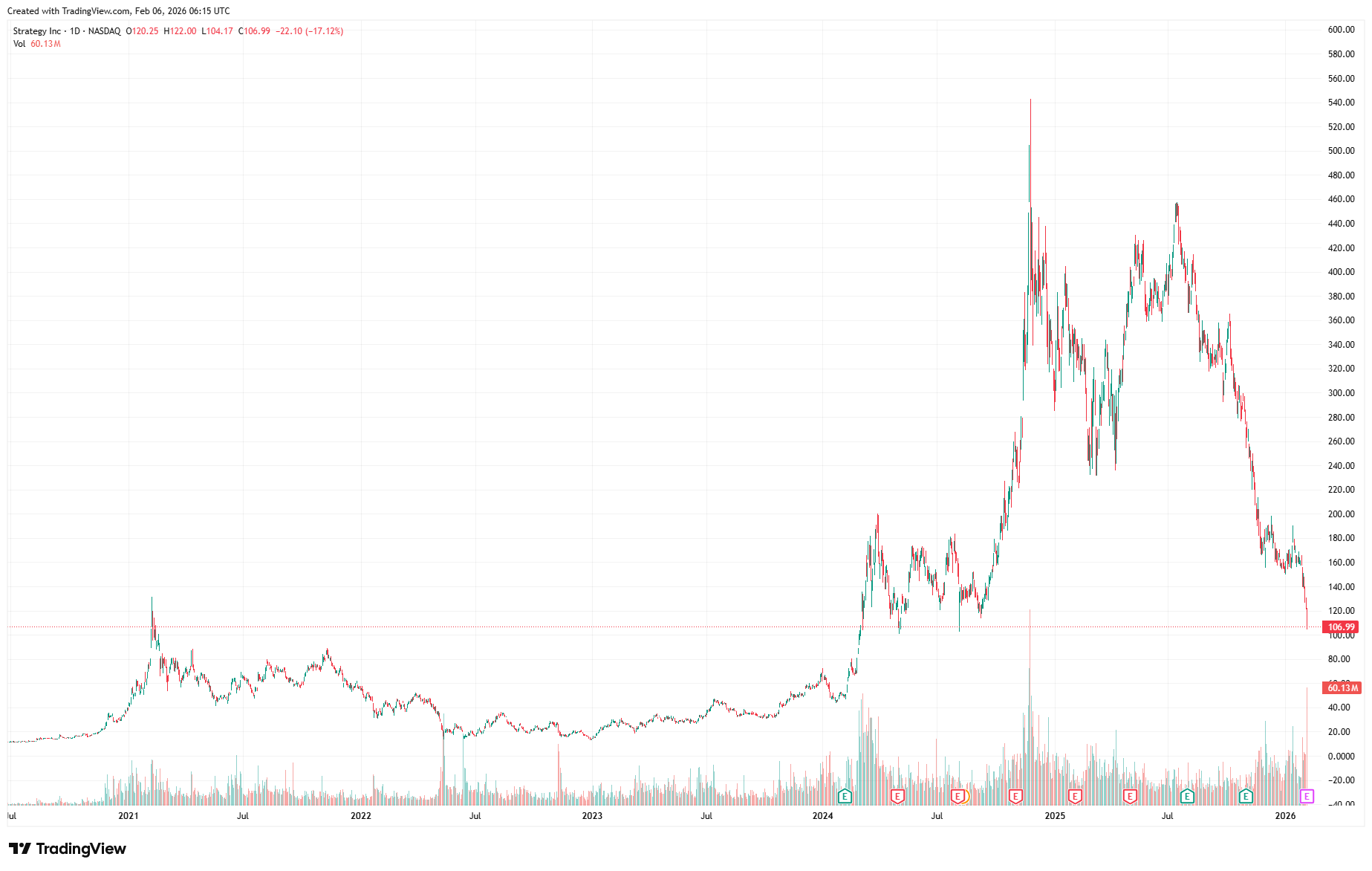
In the same quarter a year earlier, the net loss stood at $671 million. The world's largest corporate Bitcoin holder acquired a record 218,887 BTC for $20.5 billion during the same period. At the same time, Bitcoin fell from its all-time high of around $126,000 to approximately $89,000 by year-end, a decline of 25 percent. As a result, the stock dropped 17 percent on the day of the announcement and is trading at around $107.
Fair value accounting amplifies quarterly volatility
Strategy has been applying the FASB fair value accounting method since the beginning of 2025. As a result, the company now marks its Bitcoin holdings to market on a quarterly basis. Previously, Strategy booked impairment losses on price declines but did not recognize price gains. While the new method does reflect actual market value, it leads to significantly higher volatility in quarterly results.
The operating loss in Q4 2025 was $17.4 billion. Most of this stems from unrealized write-downs on Bitcoin holdings. Meanwhile, the core software business remained stable, posting a revenue increase of just under 2 percent to $123 million year-over-year. Yet the core business barely matters for the company's overall valuation anymore.
Strategy's loss ranks among the largest quarterly losses in US corporate history. For comparison, AOL Time Warner posted a quarterly loss of $54 billion in 2002, driven by goodwill write-downs following the failed merger. In Strategy's case, however, the losses are unrealized and tied to digital assets.
Stock price in freefall, valuation below book value
The MSTR stock has lost roughly 75 percent of its value since its all-time high in November 2024 at around $540. Over the full year 2025, the stock fell 49 percent. This is the second-worst annual performance in the company's history. Additionally, the stock has posted consecutive monthly declines for eight straight months.
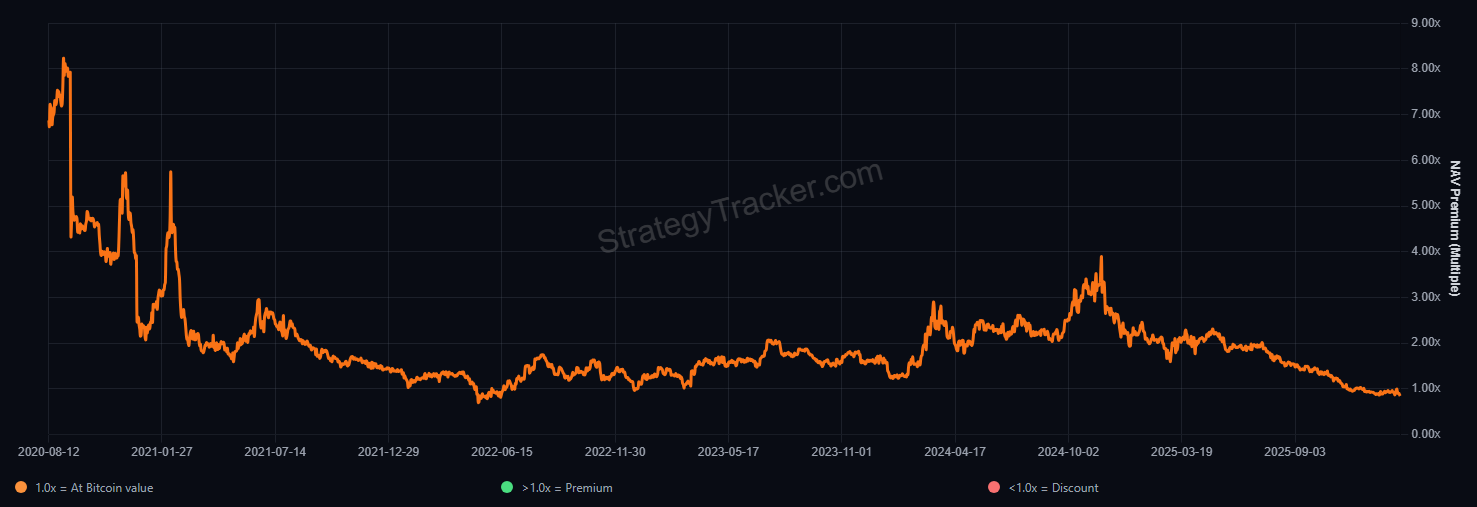
Total market capitalization dropped from $75 billion in October 2025 to $32.1 billion. Its trading ratio stands at 0.85x of the market-adjusted net asset value (mNAV). This means the stock is trading below the book value of its Bitcoin holdings. By contrast, MSTR traded at a significant premium to its Bitcoin holdings in early 2025.




Debt structure as the key question
Strategy has a total of $8.2 billion in convertible bonds outstanding. Its average coupon is 0.42 percent, with an average maturity of 5.1 years. The first major maturity date falls in September 2028, though investors already hold a put option starting in March 2027.
Meanwhile, the cash position stands at $2.25 billion. According to the company, this covers 2.5 years of preferred dividends and debt interest. CEO Phong Le therefore sees no immediate pressure.
"Bitcoin would have to fall to $8,000 and stay there for five to six years before a real threat to servicing our convertible bonds would emerge." - Phong Le, CEO of Strategy
So far, Strategy has successfully refinanced bonds without having to sell Bitcoin. Management used a combination of equity raises and zero-coupon convertible bonds. In 2025 alone, the company raised a total of $25.3 billion through equity offerings.
713,000 Bitcoin and the question of concentration
As of February 2026, Strategy holds 713,502 Bitcoin at a total cost of $54.26 billion. Its average purchase price is $76,052 per Bitcoin. At the current price of around $65,000, this results in an unrealized loss of $8.5 billion on the total position.
The company's proprietary metric "BTC Yield" measures whether Strategy is accumulating Bitcoin faster than dilution from equity raises. For 2025, Strategy achieved a BTC Yield of 22.8 percent, within the target corridor of 22 to 26 percent. In concrete terms, this translates to a net gain of 101,873 Bitcoin over the full year.
Still, the fundamental problem persists. Strategy's entire market capitalization depends on a single asset. Bitcoin is currently trading 48 percent below its all-time high. Meanwhile, the crypto Fear and Greed Index has dropped to 17 points, signaling extreme fear. Bitcoin ETFs also recently recorded outflows of $2.3 billion. Saylor's public reaction to the quarterly results was limited to a single word on X: "HODL."
HODL
— Michael Saylor (@saylor) February 5, 2026