What happened this week around blockchain and cryptocurrencies? The most relevant local and international events as well as appealing background reports in a pointed and compact weekly review.
Selected articles of the week:
Crypto custody refers to the secure storage and management of digital assets such as cryptocurrencies. The self-custody of these assets is a fundamental concept in the field, as it allows individuals to maintain full control and ownership of their funds. Counterparties are eliminated, and dependencies on third parties are minimized. In this context, hardware wallets are typically used, which are special devices for the secure offline storage of private keys. Unlike wallets stored on computers or smartphones, these devices are less susceptible to hacker attacks because they are not connected to the internet. In the event of a hardware wallet failure, the recovery phrase (secret recovery or seed phrase) serves as the final access key to restore the safeguarded cryptocurrencies. These 12 or 24 words are usually physically written down to provide the smallest possible attack surface. That explains why there was a significant outcry when the leading hardware wallet manufacturer, Ledger, announced its new “Recover” function. The service allows users to store their recovery phrase in the cloud and retrieve it with an identification document. An overview of the controversy.
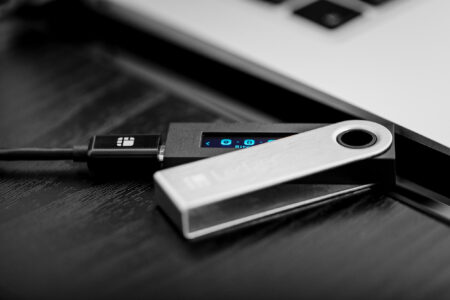
Hardware wallet provider Ledger’s announcement of a “Recover” recovery service met with harsh headwinds.
Secure crypto custody is also essential for institutional investors. Institutional custody generally involves professional third-party providers specializing in the secure storage and management of digital assets on behalf of institutional clients such as hedge funds, banks, or large investment firms. Unlike self-custody, institutional custody offers additional layers of security, including robust infrastructure, offline storage, multi-signature authentication (multi-sig), insurance coverage, and compliance measures, to meet the specific needs and requirements of institutional actors. The $250 million acquisition of Swiss crypto infrastructure provider Metaco by Ripple demonstrates the growing demand for these services. According to the creator of the XRP Ledger, the foray into the custody space is a milestone in the business strategy and opens up new revenue opportunities for the company.

The operator of the XRP ledger Ripple is acquiring Metaco, a Switzerland-based crypto infrastructure provider.
Efforts regarding the regulation of crypto activities have gained momentum globally since the FTX debacle last winter. For instance, the UK Treasury has been working on a comprehensive regulatory plan since December. The framework initially focused on regulations for stablecoins and is now set to be expanded to traditional cryptocurrencies. In February, a consultation phase was initiated, which concluded two weeks ago. The ambitions for regulating the sector now face opposition from the UK House of Commons’ Treasury Committee. Regulating it as a financial activity would wrongly confer legitimacy to the industry, despite crypto trading being more akin to gambling, according to the group. This questionable stance by the policymakers immediately faced backlash from various industry representatives.

The UK House of Representatives Finance Committee recommends regulating crypto trading as gambling in a questionable report.
Bitcoin, the mother of all cryptocurrencies, has undergone a significant change in its fee structure due to the emergence of ordinals. In recent years, the “digital gold” has primarily been used as a store of value and an alternative asset class, offering portfolio diversification, protection against inflation, and the potential for long-term capital growth. Despite initiatives in countries like El Salvador, its use as a means of payment has somewhat taken a backseat. This has resulted in a stagnation of transaction fees, which at the beginning of the year were at similar levels to 2017. However, the introduction of Bitcoin-based digital collectibles (NFTs) and cryptocurrencies (BRC20 tokens) has led to a significant increase in network activity since this spring. These “ordinal inscriptions” on the Bitcoin blockchain regularly occupy over 50% of the entire block space, which is a boon for miners earning from it but a curse for everyday network users.
The rise of so-called Bitcoin Ordinals have driven up the network’s transaction fees – a curse and a blessing in equal measure.
In addition: The rapidly evolving sports world has witnessed a rise in innovative technologies aiming to revolutionize fan engagement. One of these emerging technologies is blockchain, which offers new opportunities for audience involvement through the use of so-called “fan tokens.” These tokens often grant access to exclusive content, voting rights, rewards, or participation in fan-driven initiatives, fostering a closer relationship between sports enthusiasts and the organizations they support. A scientific analysis of this phenomenon and a fan token framework by the Blockchain Research Lab.

A case study of the blockchain-based fan token platform Socios and its impact on the rapidly evolving world of sports.