


What has been happening this week in the world of blockchain and cryptocurrencies? Current events and background reports in our weekly review.
Selected articles of the week:
Index provider MSCI is removing Bitcoin company Strategy from its global equity indices in late November, including the MSCI World. The company keeps buying Bitcoin, now holds 850,364 BTC and funds the purchases with new shares. The basis is a new rule for companies whose assets are not mainly operating assets. Although the rule does not name Bitcoin, an MSCI simulation flagged Strategy for deletion back in August. Funds tracking these indices must therefore sell the stock. By Strategy’s estimate, they hold around 13 million shares, or 3.1% of shares outstanding and less than one day’s volume. A year ago, bank JPMorgan estimated outflows of USD 2.8 billion, although for the original proposal. The deletion does not force Strategy to sell any Bitcoin. Nevertheless, the exclusion could make it harder to finance further purchases. Strategy disputes the classification, since it reports its Bitcoin business as an operating segment.

MSCI is removing Strategy from the MSCI World Index, which forces no bitcoin sales but could weigh on the funding of new purchases.
Banks fund a rival to Tether and Circle
Goldman Sachs, Citigroup and other financial firms have pledged around USD 270 million to a joint stablecoin, Bloomberg reports. The financial news service cites insiders. A stablecoin tracks the value of a currency such as the dollar, with reserves backing the peg. Two crypto firms, Tether and Circle, have so far dominated the market of around USD 295 billion, with nearly 84% combined. The money is to cover five years of operations at a US issuer still to be founded. It plans to issue a dollar token under the GENIUS Act, the US stablecoin law, in the first half of 2027. The group of 21 financial institutions includes Switzerland’s UBS and, according to reports, asset manager Fidelity. However, key points remain open, as the project has neither a chief executive nor a final name. It is also unclear how the sum breaks down and whether all members pay in.

Goldman Sachs, Citi and other banks commit around USD 270 million to fund five years of operations for their joint stablecoin.
Bitcoin slides and the crypto bill expires
Bitcoin fell to USD 73,708 after the US midterm elections, its lowest level since August. Ether lost around 5% and briefly slipped below USD 2,100. At the same time, exchanges forcibly closed leveraged bets worth more than USD 1 billion. However, it is not possible to say with certainty what triggered the decline. Reuters points mainly to concern about stricter regulation under the incoming Democratic Congress. By contrast, CoinDesk sees an investigation involving Nvidia CEO Jensen Huang and failed Iran talks as the triggers. Elizabeth Warren is the frontrunner to chair the Senate Banking Committee, where she could set the agenda. However, Senate legislation still needs 60 votes. Therefore, the Democrats will not have a free hand. Moreover, the Clarity Act, the proposed bill for supervising the crypto market, lapses in January with the outgoing Congress. Consequently, the new Congress would have to start the process from scratch.

Bitcoin drops to USD 73,708 after the US midterms and Ether briefly slips below USD 2,100 as investors fear stricter crypto regulation.
Trump Media earns mostly on paper
Trump Media, which runs social network Truth Social, posted a third-quarter profit of USD 409.7 million. In the prior-year quarter, the company had reported a loss of USD 54.8 million. Valuation gains of USD 496.1 million on crypto holdings and stocks tipped the balance, but brought in no cash. At the end of September, Trump Media held around 15,649 BTC, so its results swing with the Bitcoin price. By contrast, the core business remains small, with revenue of just USD 3 million. Excluding the valuation gains, the quarter would consequently have shown a loss of around USD 86 million. Moreover, the loss over nine months totals around USD 234 million. Crypto holdings make up more than half of total assets. If the Bitcoin price falls, the same items will therefore turn into losses. The stock market reaction was muted, and the shares have lost almost 70% since January.
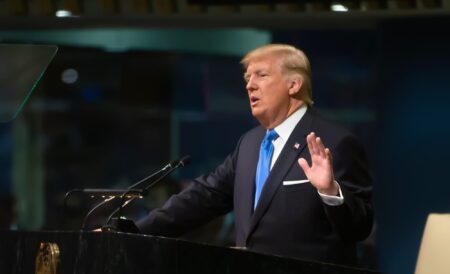
Trump Media profit reached USD 409.7 million in the third quarter of 2026, almost entirely from valuation gains, on revenue of USD 3 million.
Bitcoin Core discloses vulnerabilities only after support ends
In addition: Bitcoin Core, the Bitcoin network’s reference software, disclosed three security vulnerabilities this week. Network computers, known as nodes, use it to check and relay transactions and blocks. However, the project had already fixed the flaws around a year ago. It rates the most serious as “high,” the second-highest of four levels. This flaw could stop miners from preparing valid new blocks if the network had first replaced the latest blocks. Nevertheless, the flaw did not affect consensus, the network’s shared rule set. As a rule, the project first fixes flaws quietly and describes them only when support for affected versions ends. As a result, operators gain time to update. Here, support for the last affected release series ended in late October. Anyone still running these or older versions is therefore using unsupported software. The advisories do not say whether anyone ever exploited the flaws.

Bitcoin Core has disclosed three security flaws fixed since October 2025, including a high-severity bug that affected mining nodes.