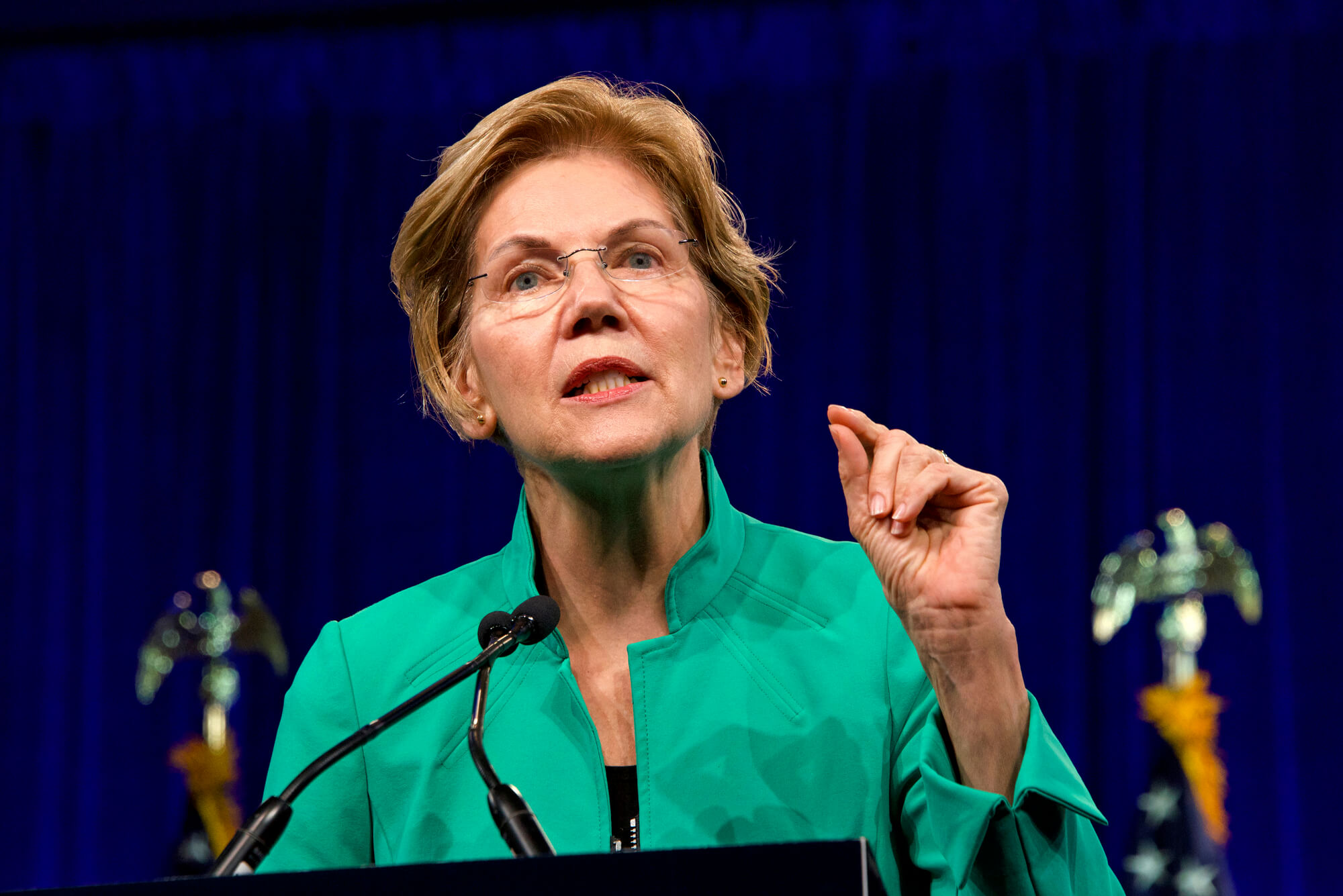
The FTX debacle is giving many crypto opponents a tailwind. Thus, Senator Elizabeth Warren is trying to push through bipartisan action against money laundering in the crypto industry within the U.S. Congress. The legislation would serve to better protect the national security of the United States.
Warren is a former Harvard law professor and expert on consumer protection and economic inequality. She says her efforts are aimed at creating a level playing field. Crypto companies should be forced to abide by the same rules that apply to banks and traditional businesses. Warren's new bill, called the Digital Asset Anti-Money Laundering Act, aims to bring the crypto ecosystem in line with the existing anti-money laundering regime in the global financial system.
Extending responsibilities
The legislation would direct the Financial Crimes Enforcement Network (FinCEN) within the Treasury Department to designate digital asset wallet (custodian) providers, miners, validators and NFT marketplaces as money services providers. This, in turn, would extend Bank Secrecy Act responsibilities to the crypto industry, including customer identification (KYC) requirements. FinCEN would also be required to maintain records, monitor markets and produce reports on digital asset transactions involving "non-hosted" wallets. Financial institutions would be prohibited from interacting with services that commingle cryptocurrencies and disguise their origins.
The Treasury Department warned earlier this year that ransomware hackers, drug traffickers and scammers are using digital assets to launder illicit proceeds. Furthermore, U.S. officials claim that North Korea, Iran, Russia as well as other countries are using cryptocurrencies to launder money and even evade sanctions. However, they could not provide any proof of this or even a sum.
Republican Roger Marshall continued to swing the terror club, pointing to sensible reforms after the September 11, 2001 terrorist attacks that apparently helped banks exclude bad actors from the American financial market. Applying the policies Elizabeth Warren called for to crypto exchanges will prevent digital assets from being misused to fund illegal activities, without restricting access for law-abiding American citizens.
Threat to national security
Even before the FTX collapse, the Treasury Department was focused on the feared national security risks posed by relatively unregulated digital currency exchanges. In August, authorities took action against Tornado Cash, a virtual currency mixer. The decentralized currency mixer was accused of laundering more than $7 billion in virtual currencies since 2019.
The Treasury Department said Tornado Cash was attractive to cybercrime money launderers, including the Lazarus Group, a North Korean-sponsored hacking group. Its attraction to cybercriminals was that it could move digital assets anonymously, obscuring the origin and destination of transactions and hiding the parties involved. The provisions of the new legislation include the following - none of which, ironically, would have prevented the FTX incident:
- Directing FinCEN to finalize and implement a 2020 proposed rule that would require banks and money services businesses to verify the identity of customers and counterparties (KYC).
- Prohibit banks and other financial institutions from using or trading in anonymity-enhancing technologies, such as digital asset mixers and banks or other financial institutions from trading in digital assets that have used these technologies.
- Extending the Bank Secrecy Act's foreign bank account reporting provisions to digital assets by requiring Americans who engage in transactions involving digital assets of more than $10,000 through offshore accounts to file a report with the Internal Revenue Service.
- Directing regulators to strengthen compliance with the provisions of the Bank Secrecy Act by establishing a process to audit compliance and review money services businesses.
- Take strong action against digital asset ATMs by ensuring that operators and managers submit and update the physical addresses of their kiosks.