
Close Menu
Crypto Valley Journal
    Facebook X (Twitter) Instagram
    Crypto Valley Journal
    • Hot Topics
      • News
      • Minds
    • Focus
      • Background
      • Blockchain
      • Legal & Compliance
      • Non-Fungible Token (NFTs)
    • Investing
      • Markets
      • Financial Products
      • Decentralized Finance (DeFi)
      • Exchange overview
    • Education
      • Basics
      • Glossary
      • Politicians on crypto
    • Statistics
      • Bitcoin-ETF-Flows
      • Ethereum-ETF-Flows
      • Crypto market data
      • On-chain data
    • Academy
      • Overview
      • Part 1: Blockchain
      • Part 2: Money
      • Part 3: Bitcoin
      • Part 4: Cryptocurrencies
      • Part 5: Decentralized Finance
      • Part 6: Investing
    • English
      • Deutsch
    Crypto Valley Journal
    You are at:Home » Focus » Legal & Compliance » EU plans to ban privacy coins: the end for anonymous crypto transactions?
    Bitcoin is widely regarded by many users as an anonymous cryptocurrency – a common misconception: Bitcoin is pseudonymous, not anonymous.

    EU plans to ban privacy coins: the end for anonymous crypto transactions?

    By Editorial Office CVJ.CH on 8. May 2025 Legal & Compliance

    The European Union is planning to introduce a comprehensive ban on anonymous cryptocurrency transactions by 2027. This primarily affects so-called privacy coins such as Monero (XMR), Zcash (ZEC), and Dash (DASH).

    Privacy coins use special technologies to obfuscate transaction details. These cryptocurrencies are intended to enable untraceable transactions and thus protect user privacy. Like all technologies, however, privacy coins can also be misused for criminal activities. With this ban, the EU aims to combat money laundering and the financing of terrorism.

    Subscribe to our newsletter

    The best articles of the week, directly delivered into your mailbox.

    Regulatory measures and impact

    The planned regulations stipulate that crypto service providers such as exchanges and wallet providers will be required to verify the identity of their customers – even for transactions under 1,000 euros. Anonymous wallets and transactions are to be banned to ensure traceability. Additionally, a central Anti-Money Laundering Authority (AMLA) is to be established to monitor compliance with the regulations.

    The crypto community is divided over the new rules. While some acknowledge the need to combat financial crime, others see a risk of excessive surveillance and a restriction of individual freedoms. Critics fear these measures could curtail citizens' financial privacy and stifle innovation in the European crypto sector.

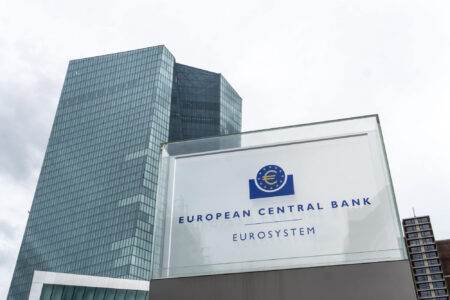
    These concerns are not entirely unfounded. By the end of the year, the European Union aims to further advance its central bank digital currency (CBDC). Such a state-controlled digital currency would allow for complete oversight of all financial transactions. Combined with a ban on privacy coins and the gradual phasing out of cash, this signals a bleak outlook.


    Ray Dalio’s Bridgewater Associates Minds

    Star investor Ray Dalio considers Bitcoin inferior to gold

    18 percent hold crypto assets in Switzerland, an IFZ and LUKB study shows. Banks see potential for up to 1 million advisory clients. Background

    HSLU and LUKB study: 18% of the Swiss population hold crypto assets

    Robinhood Perpetual Futures in Europe now cover commodities and currencies, and the broker plans a crypto launch in the United Kingdom. Financial Products

    Robinhood Perpetual Futures expand to commodities in Europe

    Digital finance transparency relies on Proof of Reserves, Merkle trees, MPC custody and 24/7 monitoring to verify solvency and user assets. Basics

    Transparency as the foundation of security in digital finance

    Ray Dalio’s Bridgewater Associates Minds

    Star investor Ray Dalio considers Bitcoin inferior to gold

    18 percent hold crypto assets in Switzerland, an IFZ and LUKB study shows. Banks see potential for up to 1 million advisory clients. Background

    HSLU and LUKB study: 18% of the Swiss population hold crypto assets

    Adjustments by crypto exchanges

    Some crypto exchanges have already responded to the proposed regulations. Binance initially announced it would delist privacy coins in several European countries, but later reversed this decision following feedback from the community and adjustments to comply with EU regulations.

    Another aspect gaining increasing attention in the current debate is the issue of technological neutrality and the potential chilling effect on open-source development. Critics warn that a blanket ban on privacy coins could criminalize not only users but also developers who are merely working on privacy-enhancing technologies.

    This could lead to developers withdrawing from the EU or relocating their projects to more regulation-friendly regions – potentially undermining Europe’s technological sovereignty. Access to financial privacy, for example in repressive regimes or for journalists and dissidents, could also be unnecessarily restricted by such regulation.

    Share. Facebook Twitter LinkedIn Email Telegram WhatsApp

    About the author

    Editorial Office CVJ.CH
    • Website
    • Twitter
    • LinkedIn

    Since 2018, the editorial team at Crypto Valley Journal has been reporting from Zug - the heart of Switzerland’s Crypto Valley - on Bitcoin, cryptocurrency, blockchain, and regulatory developments in digital assets. Behind the publication’s collective editorial voice is a team of writers with backgrounds in financial markets, law, and technology.

    Related Articles

    Six Swiss crypto service providers secured MiCA authorization. AMINA was the world's first; Sygnum and Bitcoin Suisse followed later.

    Swiss crypto service providers secure MiCA licenses

    The Clarity Act delay is intensifying: Galaxy Research cut the odds of a 2026 signing to 50%, while Polymarket now prices them at just 39%.

    Window missed: Clarity Act faces delay until 2030

    Financial Conduct Authority (FCA)

    FCA cuts stablecoin capital requirement to 1 percent

    Russia's Sberbank plans a crypto wallet in its apps by December 2026, once the digital asset law takes effect in September.
    6. July 2026

    Russia’s Sberbank plans crypto wallet by December

    Strategy sold 3,588 Bitcoin for 216 million USD to finance its preferred dividends for STRC & Co. - the largest sale to date.
    6. July 2026

    Strategy sells USD 216 million in Bitcoin for preferred dividends

    German savings and cooperative banks bring crypto trading for retail customers directly into the banking app, under BaFin MiCAR approval.
    5. July 2026

    German savings and cooperative banks open up crypto trading

    twitter image button instagram image button linkedin image button youtube image button

    About Crypto Valley Journal
    About Crypto Valley Journal

    On the pulse of the movement

    • Academy
    • Contact
    • Advertising
    • About us
    • Partner
    • Imprint
    • Privacy
    • Disclaimer
    Search

    Type above and press Enter to search. Press Esc to cancel.