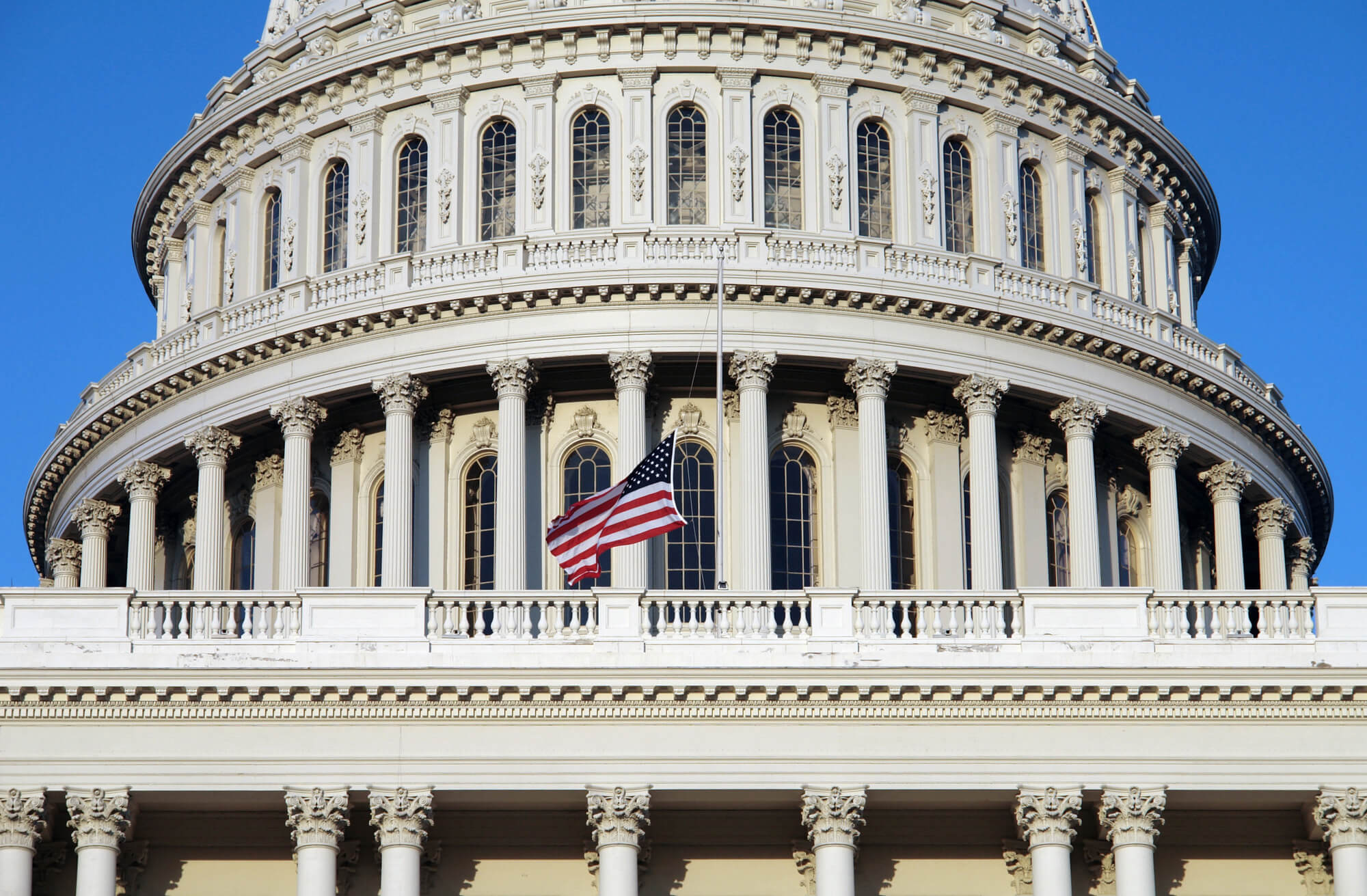
On 15 April 2026, the CLARITY Act disappeared from the daily session calendar of the US Senate. As a result, the market structure bill still lacks a markup date in the Senate Banking Committee. The compromise formula on the contested stablecoin yield question, however, has been in place since March.
In July 2025, the House of Representatives passed the bill (H.R. 3633) by 294 to 134 votes. Since then, it has been stuck in the Senate. This is because the banking lobby and parts of the crypto industry continue to disagree over the design of the yield rules for stablecoins. On 14 April, Chairman Tim Scott named three remaining obstacles: the stablecoin yield language, DeFi provisions, and intra-party unity among Republicans on the committee.
Compromise formula separates passive interest from activity-based rewards
On 22 March 2026, Senators Thom Tillis (R-NC) and Angela Alsobrooks (D-MD) officially confirmed their agreement. The core element: the rule prohibits passive yield, meaning interest earned solely by holding stablecoins. Activity-based rewards for payments, transfers, and platform use, by contrast, remain permitted.
The legal text explicitly bars digital asset service providers from offering yield, directly or indirectly, on stablecoin balances. Exchanges, brokers, and affiliated companies fall under this scope. Moreover, the ban covers all arrangements that are economically or functionally equivalent to bank interest. The text also explicitly excludes circumvention attempts via subsidiaries.
In addition, the SEC, CFTC, and US Treasury receive a joint mandate. Within twelve months of enactment, they must define permissible reward structures and issue anti-circumvention rules. As a result, the formula closes the previously open regulatory grey area without destroying payment processor business models. The Senate talks with crypto representatives took place behind closed doors on 23 March. One day later, the banks reviewed the same draft text.
White House refutes banking lobby on credit arguments
On 8 April 2026, the White House Council of Economic Advisers published a quantitative analysis of the yield debate. The result runs against the position of the banking associations. A yield ban would increase bank lending by only 2.1 billion USD, which corresponds to 0.02% of total lending volume. At the same time, consumer costs of 800 million USD would arise. The cost-benefit ratio therefore stands at 6.6.
Even in the worst-case scenario, a yield ban would raise bank lending by merely 531 billion USD, or 4.4%. This scenario assumes that the stablecoin market grows to six times its current size. For community banks, the effect is far smaller: 500 million USD, equivalent to 0.026%. Nevertheless, the banking associations dispute the figures and insist on the risk of deposit outflows.
In an opinion piece on 9 April, Treasury Secretary Scott Bessent followed up and described the CLARITY Act as a matter of national security. One day later, Coinbase CEO Brian Armstrong executed a notable reversal and now publicly supports the bill. Notably, the banking lobby maintains its opposition despite the robust CEA figures. Administrative and industry signals, meanwhile, clearly push for passage.



Time pressure before the midterms shapes the political calculation
The legislative process is under acute time pressure. Senator Bernie Moreno stated that the bill must reach the full Senate by May at the latest. Otherwise, conflicts with the campaign calendar of the 2026 midterm elections loom. Therefore, 25 April 2026 now counts as the critical deadline. If the markup fails by then, the CLARITY Act is effectively dead for the current year.
Passage in the Senate requires 60 votes because the cloture threshold applies. Bipartisan support therefore remains strictly necessary. Consequently, the window narrows even further. Ripple CEO Brad Garlinghouse shifted his forecast for the passage date from April to late May 2026.
"This is our last chance to pass the CLARITY Act at least until 2030." - Senator Cynthia Lummis, US Senate
The GENIUS Act, the stablecoin-specific law with its own yield ban for issuers, already received the presidential signature in July 2025. The CLARITY Act, by contrast, regulates the broader market structure and distinguishes between digital commodities under CFTC oversight and investment contracts under SEC oversight. This jurisdictional dispute, open for years, makes the bill the central framework for US crypto regulation. As a next step, Senator Tillis must publish the revised legal text. After that, a 48-hour waiting period applies before Chairman Scott can announce a markup date for 24 or 25 April.