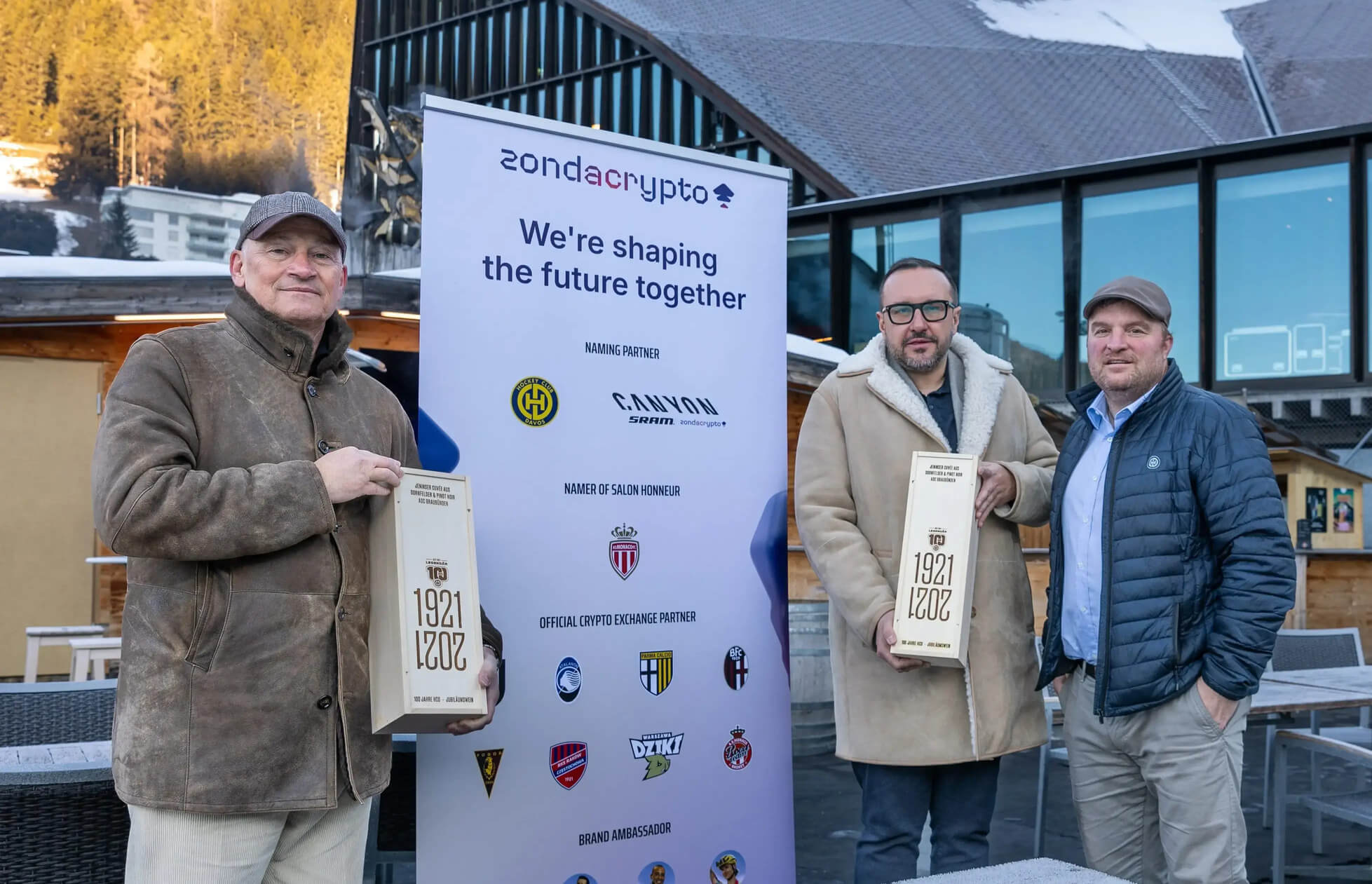
The entire supervisory board of BB Trade Estonia OÜ, the company operating Zondacrypto, resigned this week. Veronika Togo, Guido Bühler and Georgi Džaniašvili filed their resignations independently. Subsequently, they released a joint statement.
In it, they accuse management of systematic misinformation and a collapse of governance fundamentals. According to its own figures, Zondacrypto ranks among the largest crypto exchanges in Central Europe, with more than one million users. However, the Swiss connection makes the case particularly explosive. Bühler is co-founder and former CEO of Zug-based SEBA Bank, now Amina Bank. Moreover, Zug-based Divisio Holding AG holds the stakes in the Estonian operating company. In addition, the HC Davos stadium has carried the name "zondacrypto-Arena" for roughly a year. As a result, the reputational damage in Switzerland is noticeable.
Governance failure amid concentrated power
The joint statement from the three supervisory board members is unusually direct. It identifies "material inconsistencies between certain public statements, operational reality and the information previously provided to the supervisory board". In other words, the company's public disclosures did not align with operational reality or with information communicated internally.
Moreover, the statement identifies the concentration of ownership and operational leadership in a single person as the structural core problem. Specifically, the reference is to CEO Przemysław Kral.
"In a governance structure where ownership and operational leadership are concentrated in a single person, effective oversight requires transparency, timely communication and mutual trust. Unfortunately, this foundation has been materially undermined." - Veronika Togo, Guido Bühler, Georgi Džaniašvili
The supervisory board members did not learn of the crisis through internal channels, but from the Polish press. The statement puts it soberly: "The supervisory board first became aware of the situation through public sources, after it began to escalate in Polish media - not through timely internal communication." Furthermore, the three members emphasise that they had made their previous decisions in good faith. For example, they relied on audit reports, MiCA-related regulatory processes and regular exchanges with management.
Hot wallets nearly drained
The operational reality referenced in the statement appears in an analysis by Recoveris, a Zug-based blockchain forensics firm. According to that analysis, Zondacrypto still held 55.7 BTC in its known Bitcoin hot wallets in August 2024. By March 2026, that balance had shrunk to 0.18 BTC. Furthermore, on 1 April 2026 only around 0.07 BTC remained. As a result, that is a decline of 99.7 percent within 20 months.
In addition, Recoveris documented 511 transactions to wallets at the Kraken exchange between December 2025 and April 2026. The total volume reached around 21 million USD. Therefore, the analysts describe the process as a "systematic draining of reserves". CEO Kral does point to cold-wallet holdings of more than 4,500 BTC. However, he has so far been unable to substantiate these figures. According to media reports, he conceded that he has no access to one of the relevant wallets. Finance magazine tippinpoint reported on the matter first in Switzerland.
At the same time, user complaints about outstanding withdrawals have mounted since December 2025. For example, customers reported transactions that remained in "pending" status for hours or even days. Consequently, the allegation now stands that customer balances can no longer be served in a timely manner. In addition, the Polish public prosecutor's office has opened an investigation.



Swiss prominence and Polish politics
Until now, Zondacrypto positioned itself as a compliant European crypto company. The company operated with a Swiss holding structure and a prominent advisory board. Bühler joined as a non-executive director in October 2023. Moreover, he was to be responsible for strategic oversight, regulatory compliance and global market development. He had left SEBA Bank unexpectedly in March 2022. Before that, he sat on the board of UBS Investment Bank. As a result, his name gave the supervisory board additional weight in the European crypto scene.
Furthermore, Zondacrypto built visibility through sports sponsorship. For example, the company partnered with Juventus FC, Atalanta BC and AS Monaco Basket. In addition, it secured the naming rights to the HC Davos stadium roughly a year ago. HCD president Gaudenz Domenig called the deal a "stroke of luck" at the time. However, CEO Marc Gianola stated that he had no knowledge of any liquidity problems. Therefore, for the Swiss sports sector, the reputational damage is immediate.
Politically, the case becomes particularly sensitive because of the link to Polish crypto regulation. Poland has not yet fully implemented the EU MiCA regulation. This delay occurred because then-president Karol Nawrocki twice vetoed the corresponding legislation. His justification was that the requirements were "excessively restrictive". Meanwhile, Prime Minister Donald Tusk now accuses Zondacrypto of having financed parliamentarians who spoke out against a MiCA implementation.