Close Menu
Crypto Valley Journal
    Facebook X (Twitter) Instagram
    Crypto Valley Journal
    • Hot Topics
      • News
      • Minds
    • Focus
      • Background
      • Blockchain
      • Legal & Compliance
      • Non-Fungible Token (NFTs)
    • Investing
      • Markets
      • Financial Products
      • Decentralized Finance (DeFi)
      • Exchange overview
    • Education
      • Basics
      • Glossary
      • Politicians on crypto
    • Statistics
      • Bitcoin-ETF-Flows
      • Ethereum-ETF-Flows
      • Crypto market data
      • On-chain data
    • Academy
      • Overview
      • Part 1: Blockchain
      • Part 2: Money
      • Part 3: Bitcoin
      • Part 4: Cryptocurrencies
      • Part 5: Decentralized Finance
      • Part 6: Investing
    • English
      • Deutsch
    Crypto Valley Journal
    You are at:Home » Hot Topics » News » PostFinance expands crypto offering to 22 digital assets
    PostFinance expands crypto offering to 22 digital assets

    PostFinance expands crypto offering to 22 digital assets

    By Editorial Office CVJ.CH on 19. February 2026 News

    PostFinance has expanded its crypto offering by six additional digital currencies. As of February 17, 2026, customers can trade Algorand (ALGO), Arbitrum (ARB), NEAR Protocol (NEAR), Stellar (XLM), USDC, and SUI via E-Finance and the PostFinance App. In total, the offering now comprises 22 cryptocurrencies.

    Demand since the launch in February 2024 speaks for itself. Customers opened more than 36,000 crypto custody accounts and executed over 565,000 trades, according to the bank. PostFinance was the first systemically important Swiss bank to offer its customers direct access to cryptocurrencies in 2024. With roughly 2.5 million customers, the institution reaches about a third of the Swiss population.

    Subscribe to our newsletter

    The best articles of the week, directly delivered into your mailbox.

    From 11 to 22 assets in two years

    This expansion follows a clear trajectory. In February 2024, PostFinance launched with 11 cryptocurrencies, including Bitcoin and Ethereum. Five more were added in July 2024. Subsequently, the bank introduced Ethereum staking in January 2025. Now comes the largest expansion yet, with six new additions.

    The inclusion of USDC stands out. PostFinance is adding a stablecoin to its lineup for the first time. USDC tracks the US dollar, allowing customers to hold a digital dollar position without direct price volatility. Meanwhile, the other five additions are Layer-1 and Layer-2 protocols with different technical focuses. Specifically, Algorand and Stellar focus on payment infrastructure, NEAR and SUI on scalable smart contracts, and Arbitrum on Ethereum scaling.

    The minimum investment remains at 50 US dollars. Crypto savings plans work analogously to fund savings plans, and trading runs around the clock. For custody and technical infrastructure, PostFinance partners with FINMA-regulated crypto bank Sygnum.

    "Our customers want to trade cryptocurrencies with their trusted primary bank. That is exactly what we deliver, and we are consistently investing in further expanding our offering." - Dr. Alexander Thoma, Head of Digital Assets, PostFinance


    Ray Dalio’s Bridgewater Associates Minds

    Star investor Ray Dalio considers Bitcoin inferior to gold

    A Reuters analysis estimates the Trump family's crypto gains at $2.3 billion, while investors incurred book losses of the same amount. Background

    Trump family earns $2.3 billion from crypto projects

    VanEck lists VBNB, the first US spot BNB ETF on Nasdaq. Sponsor fee 0.39%, custody at Anchorage Digital, no staking at launch. Financial Products

    VanEck launches first US BNB ETF (VBNB) on Nasdaq

    Digital finance transparency relies on Proof of Reserves, Merkle trees, MPC custody and 24/7 monitoring to verify solvency and user assets. Basics

    Transparency as the foundation of security in digital finance

    Ray Dalio’s Bridgewater Associates Minds

    Star investor Ray Dalio considers Bitcoin inferior to gold

    A Reuters analysis estimates the Trump family's crypto gains at $2.3 billion, while investors incurred book losses of the same amount. Background

    Trump family earns $2.3 billion from crypto projects

    Swiss banking market remains divided

    PostFinance's crypto strategy contrasts with the reluctance of other major banks. UBS still does not offer crypto products for retail clients. Julius Baer does provide direct token investments and access via ETPs, but targets wealthy clients. Swissquote and Dukascopy cater more to trading-oriented users. Neobank Yuh also offers crypto trading with a 1 percent fee.

    PostFinance thus occupies a specific niche in regulated crypto trading for the mass market. A minimum entry of 50 US dollars, integration into the existing banking app, and the trust of a state-controlled bank appeal to customers. Those wanting to try cryptocurrencies do not need to register with specialized crypto exchanges. In total, 36,000 opened custody accounts among 2.5 million customers represent a penetration rate of just under 1.5 percent. For a product that has been on the market for only two years, this signals solid growth potential.

    Retail customers prefer XRP over Ethereum

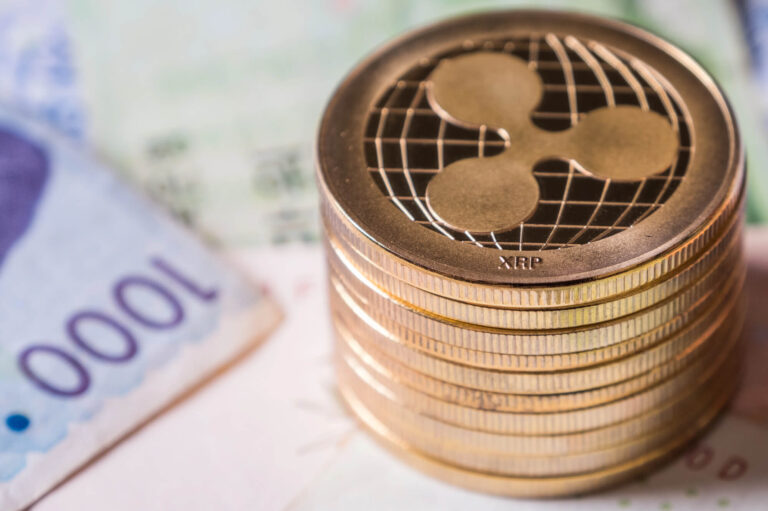
    The trading distribution so far provides revealing insights into the behavior of Swiss retail customers. Bitcoin dominates with 35 percent of all trades. Second place goes not to Ethereum but to Ripple (XRP) at 23 percent. Ethereum comes in at just 11 percent.

    Among PostFinance customers, XRP is twice as popular as Ethereum. This diverges significantly from institutional portfolios, where Bitcoin and Ethereum typically dominate. For retail customers, lower unit prices (unit bias) and media attention play a bigger role. XRP benefits from a particularly active community in the German-speaking region.


    Share. Facebook Twitter LinkedIn Email Telegram WhatsApp

    About the author

    Editorial Office CVJ.CH
    • Website
    • Twitter
    • LinkedIn

    Since 2018, the editorial team at Crypto Valley Journal has been reporting from Zug - the heart of Switzerland’s Crypto Valley - on Bitcoin, cryptocurrency, blockchain, and regulatory developments in digital assets. Behind the publication’s collective editorial voice is a team of writers with backgrounds in financial markets, law, and technology.

    Related Articles

    Visa, Mastercard, Stripe and Coinbase are planning a stablecoin consortium - a direct attack on Circle's USDC.

    Visa and Mastercard plan stablecoin consortium

    XRP Ledger 3.2.0 renames the core software rippled to xrpld. Node operators must update; the release is planned for around 15 June.

    XRP upgrade: Version 3.2.0 changes naming convention

    JPMorgan urges Strategy to rebuild its dollar reserves after the first Bitcoin sale since 2022 and grades digital assets as cautious.

    JPMorgan: Strategy (MSTR) must build up dollar reserves

    A Reuters analysis estimates the Trump family's crypto gains at $2.3 billion, while investors incurred book losses of the same amount.
    9. June 2026

    Trump family earns $2.3 billion from crypto projects

    IC3 researchers refute three central promises of the AI and blockchain market narrative in a 155-page survey on crypto and AI.
    9. June 2026

    The synergy between AI and blockchain is overstated

    Visa, Mastercard, Stripe and Coinbase are planning a stablecoin consortium - a direct attack on Circle's USDC.
    9. June 2026

    Visa and Mastercard plan stablecoin consortium

    twitter image button instagram image button linkedin image button youtube image button

    About Crypto Valley Journal
    About Crypto Valley Journal

    On the pulse of the movement

    • Academy
    • Contact
    • Advertising
    • About us
    • Partner
    • Imprint
    • Privacy
    • Disclaimer
    Search

    Type above and press Enter to search. Press Esc to cancel.