While some jurisdictions remain resistant to blockchain technology and the associated digital assets, other countries are developing necessary regulations to foster innovation. Here's an overview of crypto regulation in the United States, Asia, the EU, and Switzerland.
The increasingly stringent regulatory environment for crypto companies in the United States has been making headlines for several months. With the Securities and Exchange Commission (SEC) taking the lead, US authorities are actively targeting companies without first establishing a legal precedent. The result is a high level of uncertainty for companies, investors, and consumers. It's no surprise that leading US players like Coinbase are now looking for alternatives internationally. But what does crypto regulation look like globa lly?
US Regulation: A complex patchwork
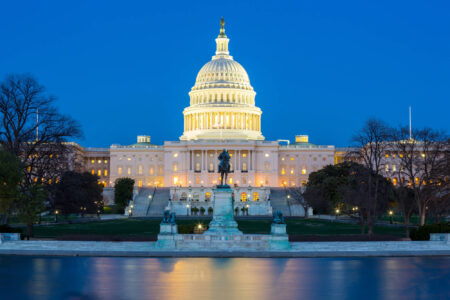
Regulating cryptocurrencies in the United States has taken a convoluted path due to the involvement of multiple regulatory agencies. In 2013, the Financial Crimes Enforcement Network (FinCEN) first issued guidelines classifying exchanges and virtual currency administrators as money services businesses. The Securities and Exchange Commission (SEC) made significant progress in 2017 by stating that certain initial coin offerings (ICOs) could be considered securities offerings. That same year, the Commodity Futures Trading Commission (CFTC) classified Bitcoin as a commodity and began overseeing Bitcoin futures trading. The Internal Revenue Service (IRS) also chimed in, declaring that virtual currencies would be treated as property for tax purposes. However, a federal-level framework was never established.
To further complicate matters, some agencies like the SEC act unilaterally. Instead of setting clear guidelines, the agency employs a strategy known as "regulation by enforcement," where it takes legal action against companies it believes fall within its jurisdiction. Unfortunately, this approach has resulted in legal battles with some of the largest cryptocurrency companies in the United States. The SEC has been unable to prevent any of the billion-dollar bankruptcies that occurred last year. This harsh crypto policy by the SEC has faced criticism not only from industry representatives but also from Hester Peirce, one of the five SEC commissioners, who criticized the agency for aggressively expanding its regulatory scope in a detailed blog post. This view was supported by the US Chamber of Commerce, the world's largest business association, in a court statement.
While President Biden introduced an initial comprehensive crypto regulation approach in March 2022 through an executive order, the tone has since become more severe following the FTX debacle at the end of last year. Signs of creating a legal framework are no longer apparent. Instead, both parties are politicizing the issue with opposing bills, while some Democratic presidential candidates have explicitly targeted the crypto industry as part of their campaigns.
Asia equally divided
As expected, there is no consensus on crypto regulations in Asia, the largest continent divided into 51 countries. Different legal systems have chosen different approaches to cryptocurrencies, leading to a diverse regulatory landscape in the region. China, in particular, has taken an extremely strict stance by imposing a comprehensive ban on most cryptocurrency activities, including trading and mining. This ban aligns with China's goal of controlling capital outflows and maintaining domestic financial stability. In contrast, financial jurisdictions like Singapore have opted for a more nuanced approach, implementing regulations for risk mitigation while allowing room for innovation.
However, the strong crackdown on cryptocurrencies by US regulatory authorities has influenced China's stance. In February, the Hong Kong Special Administrative Region announced a reopening to the crypto industry. According to Bloomberg, some experts speculate that China is using Hong Kong as a testing ground to relax cryptocurrency regulations, with the intention of reintroducing crypto services on the mainland in the future.
The United Arab Emirates (UAE) is also increasingly offering support to the industry. In particular, the hotspot Dubai has made its ambitions clear in shaping the future of virtual assets. The city-state established the legal framework with the enactment of a crypto law and regulatory authority called the Dubai Virtual Assets Regulatory Authority (VARA). This prompted some of the largest trading exchanges to open subsidiaries in the region.
Legal certainty in the EU with MiCA
Crypto regulation in the European Union has also been gradually evolving over the years. Before 2019, there was no comprehensive framework for regulating cryptocurrencies at the EU level. Member states pursued varying approaches, ranging from strict regulation to more liberal policies. However, the lack of uniformity and the increasing importance of cryptocurrencies raised concerns about potential risks, including money laundering and terrorism financing. In response to these concerns, the EU began discussions on the "Markets in Crypto Assets" (MiCA) framework in 2019. The aim was to establish clear rules and protective measures for crypto assets across the European Economic Area.




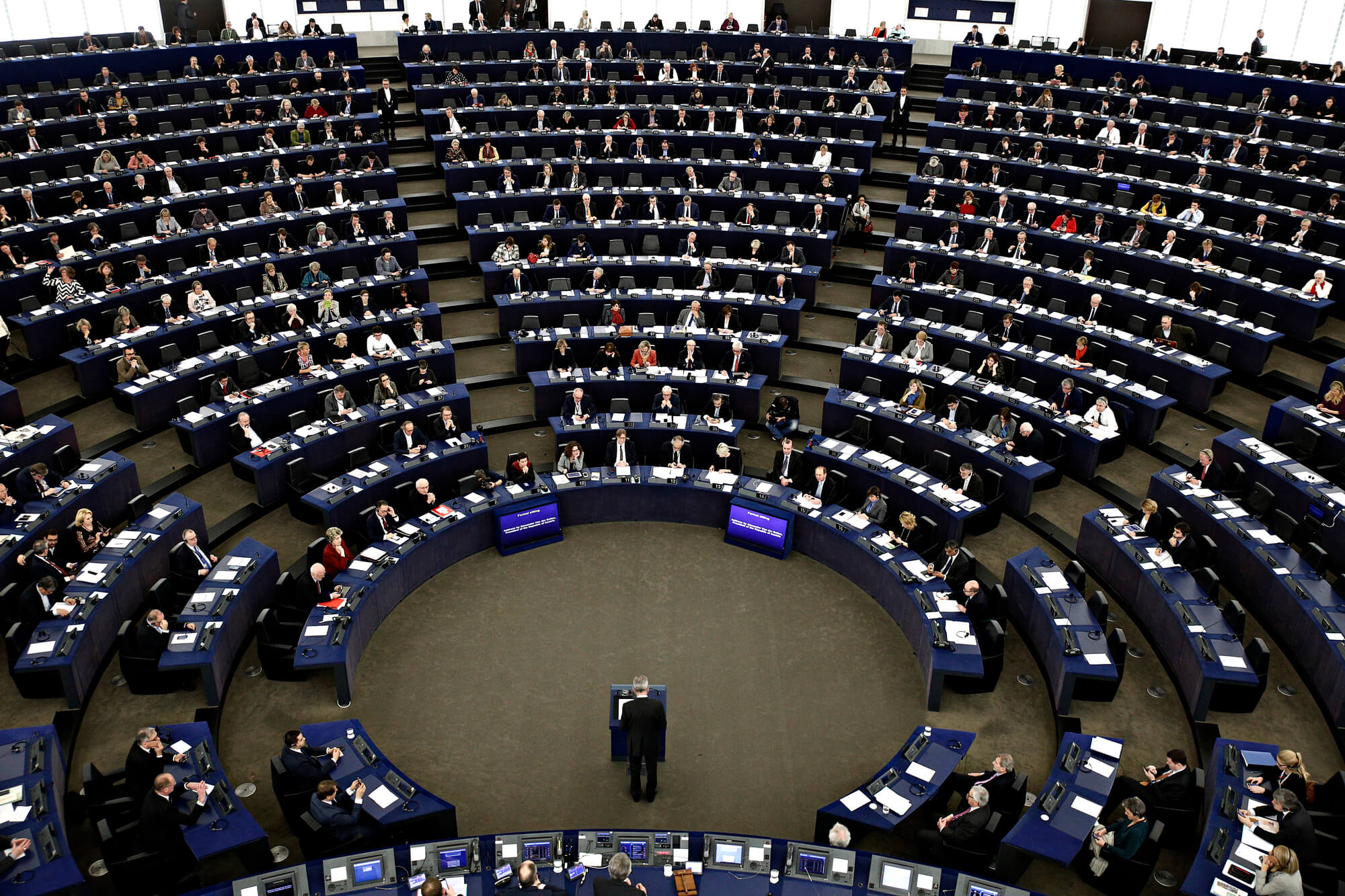
After four years of intense debates in the EU Parliament, the framework was finally adopted a few weeks ago, marking a significant step forward for the European crypto industry. MiCA creates comprehensive regulatory conditions that foster innovation and security. The framework requires all crypto service providers to obtain authorization while setting standards for operations, structure, and issuance of digital assets. The majority of the regulation will come into effect in January 2025, although certain provisions for stablecoins will apply from mid-2024.
While MiCA represents significant progress towards cryptocurrency regulation, there are aspects of the 400-page document that have been questioned by various crypto actors. For example, Patrick Breyer, a member of the European Parliament, interprets the Money Transfer Regulation (TFR) as a ban on anonymous payments and donations. Additionally, the current framework does not consider decentralized finance applications (DeFi), cryptocurrency loans, or staking. Furthermore, MiCA lacks provisions for non-fungible tokens (NFTs).
Switzerland as a safe haven?
Thanks to its policies and regulations, Switzerland has been able to establish the necessary legal certainty for a thriving ecosystem around blockchain and cryptocurrencies. The regulator has been active since 2015, which is considered early in the blockchain field on an international level. The Swiss Financial Market Supervisory Authority (FINMA) first published ICO guidelines and later issued banking licenses. Over the years, the region, known as the "Crypto Valley," has attracted new company formations and witnessed continuous development. Co-working spaces in Zurich and Zug have flourished, and the University of Basel, followed by ETH Zurich, have attracted programmers crucial to the advancement of blockchain technology.
As a groundbreaking example, the Swiss Distributed Ledger Technology (DLT) Act laid the groundwork for other jurisdictions seeking to adopt similar approaches. The framework is designed as an umbrella ordinance, making selective adjustments to a total of ten federal laws. In particular, the Swiss Civil Code introduced the concept of registered rights, providing a robust legal basis for the digitization or tokenization of assets (rights) such as shares, bonds, and other financial assets and their transfer. Such comprehensive regulation for crypto activities is not duplicated elsewhere internationally.