In the constantly evolving world of cryptocurrencies, the emergence of Ordinals has ushered in a new era for Bitcoin miners while also causing dissatisfaction among users due to increased fees. Here's an overview of the phenomenon.
Bitcoin, the mother of all cryptocurrencies, has undergone a significant change in its fee structure due to the emergence of Ordinals. Originally used as a protocol for storing images on the blockchain (NFTs), Ordinals technology quickly evolved. Today, it is also possible to create so-called "BRC20 tokens." These developments have led to transaction fees on Bitcoin exceeding mining rewards for the first time in years, a phenomenon that has sparked both excitement and controversy in the crypto community.
The emergence of Ordinal's NFTs
Ordinals have proven to be an exciting development in the Bitcoin network. Bitcoin-based NFTs have introduced a new way of interacting with the oldest blockchain. Unlike traditional transactions, users can now inscribe (or "Inscription" in English) images and other media types into newly mined blocks using Ordinals. This has opened up entirely new possibilities for users, as they can now use the Bitcoin blockchain for more than just peer-to-peer money transactions.
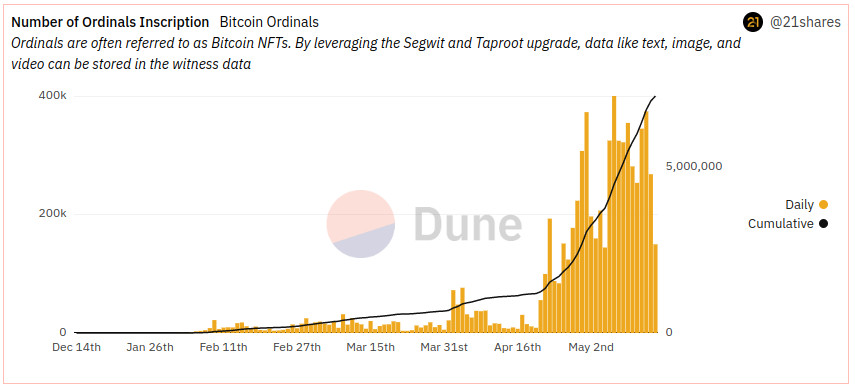
Since their introduction in mid-December 2022, Ordinals have experienced rapid growth. Hundreds of thousands of new files are being inscribed into the Bitcoin blockchain daily, demonstrating their increasing popularity. This surge in activity has resulted in Ordinals regularly occupying more than 50% of the Bitcoin block space, signifying a significant shift in network usage.
The evolution to the BRC-20 standard
The initial implementation of Ordinals had some limitations. The protocol was still in its early stages, and there were technical challenges to overcome. Eventually, the possibility of multimedia inscription was made possible by Taproot and the creativity of the programming artist Casey Rodarmor. Along with a previous upgrade to the blockchain, size restrictions on data in transactions were relaxed. However, the original process of inscribing data into the blockchain was not as efficient as it could be, and the associated transaction fees were relatively high.
In response to these challenges, the Bitcoin community developed the BRC20 standard. It was designed to improve the efficiency of NFT transactions on the Bitcoin network and make it easier and more cost-effective for users to inscribe data into the blockchain. The BRC20 standard introduced several key improvements over the original Ordinals protocol. Firstly, the process of inscribing data into the blockchain was streamlined, making it faster and more efficient. Additionally, a fairer fee structure was introduced to make NFT transactions more affordable for users.
The impact on transaction fees
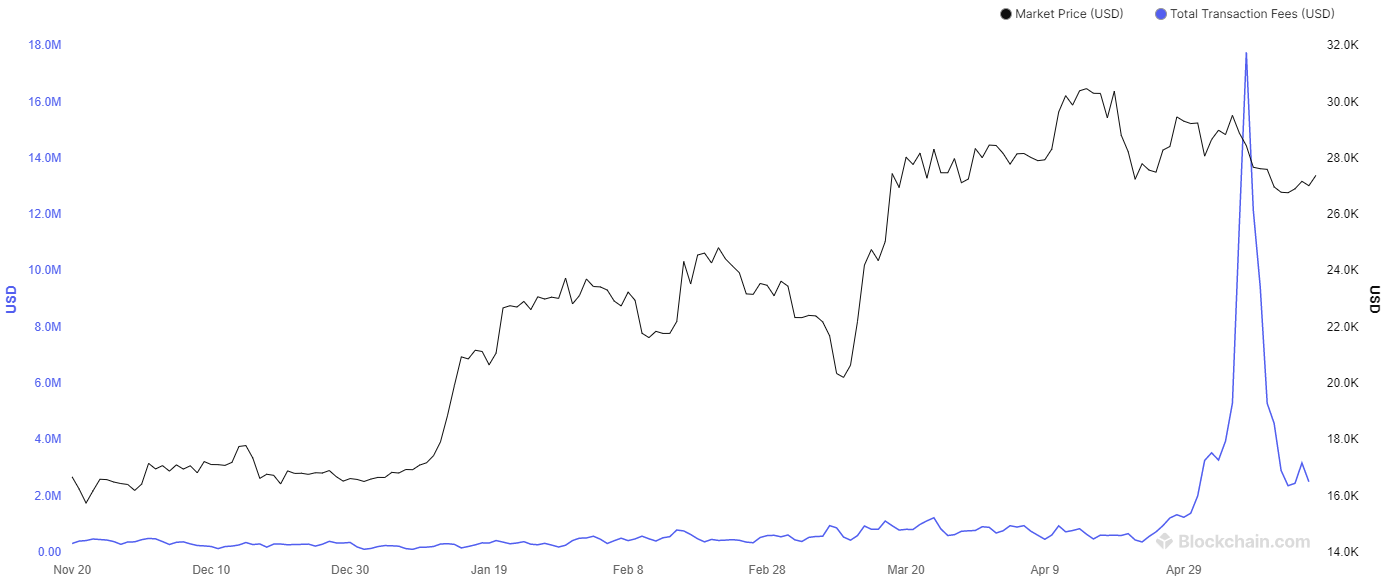
The success of Ordinals has had a profound impact on transaction fees within the Bitcoin network. As users inscribe more and more files into the blockchain, the fees associated with these transactions have skyrocketed. At one point, the daily fees paid to miners reached a record-breaking sum of $17 million. This significant increase in fees has been a boon for miners, allowing them to significantly increase their earnings. However, it has also raised concerns about the affordability of transactions for users, particularly those conducting smaller transactions.
The shift in transaction patterns
The introduction of Ordinals has also resulted in a noticeable shift in transaction patterns within the Bitcoin network. There has been a significant increase in transactions with lower values, likely due to users utilizing Ordinals to inscribe data into the blockchain. These transactions typically involve smaller amounts compared to traditional money transfers.
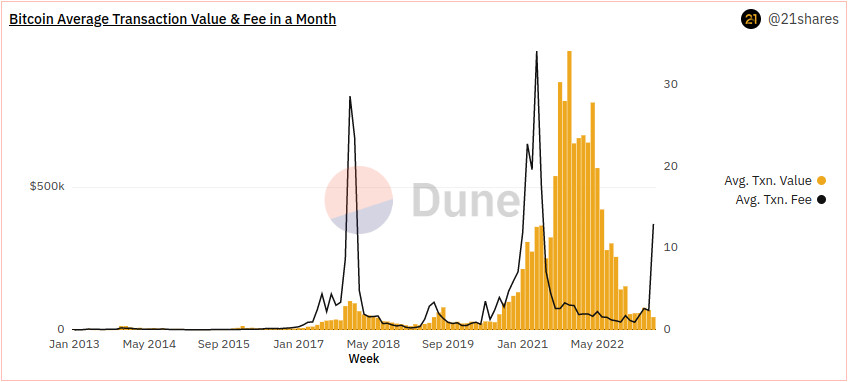
This shift in transaction patterns could have far-reaching implications for the Bitcoin network. As more users embrace Ordinals, there could be a further increase in smaller transactions, leading to a subsequent rise in transaction fees. This development will be crucial as the Bitcoin network continues to evolve.
Increase in bitcoin transaction volume
In addition to the increase in transaction fees and active addresses, there has been a significant rise in transaction volume within the Bitcoin network. Transaction volume refers to the number of Bitcoin transactions conducted within a specific period. In 2023, the average transaction volume has reached approximately 350,000 transactions per day.
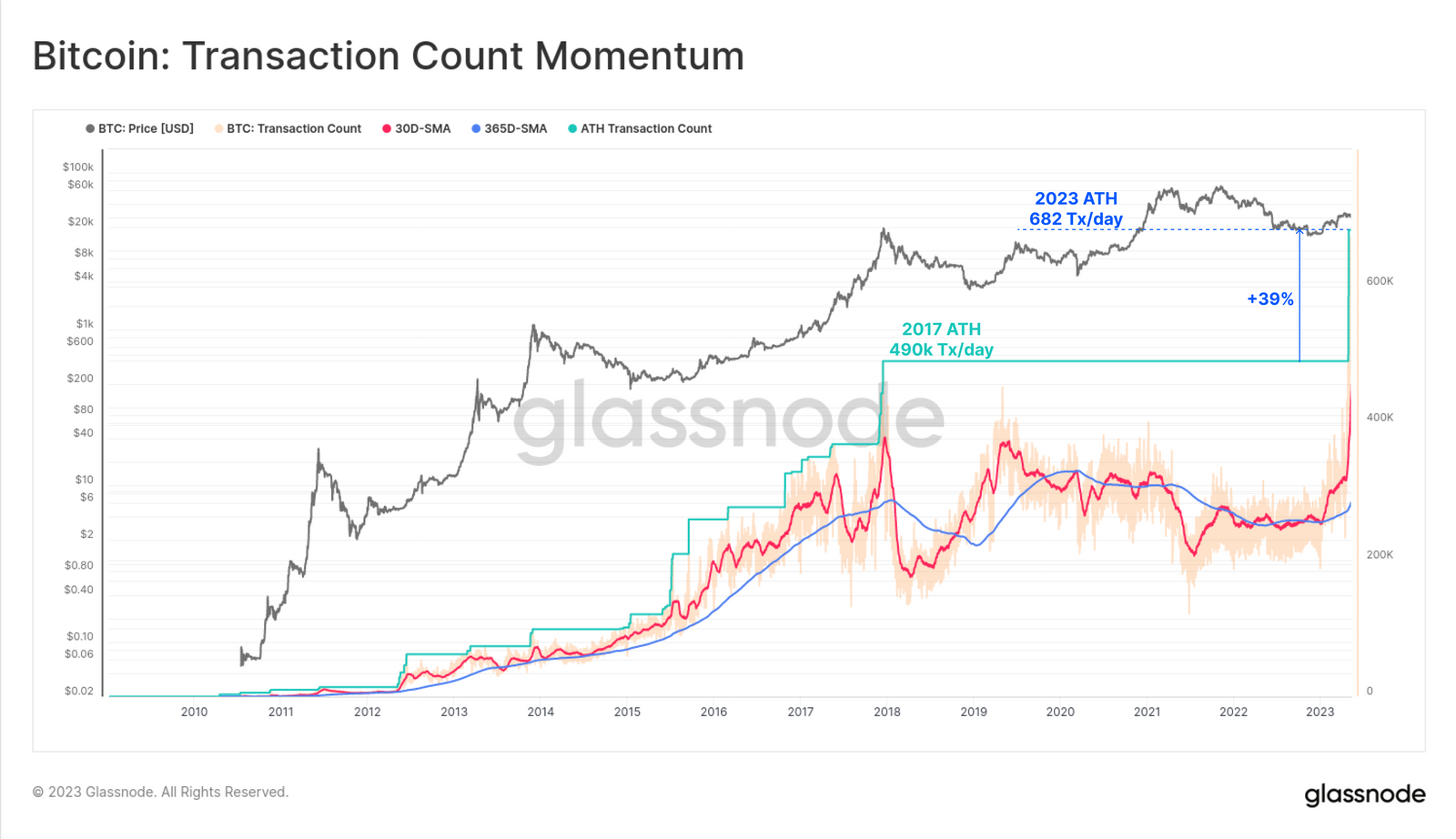
The average number of transactions per block has more than doubled, increasing from the typical starting value of about 2,000 transactions per block to over 4,300 per block. Since Bitcoin has a block size limitation, such a significant increase in transaction numbers is a direct result of inscriptions taking advantage of SegWit's 75% discount, allowing for denser utilization of available block capacity.
Ordinals: Blessing and Curse
The growth in active addresses and transaction volume is a positive sign for the Bitcoin network. It indicates a larger and more active user base, which is crucial for the network's health and longevity. Additionally, Bitcoin miners are the backbone of the network, validating new transactions and adding them to the Bitcoin blockchain. The introduction and success of Ordinals have created a new source of revenue for miners. They are now earning significant income from fees associated with the creation and trading of Ordinals. This creates new incentives for securing the network beyond the inflationary block rewards, indirectly strengthening the security of the Bitcoin network.
However, this blessing for miners has become a curse for many users. The high transaction fees, a direct consequence of the demand for Ordinals, have become a point of contention. It has become increasingly expensive for regular users to transact on the Bitcoin network. The costs associated with opening Lightning channels, a Layer 2 solution designed to enable faster and cheaper Bitcoin transactions, have also skyrocketed. This has made it unaffordable for many users, especially those conducting smaller transactions.
Everyday payments in Bitcoin have become almost impossible. The Ordinals innovation, therefore, presents a dichotomy. On one hand, it is a significant breakthrough that has improved the profitability of Bitcoin mining, a crucial aspect for maintaining the security and functionality of the Bitcoin network. On the other hand, it has raised barriers for users, making Bitcoin transactions more expensive and less accessible for everyday use. Whether this dynamic can prevail in the long term remains to be seen.