
What has been happening this week in the world of blockchain and cryptocurrencies? Current events and background reports in our weekly review.
Selected articles of the week:
The industry’s most prominent Bitcoin buyer is reversing course for the first time in years. Michael Saylor’s treasury company Strategy, formerly MicroStrategy, sold 32 Bitcoin for around USD 2.5 million – its first strategic sale since December 2022. The move came during an already weak trading week and added further to the selling pressure in the Bitcoin market. The proceeds cover dividend obligations on several preferred stock series, making the sale structurally driven rather than a departure from accumulation. Saylor stresses that for every Bitcoin sold, Strategy buys ten to twenty more. At 843,706 BTC, total holdings remain above four percent of the maximum supply. Even so, the company is sitting on paper losses: the first quarter of 2026 closed with a net loss of USD 12.54 billion, driven by USD 14.46 billion in unrealized Bitcoin losses. MSTR shares fell around six percent in pre-market trading after the announcement.

Strategy sells Bitcoin for the first time since December 2022, 32 BTC for USD 2.5 million to fund its preferred stock dividend obligations.
Crypto venture capital falls to a five-year low in May
The weakness extends beyond prices into the sector’s funding base. In May 2026, the industry counted around 50 VC deals, the lowest level since 2020. April still saw 62 deals worth over USD 660 million, and March 84 deals worth over USD 2.5 billion. The apparent stability of the total capital is misleading: the Series F round of prediction market Kalshi alone, worth USD 1 billion, props up the statistics. The number of active investors is also collapsing, with only around 600 crypto VCs still active, the lowest figure in three years. Beyond price weakness, the main reason also lies outside the sector: in the first quarter of 2026, USD 297 billion flowed into venture capital worldwide, 81 percent of it into AI startups. The crypto industry is increasingly competing for capital that artificial intelligence is absorbing.

Crypto VC deals fell to around 50 in May 2026, a five-year low. Mega-rounds like Kalshi’s Series F keep the dollar volume elevated.
Four major US banks plan a network for tokenized deposits
While treasury firms and venture capital come under pressure, the established banking world is advancing deeper into tokenization. JPMorgan, Citigroup, Bank of America, and Wells Fargo are jointly planning a network for tokenized bank deposits, operated through The Clearing House. Founded in 1853, the payments company is owned by 24 of the largest US banks and processes just under USD 2 trillion daily, around half of all commercial payment transactions in the country. The launch is planned for the first half of 2027, and a blockchain provider has not yet been determined. The system promises instant settlement, 24/7 liquidity, and cross-border payments. The driving force is the pressure from stablecoins such as USDC and USDT, which are pulling corporate deposits out of the regulated banking system. The GENIUS Act of July 2025 explicitly exempts tokenized deposits from the stablecoin framework, giving banks room of their own.

JPMorgan, Citi, Bank of America and Wells Fargo plan a network for tokenized deposits from 2027, operated by The Clearing House.
Bessent presses the Senate on the Clarity Act
On the regulatory front, Washington is picking up the pace. US Treasury Secretary Scott Bessent called on the Senate to pass the Clarity Act before the summer. The federal framework law would, for the first time, clearly separate the CFTC and the SEC: the CFTC would oversee the spot markets for digital commodities, the SEC the investment contract assets. The House of Representatives approved a version in 2025, and the Senate Banking Committee voted 15 to 9 in favor on 14 May 2026. On the floor, however, votes are still missing: 60 are needed, meaning at least seven more Democrats, and only around eight weeks of Senate calendar remain. Bessent also pointed to the US Bitcoin reserve of 328,372 BTC, about 1.6 percent of all Bitcoin ever created. Earlier sales cost the state over USD 17 billion in forgone gains. Stablecoin yields, DeFi sanctions powers, and ethics rules for officials remain contentious.
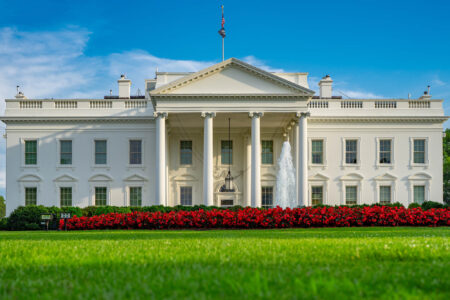
Bessent urges Clarity Act passage by summer and confirms progress on the strategic US Bitcoin reserve, now holding 328,372 BTC.
Shielded Labs discloses a critical Zcash bug
In addition: a critical flaw shook the privacy coin Zcash. Shielded Labs and security engineer Taylor Hornby uncovered a soundness bug in the Orchard pool that theoretically allowed unlimited ZEC to be counterfeited. The flaw had existed since the pool’s activation in May 2022 and went undetected for around four years, despite audits by world-class cryptographers. Invalid transactions appeared valid, and the privacy properties would have made the counterfeiting invisible. The ZEC price fell from over USD 600 to around USD 300, a 50% drop within two days. The discovery itself is notable: Hornby found the bug with his own AI audit framework based on Claude Opus 4.8, one day after its release. The flaw was fixed within five days via an emergency soft fork and the NU6.2 hard fork. Going forward, turnstile accounting is intended to ensure independent supply verification.

The Zcash Orchard bug went undetected for four years and theoretically allowed unlimited ZEC counterfeiting. The price crashes by over 40%.