Close Menu
Crypto Valley Journal
    Facebook X (Twitter) Instagram
    Crypto Valley Journal
    • Hot Topics
      • News
      • Minds
    • Focus
      • Background
      • Blockchain
      • Legal & Compliance
      • Non-Fungible Token (NFTs)
    • Investing
      • Markets
      • Financial Products
      • Decentralized Finance (DeFi)
      • Exchange overview
    • Education
      • Basics
      • Glossary
      • Politicians on crypto
    • Statistics
      • Bitcoin-ETF-Flows
      • Ethereum-ETF-Flows
      • Crypto market data
      • On-chain data
    • Academy
      • Overview
      • Part 1: Blockchain
      • Part 2: Money
      • Part 3: Bitcoin
      • Part 4: Cryptocurrencies
      • Part 5: Decentralized Finance
      • Part 6: Investing
    • English
      • Deutsch
    Crypto Valley Journal
    You are at:Home » Focus » Background » Ordinals: NFTs on the bitcoin blockchain
    Ordinals: NFTs auf der Bitcoin-Blockchain

    Ordinals: NFTs on the bitcoin blockchain

    By Editorial Office CVJ.CH on 22. February 2023 Background

    An unexpected event in Bitcoin history led to a new and sustained demand for Bitcoin block space. Inscriptions directly on the Bitcoin blockchain enable the creation of digital artefacts called ordinals; a new type of NFT.

    In recent weeks, the permanent and immutable inscription of non-monetary data directly onto the Bitcoin blockchain has become an unexpected trend. The "ordinals" Bitcoin NFTs led to discussions and debates about the implications of this application of the Bitcoin network. Eventually, blocks of the most secure decentralised network were rapidly filled with NFT transactions, slowing down normal transactions.

    Ordinals: an unexpected side effect of the Taproot upgrade

    Long-time Bitcoiner and programming artist Casey Rodarmor found a way to create a kind of NFT on the Bitcoin network in January 2023. He did so by using the recent Taproot upgrade for Bitcoin to store image data more efficiently. Taproot, along with an earlier upgrade to the blockchain, relaxed the size restrictions on data in transactions. This made it easier to store arbitrary data in it, as long as the transaction fit in a block. SegWit introduced a split data structure for Bitcoin transactions, which both improved the efficiency of transaction data and increased the design space for Bitcoin scripts (e.g. for the Lightning network).

    Casey, the developer of the Ordinals, used the upgrades to convert old OP codes into so-called "envelopes" and to store arbitrary data in an inscription. Each inscription on Bitcoin is called a "digital artefact" because it is complete in itself and decentralised. The ordinal is a unique identifier associated with a sequence of assets. In doing so, it is possible to create an infinite number of assets that are all associated with the same ordinal. This is a significant difference from traditional NFTs, which are typically used to represent a unique, one-of-a-kind asset.


    Ray Dalio’s Bridgewater Associates Minds

    Star investor Ray Dalio considers Bitcoin inferior to gold

    Most crypto cards hide who issues them. After mapping the licensed issuers, here is why Switzerland's self-issuing model reads differently. Background

    The bank you never chose: who really issues Switzerland’s crypto cards

    Robinhood Perpetual Futures in Europe now cover commodities and currencies, and the broker plans a crypto launch in the United Kingdom. Financial Products

    Robinhood Perpetual Futures expand to commodities in Europe

    Digital finance transparency relies on Proof of Reserves, Merkle trees, MPC custody and 24/7 monitoring to verify solvency and user assets. Basics

    Transparency as the foundation of security in digital finance

    Ray Dalio’s Bridgewater Associates Minds

    Star investor Ray Dalio considers Bitcoin inferior to gold

    Most crypto cards hide who issues them. After mapping the licensed issuers, here is why Switzerland's self-issuing model reads differently. Background

    The bank you never chose: who really issues Switzerland’s crypto cards

    Bitcoin NFTs are different from Ethereum images

    An inscription consists of a content type known as MIME as well as the content itself, which takes the form of a byte string. This allows content to be returned from a web server and direct HTML content to be created that uses and displays the inscriptions. The data stored on the Bitcoin blockchain thus ranges from images to audio clips to a minimalised version of the video game Doom.
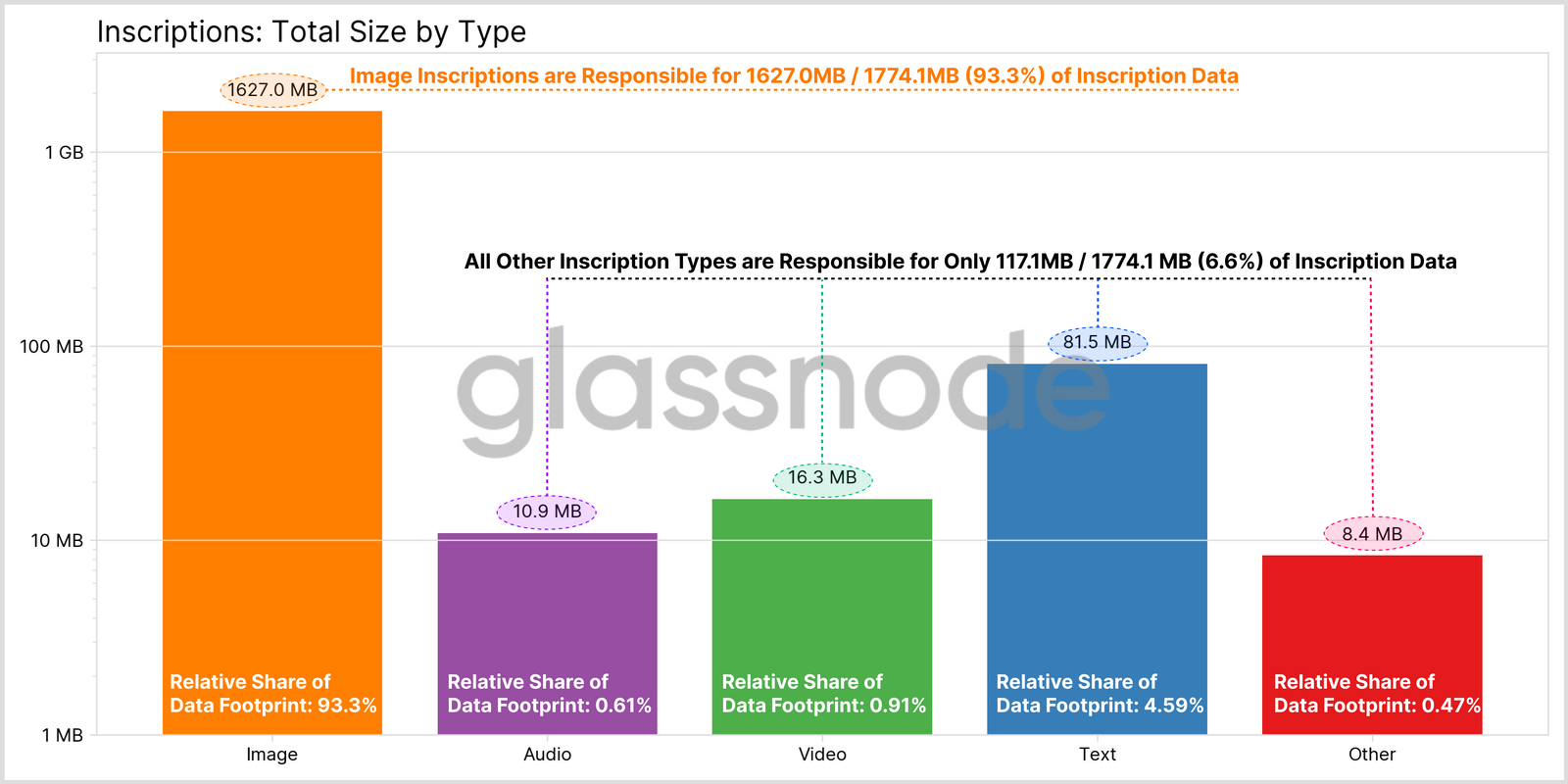
    Multimedia data on the Bitcoin blockchain / Source: Glassnode

    The Ordinal Theory Handbook argues that Bitcoin inscriptions are superior to Ethereum NFTs. Ordinals are immutable and the content is stored entirely on the blockchain. This differs from most NFTs, whose metadata can be changed or even deleted by the creator. ERC721 tokens on Ethereum often signal ownership of associated metadata, which is usually stored outside the blockchain (IPFS).

    Bitcoin blocks are filled with ordinals

    Bitcoin block space refers to the limited amount of available space on each block in the Bitcoin network. Blocks are collections of Bitcoin transactions added to the blockchain by miners who are rewarded for their efforts with newly created Bitcoin. As the block space fills up with data, this can lead to slower confirmation times and higher transaction fees. This is because miners prioritise transactions with higher fees. So users may have to pay more to get their transactions processed quickly.
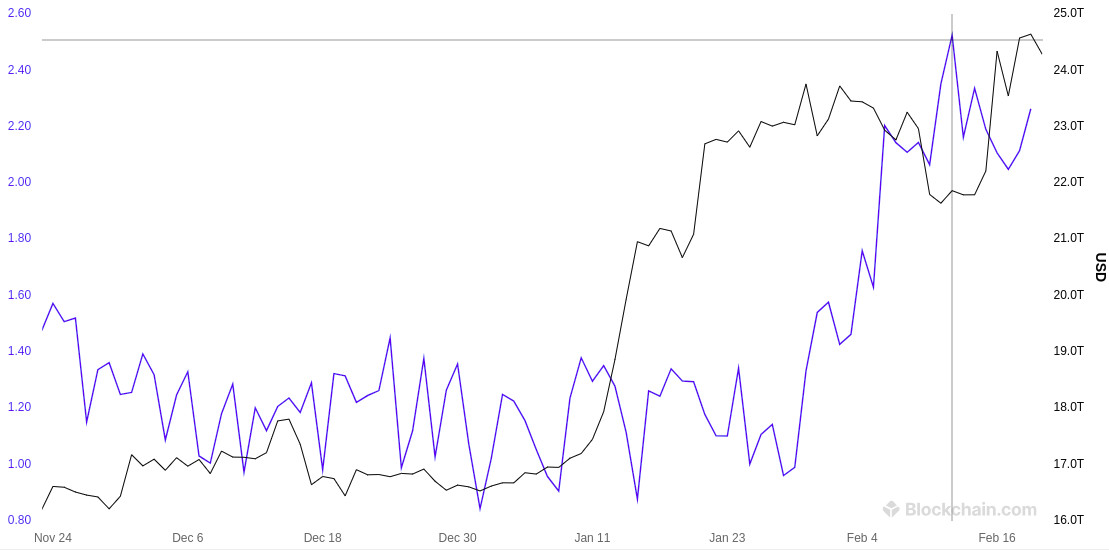
    alltimehight bitcoin blocksize
    Doubling of the average block size / Source:  Blockchain.info

    Since its launch in January 2023, over 150,000 ordinals have been created, although the creation and display of "Bitcoin NFTs" is anything but easy for everyday users. Driven by enthusiasm for the new use case of the decentralised network, the average Bitcoin block size thus exceeded 2MB for the first time.

    Subscribe to our newsletter

    The best articles of the week, directly delivered into your mailbox.

    Wasted block space or new mining revenue?

    Ordinals have led to a gradual congestion of the mempool and are exerting ongoing pressure on network fees. So far, however, this pressure is mainly affecting competition in the lowest fee ranges (for example, lightning channels). So there are no clear signs yet that bitcoin NFTs are "crowding out" monetary transactions. So far, only the lowest fee limit for inclusion in a block is being raised slightly. Still a thorn in the side for some Bitcoiners.

    i retracted/deleted that as it was stupid and getting misinterpreted see here. https://t.co/fv0AfrPUMH

    — Adam Back (@adam3us) January 30, 2023

    Defenders of Ordinals NFTs argue that new competition for Bitcoin block space could create better incentives for miners. Finally, the Bitcoin subsidy - the amount of Bitcoin a miner receives for successfully "mining" a data block - is halved every 210,000 blocks (about four years). Higher transaction fees would make this process worthwhile despite steadily declining inflation, a central feature of Bitcoin.


    Share. Facebook Twitter LinkedIn Email Telegram WhatsApp

    About the author

    Editorial Office CVJ.CH
    • Website
    • Twitter
    • LinkedIn

    Since 2018, the editorial team at Crypto Valley Journal has been reporting from Zug - the heart of Switzerland’s Crypto Valley - on Bitcoin, cryptocurrency, blockchain, and regulatory developments in digital assets. Behind the publication’s collective editorial voice is a team of writers with backgrounds in financial markets, law, and technology.

    Related Articles

    JPMorgan ranks Strategy's sales below the bigger Bitcoin risk and names tokenization beyond public chains as the real threat.

    JPMorgan sees biggest Bitcoin risk beyond Strategy

    Germany's federal cabinet plans to scrap the one-year Bitcoin holding period and tax private crypto gains at 26.375% regardless of duration.

    Germany plans to scrap its one-year Bitcoin holding period

    Most crypto cards hide who issues them. After mapping the licensed issuers, here is why Switzerland's self-issuing model reads differently.

    The bank you never chose: who really issues Switzerland’s crypto cards

    Robinhood Chain gathered roughly USD 3.1 billion in DEX volume in its first week and now ranks among the five largest chains, according to Bernstein.
    14. July 2026

    Robinhood Chain enters top five chains by DEX volume

    A field hearing in New York aims to push the CLARITY Act through the US Senate before the summer recess. Here is what is at stake.
    13. July 2026

    July 17: House hearing aims to push the CLARITY Act through the Senate

    The DOJ dropped its USD 722 million BitClub Ponzi case against Goettsche just before trial, after two Trump-linked lawyers intervened.
    13. July 2026

    DOJ drops charges against BitClub founder Goettsche

    twitter image button instagram image button linkedin image button youtube image button

    About Crypto Valley Journal
    About Crypto Valley Journal

    On the pulse of the movement

    • Academy
    • Contact
    • Advertising
    • About us
    • Partner
    • Imprint
    • Privacy
    • Disclaimer
    Search

    Type above and press Enter to search. Press Esc to cancel.