A Reuters analysis puts the Trump family crypto gains from four projects at roughly USD 2.3 billion, against startup costs that finance professors estimate at near zero. Over the same period, investors in those same projects suffered paper losses of roughly USD 2.3 billion as well.
The analysis by Tom Bergin draws on thousands of pages of filings, blockchain data from Chainalysis, and interviews with more than a dozen advisers and academics. In addition, four finance professors, two CPAs, and one accounting professor reviewed the figures. The analysis covers four ventures: World Liberty Financial (WLFI), the TRUMP meme coin, the Nasdaq-listed fintech ALT5 Sigma, and American Bitcoin Corp. These four projects launched between September 2024 and 2025 or received substantial backing during that time. The Trump family holds stakes in each project. For ALT5 Sigma and American Bitcoin, it acquired them at zero monetary cost according to filings. WLFI represents the largest single item, with more than USD 1.4 billion for the Trumps, followed by the TRUMP meme coin at an estimated USD 616 million. For that token alone, investors face more than USD 700 million in paper losses.
WLFI: How a governance token generated USD 1.4 billion
World Liberty Financial launched in September 2024. Its founders include Zachary Folkman, Chase Herro, Alex and Zach Witkoff, as well as members of the Trump family. A Trump entity holds 60% of the company and is also entitled to 75% of net token sale proceeds. Donald Trump carries the title "Chief Crypto Advocate," while Eric Trump and Donald Trump Jr. take part in active management. Overall, the sale of 30 billion governance tokens brought in roughly USD 1.4 billion. Of that, about USD 987 million flowed directly to the Trumps, including USD 538 million from a deal with ALT5 Sigma.
A filing from October 2025 under EU regulation showed 3 billion fewer tokens than the amount publicly stated the previous month. Notably, WLFI spoke in a September post about tokens "set aside" to meet demand, yet did not disclose a sale. Two academics and two advisers consider a sale likely. Measured against the weighted average price, that would amount to at least USD 460 million in additional revenue. As a result, the Trump revenue from WLFI adds up to more than USD 1.4 billion, the largest single item in the overall estimate. According to the professors consulted, the estimated startup costs for WLFI and TRUMP combined likely came in below USD 1 million.
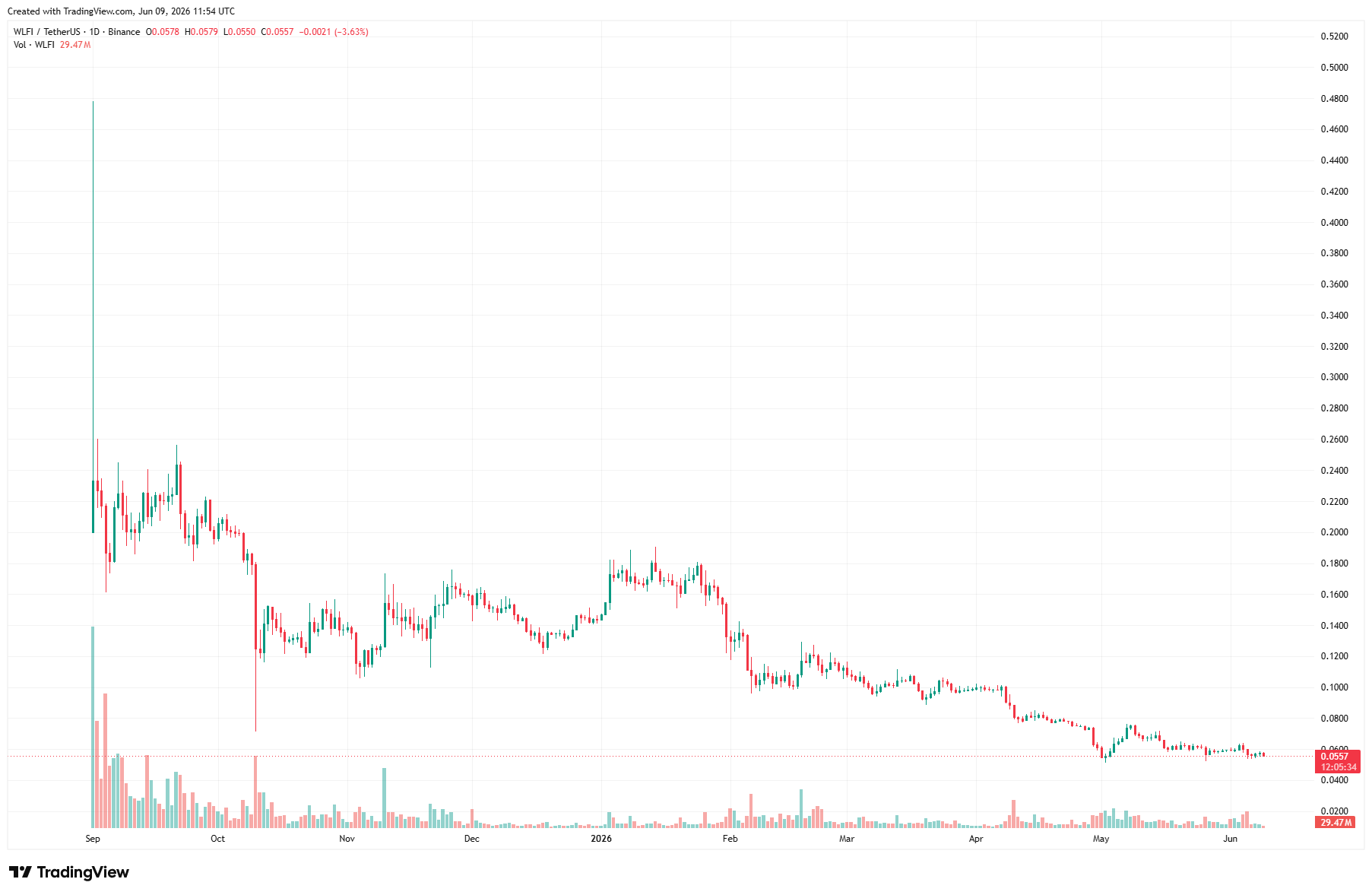
On the other side stand roughly USD 674 million in investor paper losses. Early buyers paid 1.5 or 5 cents per token, yet they cannot sell 80% of their holdings. Consequently, non-transferable assets currently carry a value of zero, according to Nathan Goldman of NC State University and CFA Mark Zyla. The price now trades at USD 0.056, after peaking at USD 0.46 in September 2025. That marks a decline of roughly 88%.
TRUMP meme coin: early traders win, retail investors lose
The TRUMP meme coin launched in January 2025 on the Solana blockchain and reached an all-time high near USD 73 two days later. Official revenue disclosure is missing, which is why Reuters turned to blockchain data. Movements to exchanges point to sales of more than USD 880 million. With additional channels, the outlet estimates total revenue at roughly USD 1.2 billion. From this, the Trumps received an estimated USD 616 million, a share that could be higher under an arrangement similar to WLFI.
Buyers collectively spent at least USD 1.2 billion. As of the end of April 2026, however, their holdings were worth only USD 521 million at a price of USD 2.38, resulting in a paper loss of more than USD 700 million. Moreover, a Chainalysis analysis shows that a small number of large early traders realized gains, while hundreds of thousands of retail investors lost out. The asymmetry thus mirrors the pattern at WLFI: those who got in early and at scale profited, while the broad mass bore the losses.
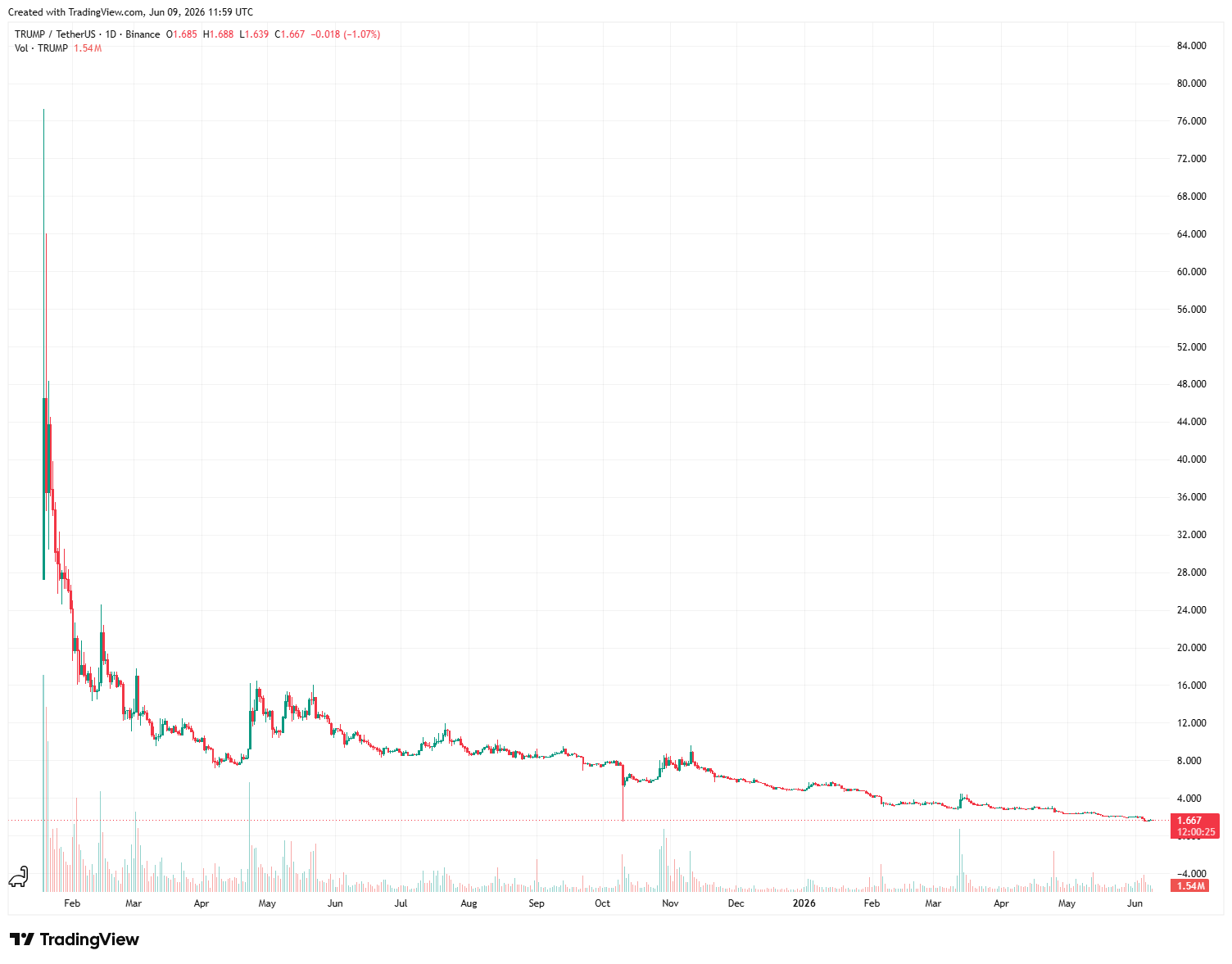
Structurally, the selling pressure continues. Each day, roughly 900,000 tokens worth about USD 2 million enter circulation from founder and community allocations. At the same time, only 237.4 million of the maximum of roughly 1 billion tokens are circulating, just over a quarter. The price stands at USD 1.67, a drop of well over 84% within a year.


ALT5 Sigma and American Bitcoin: stakes at zero cost
ALT5 Sigma, then listed under the ticker ALTS, bought WLFI tokens worth USD 717 million. More than USD 500 million of that flowed to the Trumps via token sales. In August 2025, the fintech also secured a USD 1.5 billion investment to expand its crypto treasury. The share price, however, fell from more than USD 9 in August 2025 to 75 cents at the end of April 2026, handing investors roughly USD 675 million in losses. Finally, the company completed its rebrand to AI Financial Corporation, along with a ticker switch to AIFC, at the end of April 2026.
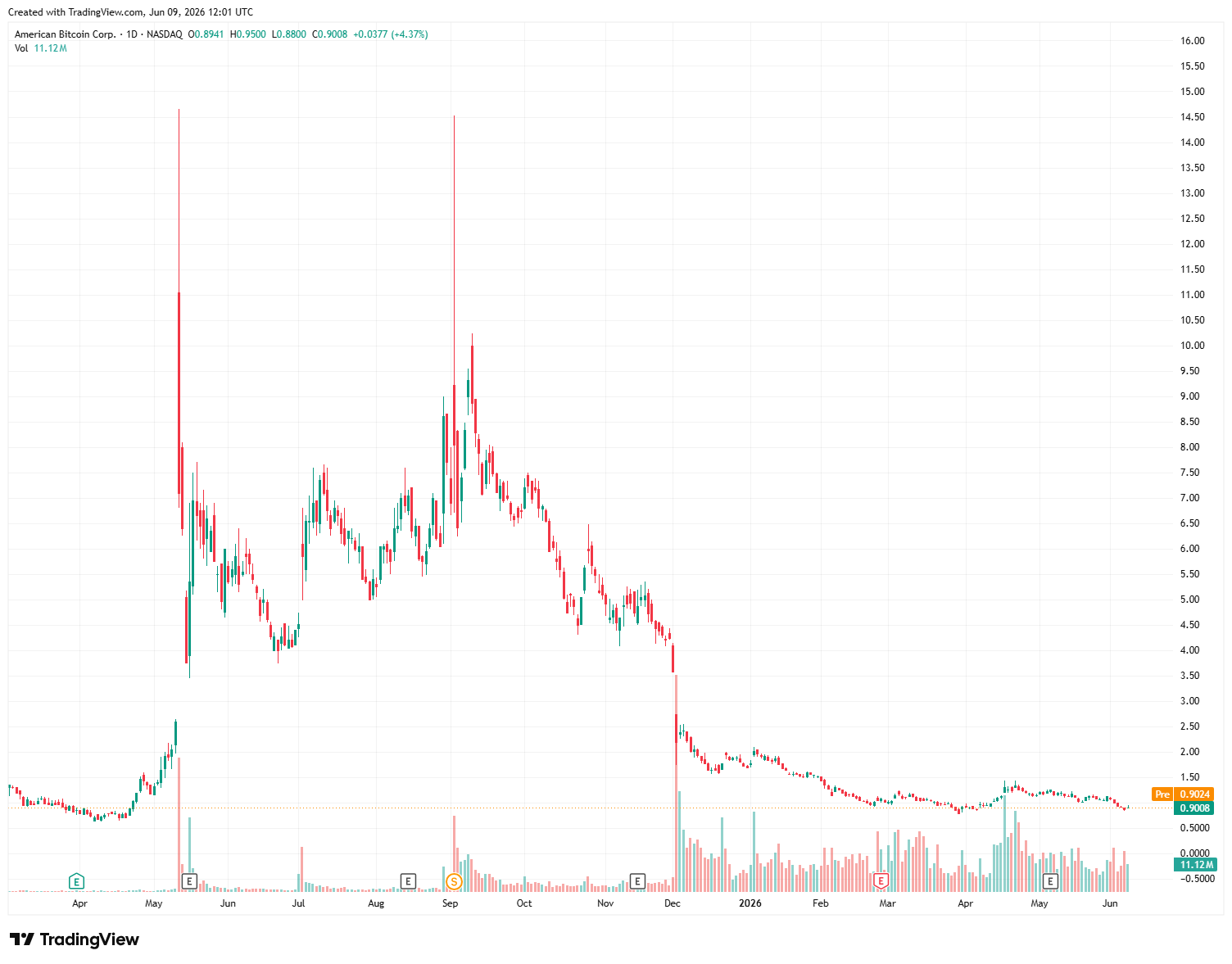
American Bitcoin Corp. emerged from Hut 8 Corp. with 80%, plus an investor group around Eric Trump and Donald Trump Jr. holding a combined 20%. The Nasdaq listing took place in September 2025 via reverse merger under the ticker ABTC. The share opened at roughly USD 6.90, reached USD 13.20, and closed at USD 8.05. By the end of April 2026, however, the price fell to about USD 1.15, costing investors more than USD 200 million in losses. According to filings, the Trump stakes in both companies passed to the family at zero monetary cost. Nevertheless, Eric Trump's stake in American Bitcoin was worth more than USD 70 million at the end of April. Hut 8 also bought WLFI tokens for USD 25 million, of which USD 19 million again went to the Trumps.
Conflict of interest surrounding the Trump family
WLFI's investor base is predominantly international. According to Reuters, 36 of the 50 largest wallets traced back to foreign buyers, who together invested USD 804 million. Furthermore, the Abu Dhabi deal stands out: the investment vehicle MGX of Sheikh Tahnoon bin Zayed Al Nahyan, brother of the UAE president, subscribed to a WLFI tranche for 500 million USD, of which roughly USD 187 million flowed to the Trump family.
Justin Sun, founder of Tron, serves as a concrete case study. Initially, he invested roughly USD 75 million in WLFI and became an adviser. In February 2025, shortly after Trump took office, the SEC dropped its lawsuit against Sun. In September 2025, WLFI froze his wallet, allegedly through an undisclosed blacklisting function in the smart contract. Sun then sued WLFI in April 2026, which responded with a countersuit and accused Sun of shorting the token. Later, the Sun-linked exchange HTX suspended trading of WLFI and USD1 in June 2026.
In the bigger picture, the family's wealth shifted markedly. In the first half of 2025, it earned roughly USD 864 million, seventeen times the USD 51 million of the prior year, with more than 90% stemming from crypto projects. Forbes estimated Trump's total wealth at USD 6.3 billion in April 2026, nearly triple the value from early 2024. Politically, the model carries consequences. Democrats on the House Judiciary Committee released a report describing a "billion-dollar crypto empire of the Trump family," driven by self-dealing and foreign interests. WLFI spokesperson David Wachsman, however, rejected the Reuters methodology and stated that governance tokens are "not an investment product." The analysis, he argued, conflates realized and unrealized losses.