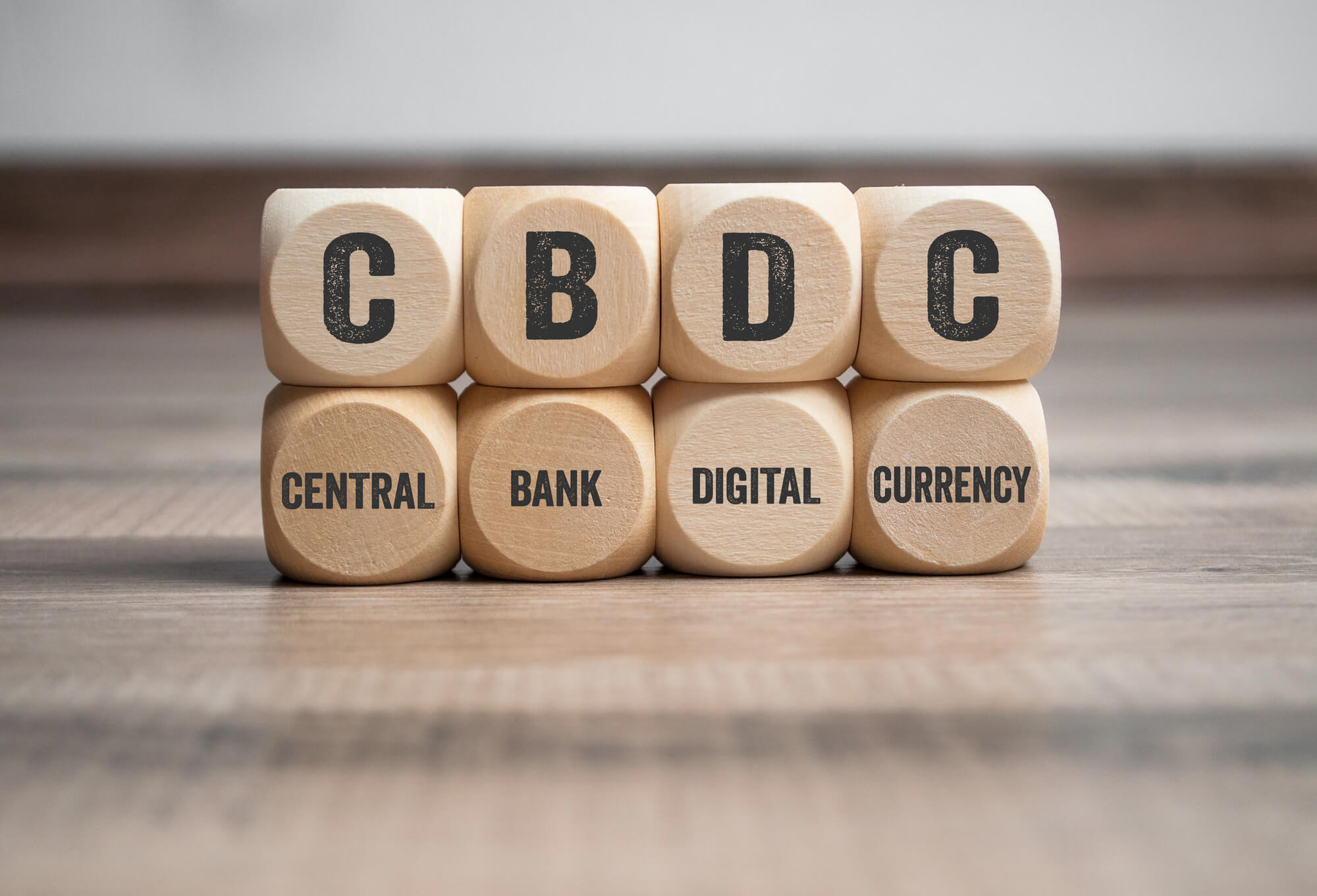
Central Bank Digital Currencies (CBDCs) are state-backed digital means of payment intended to replace cash and modernize central banks – with growing relevance and regulatory momentum expected in 2025. Why do proponents of anti-CBDC legislation want to ban these currencies in the US?
CBDCs are defined as digital versions of sovereign currencies, issued directly by central banks. They exist as retail CBDCs (for individuals) and wholesale CBDCs (between banks/institutional users). Global powers such as China and Nigeria have been running pilot programs for years, while the EU, India, and Brazil are now preparing concrete implementations and legal frameworks. Technologically, CBDCs can be based on traditional digital accounts or blockchain/DLT systems – increasingly framed by regulations like MiCA. They are popular due to faster payments, improved financial inclusion, and more controllable monetary policy, while their implications for privacy, banking stability, and cybersecurity remain under discussion.
CBDC models and current usage
- Retail CBDC: For everyone – individuals and businesses. Variants include direct (central bank accounts), indirect (via banks), or hybrid models. Some countries, such as Nigeria with its e‑Naira (since 2021), have made strong progress – recently reporting a 12-fold increase in active wallets in 2023.
- Wholesale CBDC: Exclusively for financial institutions. Aimed at optimizing interbank payments and securities settlement – often integrated with existing payment networks like TARGET2 in the EU.
Globally, over 80 countries are in the research or pilot phase of CBDC development; more than 15 advanced studies are ongoing. The most advanced include:
- China: Over 260 million e-CNY wallets are active in about 23 cities, using an indirect model via banks.
- Nigeria’s e-Naira follows an inclusion-focused model with a 95% coverage goal according to the CBN, although current penetration stands at around 6%.
- India, Brazil, Russia plan major rollouts within the next 18 months.
Strengths
- Fast, low-cost, with potential for programmability (automated payments).
- “Digital cash” can enhance financial inclusion.
- Government tools for targeted monetary policy and transfer payments.
Drawbacks and risks
- Privacy: Individual transactions could be traceable by central authorities.
- Shift in roles: Banks could lose deposit share, potentially increasing systemic risks.
- Technology & security: Risk of cyberattacks and system outages.
CBDC in Switzerland and the EU
Switzerland has discussed multiple hybrid models and is currently evaluating an offline-capable retail CBDC to complement the digital franc. In the EU, the European Central Bank (ECB), in cooperation with national central banks, is preparing the digital euro – with a focus on data protection, payment security, and interoperability with existing systems like TARGET2 and private banking networks.
Beyond the technological and monetary aspects, CBDCs are gaining importance in geopolitical debates. Countries like China and Russia are increasingly using central bank digital currencies as a strategic tool to reduce their reliance on the US dollar in international payments. At the same time, BRICS nations are exploring joint digital settlement networks. The digital yuan (e-CNY) has already been tested in international trade agreements with Arab partners and in cross-border projects with Hong Kong and Thailand. These developments show that CBDCs are not merely financial technology experiments, but may also shape the future global monetary order.
Concerns are justified
The greatest concerns regarding central bank digital currencies (CBDCs) lie in the fact that they could be fully monitored and tracked by the central bank. Unlike cash, which allows for anonymous transactions, CBDC transactions would leave a permanent digital trace, giving central banks unprecedented access to an individual's spending habits. This could lead to privacy violations, such as targeted advertising, government surveillance, or data breaches if proper safeguards are not in place. Thomas Moser, alternate member of the SNB’s governing board, warned in an interview with CVJ.CH about retail CBDCs.
Additionally, programmable money is a powerful feature of CBDCs that comes with both potential benefits and drawbacks. Essentially, central banks could program their digital currency to automatically perform certain actions. For instance, the creation of smart contracts becomes possible, money flows between parties can be regulated, or restrictions on the use of digital currency could be enforced programmatically. This could be very useful in many ways – automation of financial transactions, cost reduction, efficiency gains, and enhanced transparency are just a few examples.
A potentially controversial use of programmable money involves incentivizing people toward certain behaviors or actions. Governments or central banks could encourage specific spending patterns by offering rewards or benefits through CBDCs. This raises concerns about state control over individual financial decisions. Any use of programmable money for nudging purposes would need to be carefully considered and implemented to avoid unintended consequences or negative impacts on individuals.