
Close Menu
Crypto Valley Journal
    Facebook X (Twitter) Instagram
    Crypto Valley Journal
    • Hot Topics
      • News
      • Minds
    • Focus
      • Background
      • Blockchain
      • Legal & Compliance
      • Non-Fungible Token (NFTs)
    • Investing
      • Markets
      • Financial Products
      • Decentralized Finance (DeFi)
      • Exchange overview
    • Education
      • Basics
      • Glossary
      • Politicians on crypto
    • Statistics
      • Bitcoin-ETF-Flows
      • Ethereum-ETF-Flows
      • Crypto market data
      • On-chain data
    • Academy
      • Overview
      • Part 1: Blockchain
      • Part 2: Money
      • Part 3: Bitcoin
      • Part 4: Cryptocurrencies
      • Part 5: Decentralized Finance
      • Part 6: Investing
    • English
      • Deutsch
    Crypto Valley Journal
    You are at:Home»Focus»Background»Bitcoins moving from exchanges to non-custodial wallets: reasons and potential impact
    Bitcoins moving from exchanges to non-custodial wallets: current and future reasons and potential impact

    Bitcoins moving from exchanges to non-custodial wallets: reasons and potential impact

    By Lucas Betschart on 13. February 2025 Background

    After most significant failures of centralized platforms such as FTX, we could observe a large uptick in Bitcoin withdrawals by users from exchanges. However, there are more factors at play that would support the thesis of a long-term decline of Bitcoin on exchanges.

    Over the last 2 years, Bitcoin exchanges have seen significant withdrawals. The movement from the exchanges to non-custodial wallets represents about 3,09% of the total bitcoin supply. 648,155 BTC (~$64bn) has been moved off exchanges, leaving around 2,638,936 BTC (~$260bn) held on these platforms.
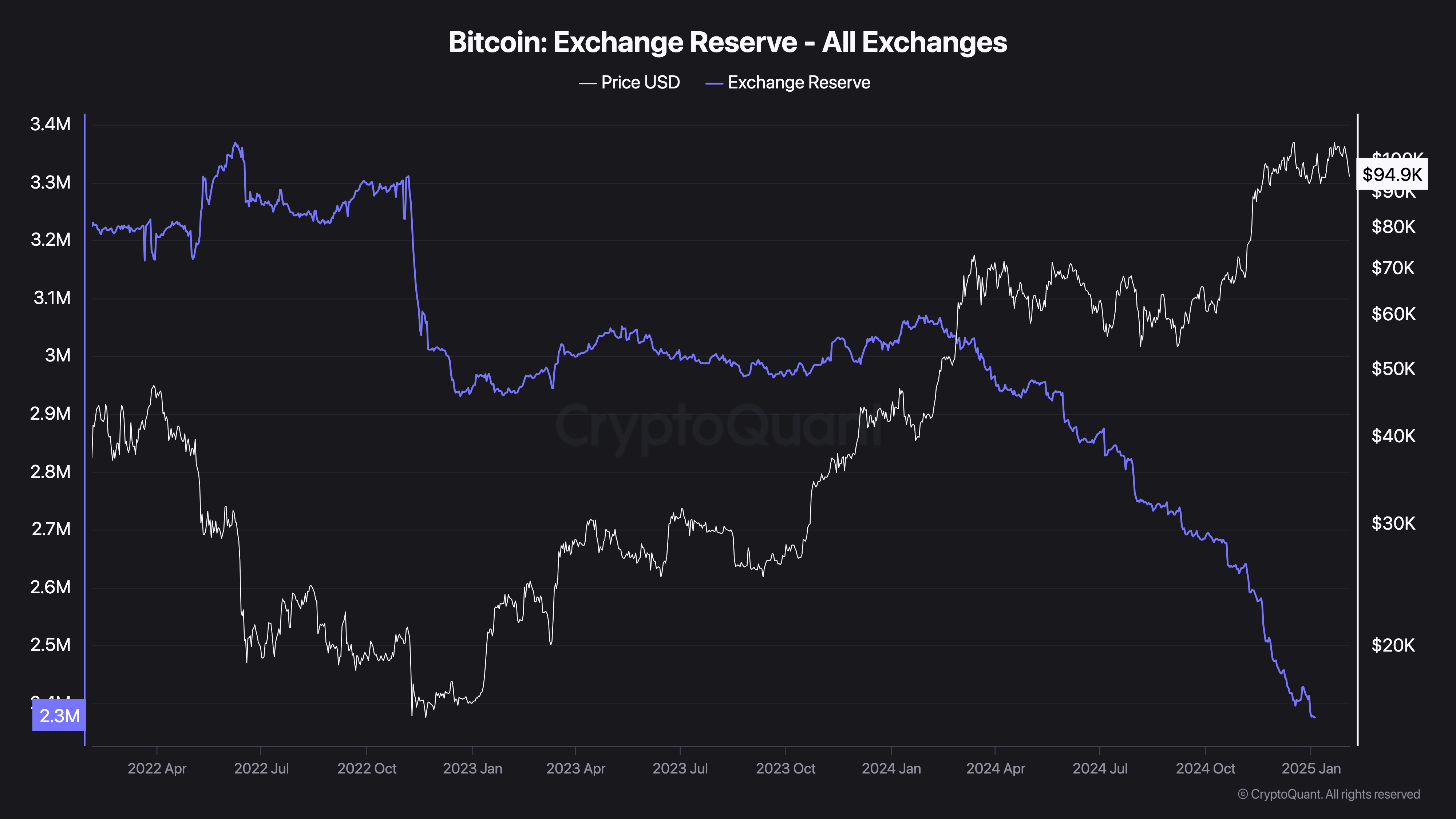
    Amount of Bitcoin on centralized exchanges (January 2025) / Source: CryptoQuant

    We anticipate these withdrawals to non-custodial wallets will further increase due to the following reasons: 

    • Due to the increase in hacks and data breaches, there is an increased lack of trust in exchanges.
    • With the growing implementation of the global FATF Travel Rule regulation, even more Bitcoiners are moving their coins off exchanges as the regulation limits the ability to transact freely.

    Current and future

    Shortly after the Mt.Gox hack in 2014, we saw an increase in non-custodial wallet usage. A repeat of this movement was observed after the FTX debacle, this time prompting novice users to move their coins off-chain. The EU's enforcement of the Travel Rule (also known as the  Transfer of Funds regulation) since January 2025 is creating additional incentives to move bitcoins to non-custodial wallets. We expect those shifts to become visible in on-chain metrics in the first half of 2025.

    This increased movement will be pushed even further with the implementation of the FATF Travel Rule in other regions. Since 2022, more than 10 regions have implemented the Travel Rule. Although the FATF recommendations are defined by a self-selected representative of bureaucrats from mostly OECD countries, some countries are swifter and stricter in implementing and enforcing them than others. 

    The UK, Switzerland and the EU have a particularly strict implementation of the Travel Rule, leaving their local exchanges and customers at a disadvantage over exchanges in less stung countries such as the US. This misalignment leads to further friction, making sending and receiving directly from one exchange to another more difficult, leading people to prefer non-custodial wallets over exchanges.

    Subscribe to our newsletter

    The best articles of the week, directly delivered into your mailbox.

    Potential impact

    This shift of bitcoins from exchanges to non-custodial wallets is reducing liquidity, which could drive long-term value increases. A potential side effect of dealing with self-custody is the permanent loss of bitcoins, which could further reduce the effective total supply. With this movement, we also expect an increased sale of hardware wallets.


    Share. Facebook Twitter LinkedIn Email Telegram WhatsApp

    About the author

    Lucas Betschart
    • Website

    Lucas Betschart is the Founder and COO of 21 Analytics, a software company focusing on privacy-respecting compliance solutions, and 21 Lectures, an education initiative to bring more developers into the Bitcoin industry. Lucas was president of the Bitcoin Association Switzerland, representing the world’s third-largest Bitcoin community. He also serves as a board member of the Bitcoin ATM manufacturer Lamassu. Lucas has been involved in Bitcoin since early 2013.

    Related Articles

    Admiral Paparo confirmed to the US Senate: INDOPACOM operates an active Bitcoin node and is conducting operational tests to protect military networks.

    US military operates Bitcoin node in the Indo-Pacific

    Bitcoin fails again at the 80'000 USD mark, profit-taking weighs on ETH, SOL and XRP despite Strategy purchase and ceasefire.

    Bitcoin price climbs to 80’000 USD – profit-taking hits ETH, SOL and XRP

    Satzlänge: 32.7% der Sätze enthält mehr als 20 Wörter, was mehr als das empfohlene Maximum von 25% ist. Du solltest versuchen, die Sätze zu kürzen. Bindewörter: Keiner der Sätze beinhaltet Bindewörter. Verwende welche. Gute Ergebnisse (5) Passiv: Du verwendest nicht zu viel Passiv. Das ist großartig! Abgeschlossene Sätze: Es gibt keine sich wiederholenden Satzanfänge. Das ist großartig! Verwendung von Zwischenüberschriften: Gut gemacht! Absatzlänge: Es gibt keine Absätze, die zu lang sind. Gut gemacht! Wortkomplexität: Du nutzt nicht zu viele komplexe Worte, was deinen Text leicht zu lesen macht. Gute Arbeit!

    New documentary seeks to unveil the mystery behind Satoshi Nakamoto

    Hoskinson calls support of the CLARITY Act by Garlinghouse and the XRP community insanity and accuses Ripple of harming the industry.
    28. April 2026

    XRP vs. Cardano: Hoskinson calls CLARITY Act support “insanity”

    Trump would sign the CLARITY Act immediately. But the Senate is blocking it, and a May deadline could push the law back to 2030.
    27. April 2026

    Trump wants to sign CLARITY Act immediately, but chances drop to 50%

    CVJ.CH Weekly review calendar week
    25. April 2026

    Weekly review calendar week 17 – 2026

    twitter image button instagram image button linkedin image button youtube image button

    About Crypto Valley Journal
    About Crypto Valley Journal

    On the pulse of the movement

    • Academy
    • Contact
    • Advertising
    • About us
    • Partner
    • Imprint
    • Privacy
    • Disclaimer
    Search

    Type above and press Enter to search. Press Esc to cancel.