Close Menu
Crypto Valley Journal
    Facebook X (Twitter) Instagram
    Crypto Valley Journal
    • Hot Topics
      • News
      • Minds
    • Focus
      • Background
      • Blockchain
      • Legal & Compliance
      • Non-Fungible Token (NFTs)
    • Investing
      • Markets
      • Financial Products
      • Decentralized Finance (DeFi)
      • Exchange overview
    • Education
      • Basics
      • Glossary
      • Politicians on crypto
    • Statistics
      • Bitcoin-ETF-Flows
      • Ethereum-ETF-Flows
      • Crypto market data
      • On-chain data
    • Academy
      • Overview
      • Part 1: Blockchain
      • Part 2: Money
      • Part 3: Bitcoin
      • Part 4: Cryptocurrencies
      • Part 5: Decentralized Finance
      • Part 6: Investing
    • English
      • Deutsch
    Crypto Valley Journal
    You are at:Home » Focus » Blockchain » FedNow: the Federal Reserve is experimenting with blockchain
    FedNow: the Federal Reserve is experimenting with blockchain

    FedNow: the Federal Reserve is experimenting with blockchain

    By Editorial Office CVJ.CH on 7. April 2023 Blockchain

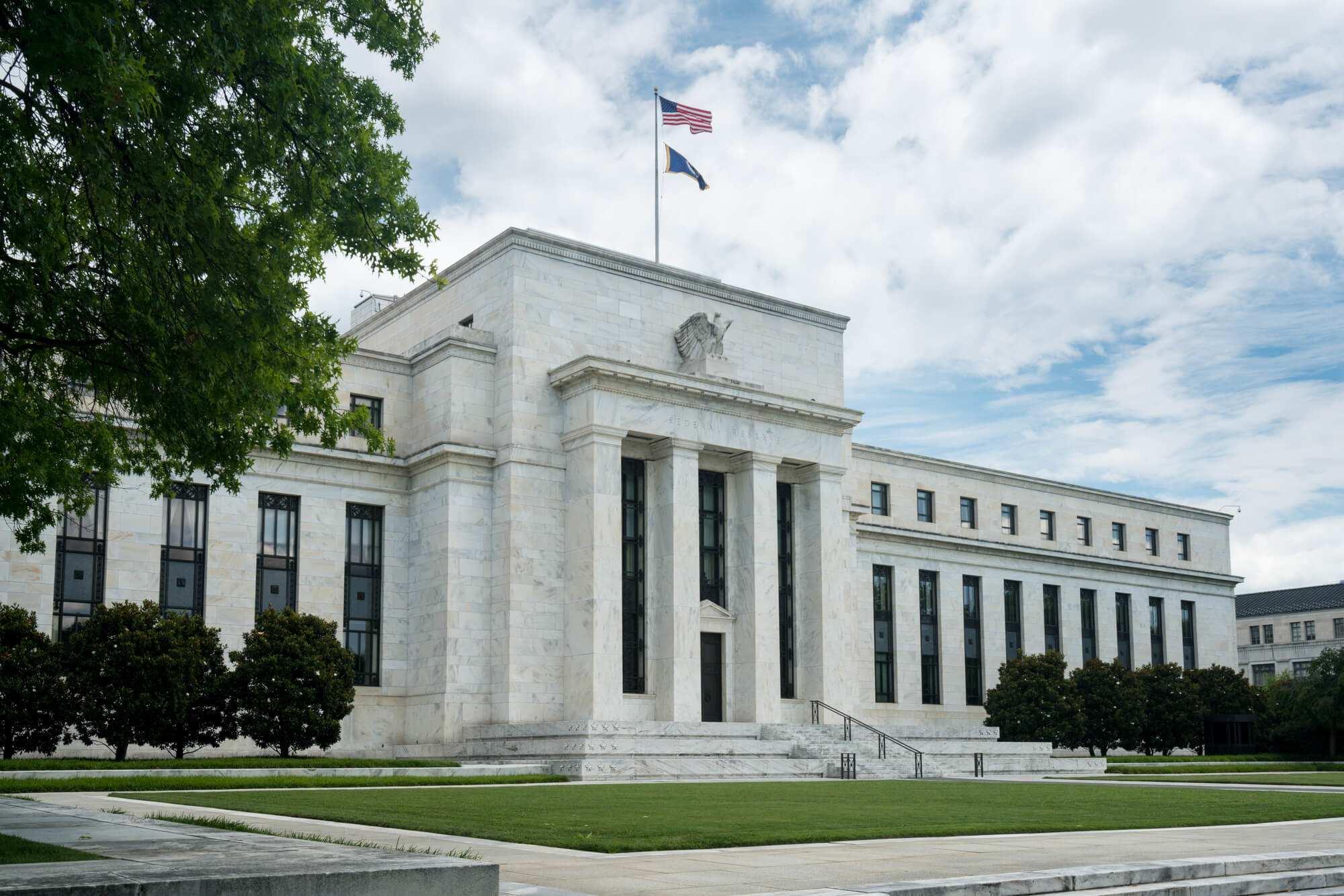
    The United States Federal Reserve has developed a new payment system called FedNow, which directly competes with certain parts of the banking system, payment service providers, and blockchain infrastructure. FedNow is a potential precursor to a central bank digital currency (CBDC), allowing for transactions at any time, day or night, 365 days a year.

    FedNow is designed to enable nearly instantaneous dollar payments, allowing banks, businesses, and individuals to send and receive money in real-time. The goal is to make payments faster, more convenient, and more accessible, especially for those without access to traditional banking services. FedNow will be introduced in several phases, with the official launch taking place in July 2023. Is the Federal Reserve preparing for a digital central bank currency (CBDC)?

    Preparations already in full swing

    The announcement of the Federal Reserve launching the FedNow service in July is considered a significant milestone for the American payments industry. FedNow will enable every participating financial institution to offer a modern instant payment solution. The payment network provides a level of speed and convenience that has become essential in today's fast-paced world. Early adopters of FedNow include financial institutions of all sizes, with the largest banks and the US Treasury set to use the service from July.

    In addition to preparing for the network's launch, the Federal Reserve continues to work with a range of financial institutions and service providers to complete the testing and certification program and implement FedNow across all areas of the financial system. The transition to real-time payment infrastructure requires concentrated efforts from all involved parties.

    Ray Dalio’s Bridgewater Associates Minds

    Star investor Ray Dalio considers Bitcoin inferior to gold

    Strategy and BitMine are deep in the red: around USD 21 billion in unrealized losses. The Digital Asset Treasury (DAT) sector is wobbling. Background

    Strategy and BitMine underwater: USD 21 billion unrealized loss

    VanEck lists VBNB, the first US spot BNB ETF on Nasdaq. Sponsor fee 0.39%, custody at Anchorage Digital, no staking at launch. Financial Products

    VanEck launches first US BNB ETF (VBNB) on Nasdaq

    Digital finance transparency relies on Proof of Reserves, Merkle trees, MPC custody and 24/7 monitoring to verify solvency and user assets. Basics

    Transparency as the foundation of security in digital finance

    Ray Dalio’s Bridgewater Associates Minds

    Star investor Ray Dalio considers Bitcoin inferior to gold

    Strategy and BitMine are deep in the red: around USD 21 billion in unrealized losses. The Digital Asset Treasury (DAT) sector is wobbling. Background

    Strategy and BitMine underwater: USD 21 billion unrealized loss

    More than 120 organizations have already signed up for the FedNow pilot program. The service will launch with a robust set of basic settlement functions and value-added features. Additional functions and improvements will be added in future versions to support security, resilience, and innovation in the industry as the FedNow network expands over the coming years.

    Blockchain basis for FedNow?

    Meanwhile, blockchain operator Tassat has announced that it will enable access to the FedNow payment system of the US Federal Reserve. The company will serve as a business-to-business interface for FedNow, using a customer-oriented application programming interface (API). Both the interbank and intrabank services of the company will provide FedNow access.

    Tassat's infrastructure solution is a private blockchain, which is permissioned and limits access to certain participants, often within a single organization. In contrast, public blockchains like Bitcoin are permissionless and open to anyone who wants to participate in verifying transactions and adding blocks to the chain. Private blockchains often prioritize data privacy and control, while public blockchains prioritize decentralization and transparency.

    "We at Tassat are dedicated to enabling banks to serve their customers faster, more securely, and more efficiently, and FedNow will be an excellent complement to our offering." - Kevin R. Greene, Chairman and CEO of Tassat Group

    While the Federal Reserve advances its FedNow development, pilot programs are currently underway to test the feasibility of creating a digital dollar, in reference to a US-held CBDC. If the central bank decides to integrate with blockchain technology, this digital dollar could potentially be issued directly to US citizens through the FedNow system.

    FedNow to enable instant payments

    In the current ACH network used by banks, large volume discounts apply to service providers such as banks, PayPal, Visa, and Mastercard. However, in the real-time network operated by the US government, these discounts are expected to increase fivefold. In 2023, an ACH transaction at high volume will cost a maximum of 0.0035 USD. Apparently, the smallest possible transaction fee in the new system is 0.01 USD, and each account holder is also charged a monthly fee of 25 USD.
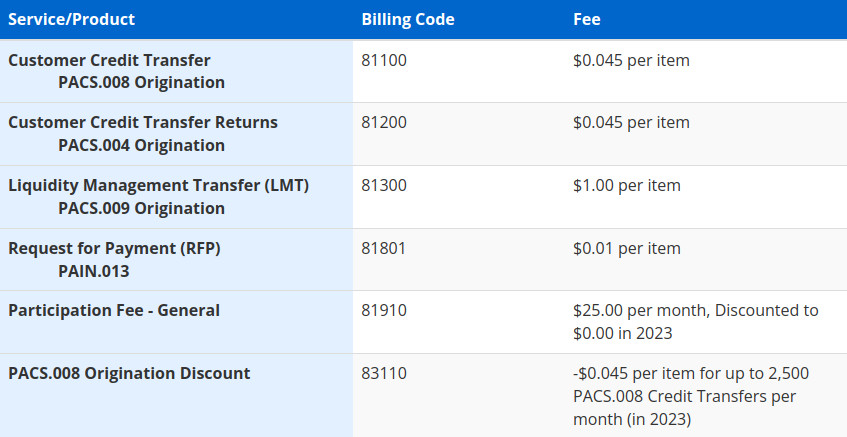
    monthly account fees for FedNow service
    Transaction costs for various services / Source: Federal Reserve (FedNow)

    The central bank has now launched an adoption tour to encourage as many financial institutions and service providers as possible to complete the testing and certification program and introduce the service. Ken Montgomery, the head of the initiative, emphasized that expanding the network of participating providers is key to improving the availability of instant payments for consumers and businesses across the country.


    Share. Facebook Twitter LinkedIn Email Telegram WhatsApp

    About the author

    Editorial Office CVJ.CH
    • Website
    • Twitter
    • LinkedIn

    Since 2018, the editorial team at Crypto Valley Journal has been reporting from Zug - the heart of Switzerland’s Crypto Valley - on Bitcoin, cryptocurrency, blockchain, and regulatory developments in digital assets. Behind the publication’s collective editorial voice is a team of writers with backgrounds in financial markets, law, and technology.

    Related Articles

    JPMorgan, Citi, Bank of America and Wells Fargo plan a network for tokenized deposits from 2027, operated by The Clearing House.

    JPMorgan, Citi, BoA and Wells Fargo plan network for tokenized deposits

    China expands the digital yuan: interest on balances, double the operator banks, and mBridge settling over $55 billion cross-border.

    China advances the digital yuan (e-CNY) on a broad front

    BIS and more than 40 banks present the Project Agorá prototype: cross-border payments tokenized and now in the real-money testing phase.

    Project Agorá: BIS and banks tokenize cross-border payments

    CVJ Weekly review
    6. June 2026

    Weekly review: Strategy sells Bitcoin and shakes up the market

    Strategy and BitMine are deep in the red: around USD 21 billion in unrealized losses. The Digital Asset Treasury (DAT) sector is wobbling.
    5. June 2026

    Strategy and BitMine underwater: USD 21 billion unrealized loss

    JPMorgan, Citi, Bank of America and Wells Fargo plan a network for tokenized deposits from 2027, operated by The Clearing House.
    5. June 2026

    JPMorgan, Citi, BoA and Wells Fargo plan network for tokenized deposits

    twitter image button instagram image button linkedin image button youtube image button

    About Crypto Valley Journal
    About Crypto Valley Journal

    On the pulse of the movement

    • Academy
    • Contact
    • Advertising
    • About us
    • Partner
    • Imprint
    • Privacy
    • Disclaimer
    Search

    Type above and press Enter to search. Press Esc to cancel.