Close Menu
Crypto Valley Journal
    Facebook X (Twitter) Instagram
    Crypto Valley Journal
    • Hot Topics
      • News
      • Minds
    • Focus
      • Background
      • Blockchain
      • Legal & Compliance
      • Non-Fungible Token (NFTs)
    • Investing
      • Markets
      • Financial Products
      • Decentralized Finance (DeFi)
      • Exchange overview
    • Education
      • Basics
      • Glossary
      • Politicians on crypto
    • Statistics
      • Bitcoin-ETF-Flows
      • Ethereum-ETF-Flows
      • Crypto market data
      • On-chain data
    • Academy
      • Overview
      • Part 1: Blockchain
      • Part 2: Money
      • Part 3: Bitcoin
      • Part 4: Cryptocurrencies
      • Part 5: Decentralized Finance
      • Part 6: Investing
    • English
      • Deutsch
    Crypto Valley Journal
    You are at:Home » Focus » Legal & Compliance » Germany allows institutional funds to invest in crypto
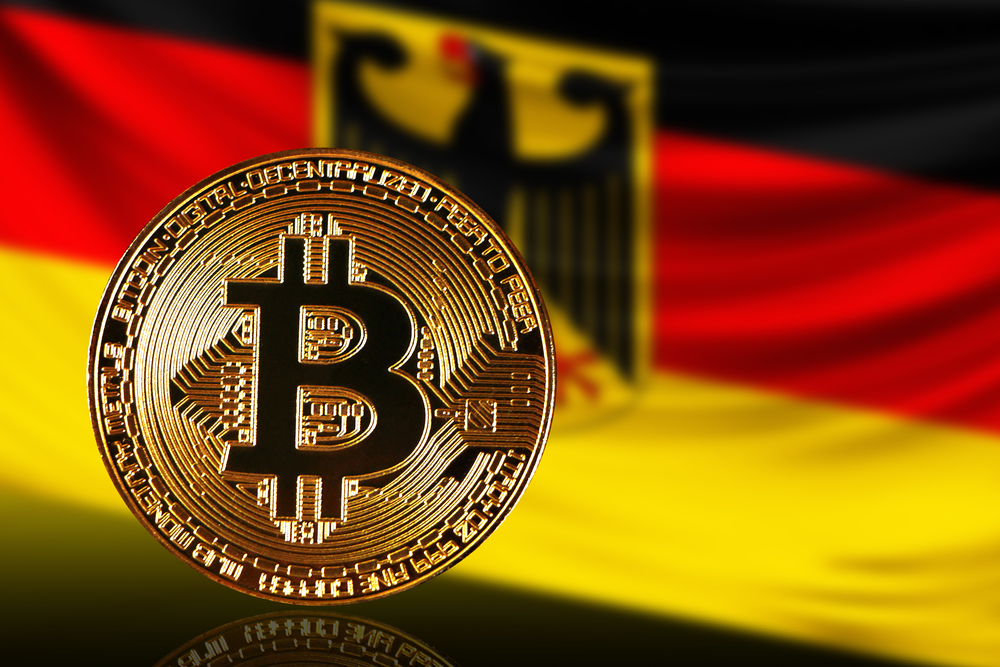
    gold coin bitcoin on a background of a flag Germany

    Germany allows institutional funds to invest in crypto

    By CVJ.CH Content Partner BeInCrypto on 8. July 2021 Legal & Compliance

    German regulators have given institutional funds the permission allocate part of their portfolios toward crypto investments, according to new policies. This is another step forward in the already crypto-friendly DACH region.

    Up to one-fifth of funds targeted at institutional investors can now be allocated toward cryptocurrencies. German regulators still advise caution to asset managers when dealing with crypto and such volatile digital assets.

    The new rules came into effect at the beginning of the month. They align with Germany’s Federal Financial Supervisory Authority’s (BaFin) attempt to neutralize its stance on crypto investments. In the past, the financial watchdog stressed its concern over the risky and volatile nature of the crypto market. This new development intends to show that the regulator nonetheless wants to encourage the future growth of emerging financial technology.

    Allocation for institutional investors

    In Germany, assets held in the specialized funds called Spezialfonds, are the ones to which the new regulations apply. These funds are exclusive to institutional investors and not the general population. According to Germany’s trade association BVI, the assets under management of these funds hovered around two trillion euros during the first quarter of the year.

    "Companies are responsible for the pension promises that they make to their members so they are very conservative investors. I would expect that company pension schemes will proceed very cautiously when assessing cryptocurrencies." - Klaus Stiefermann, managing director at ABA

    Now that these funds have the potential to be converted into crypto assets, this could potentially shift billions of euros into the crypto market. Nonetheless, regulators, officials, and representatives still have hesitations towards the ever-shifting crypto space.

    Germany continues crypto friendly trends 

    The new policies on fund allocations follow another big announcement made by Coinbase at the end of last month. The cryptocurrency exchange behemoth finally gained approval to offer crypto custodial services in Germany. This marked Coinbase as the first cryptocurrency exchange BaFin allowed a crypto custody license.

    Germany also came out with a series of moves, friendly to the future of blockchain development within the country. A select group of high school graduates will have their graduation diplomas issued using blockchain technology.

    Additionally, last month German lawmakers allowed companies to launch blockchain-backed debt securities. While the country’s lawmakers may still be skeptical, these cryptocurrency and blockchain forward moves are steps to keep Germany a global leader in innovation.


    Share. Facebook Twitter LinkedIn Email Telegram WhatsApp

    About the author

    CVJ.CH Content Partner BeInCrypto
    • Website

    BeInCrypto is a news website founded in August 2018 that specializes in cryptographic technology, privacy, fintech, and the Internet — among other related topics. The primary goal is to inject transparency into an industry rife with disingenuous reporting, unlabeled sponsored articles, and paid news masquerading as honest journalism.

    Related Articles

    Since the MiCA transition period ended on July 1, phishing scams have impersonated ESMA or AMF and demanded crypto transfers to fake sites.

    Beware of phishing scams after MiCA deadline

    Wintermute's US unit registered with the SEC as a broker-dealer, and the license opens crypto ETF settlement to the market maker.

    Wintermute targets Citadel with broker-dealer license

    The Senate has scheduled no cloture vote on the Clarity Act before the summer recess. Ethics and money laundering questions remain unresolved.

    Clarity Act stalls in the Senate before the summer recess

    Since the MiCA transition period ended on July 1, phishing scams have impersonated ESMA or AMF and demanded crypto transfers to fake sites.
    8. August 2026

    Beware of phishing scams after MiCA deadline

    CVJ weekly review
    8. August 2026

    Weekly review: Coldcard hack hits Bitcoin in hardware wallets

    Wintermute's US unit registered with the SEC as a broker-dealer, and the license opens crypto ETF settlement to the market maker.
    7. August 2026

    Wintermute targets Citadel with broker-dealer license

    twitter image button instagram image button linkedin image button youtube image button

    About Crypto Valley Journal
    About Crypto Valley Journal

    On the pulse of the movement

    • Academy
    • Contact
    • Advertising
    • About us
    • Partner
    • Imprint
    • Privacy
    • Disclaimer
    Search

    Type above and press Enter to search. Press Esc to cancel.