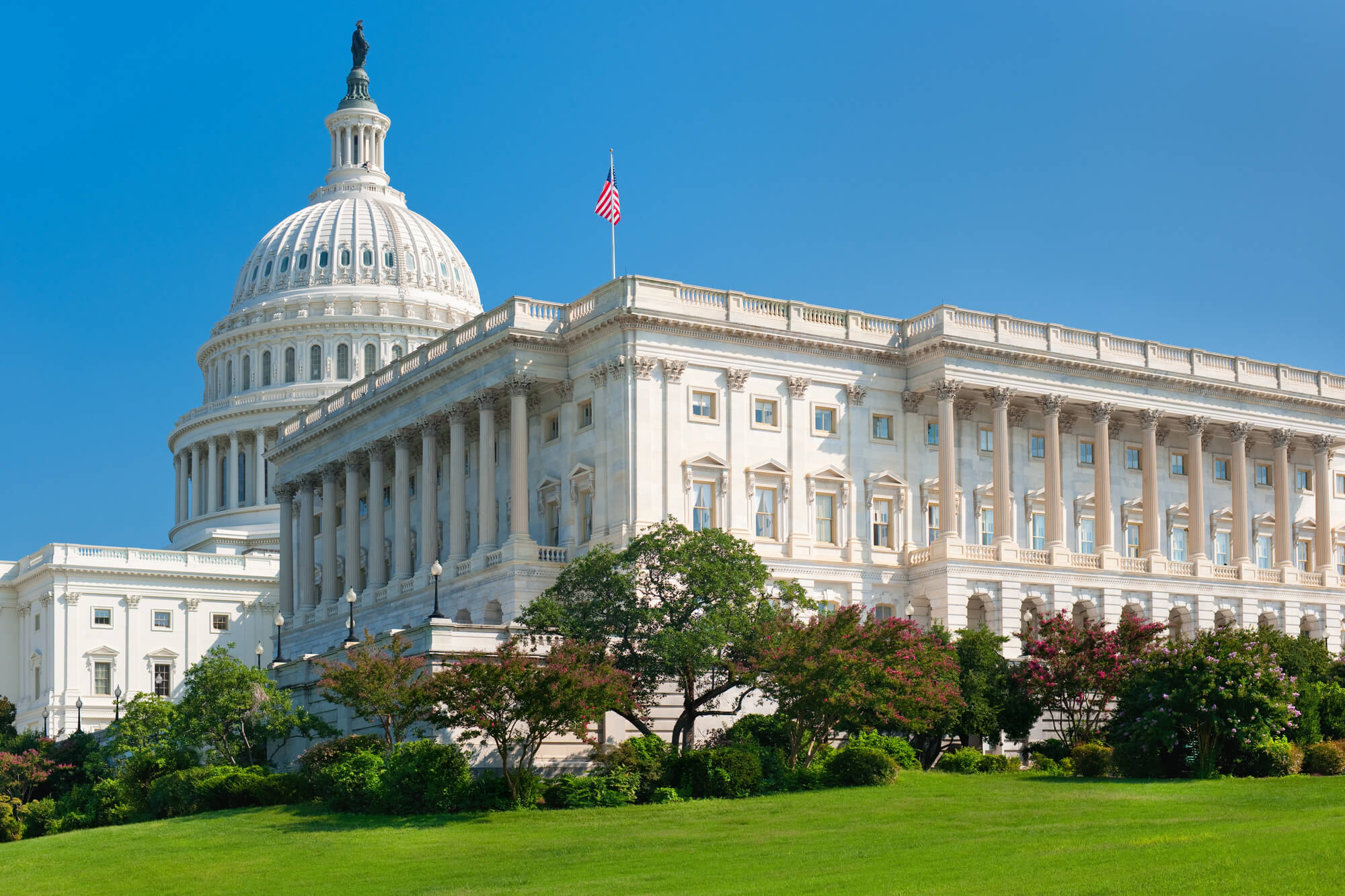
The House Digital Assets Subcommittee will hold a field hearing on the CLARITY Act in New York. This session is scheduled for July 17, 2026. The date is meant to move the Senate toward a vote before the summer recess begins on August 7.
The Digital Asset Market Clarity Act (H.R. 3633) defines which US agency oversees which cryptocurrencies. It assigns the CFTC sole authority over the spot markets for digital commodities, provided these qualify as sufficiently decentralized. The SEC, by contrast, remains responsible for assets with securities characteristics. As a result, a codified division of jurisdiction would emerge for the first time. This would follow years of an enforcement-driven approach by both agencies. The House of Representatives initially passed the bill on July 17, 2025, on a bipartisan basis. That vote came to 294 to 134. The Senate Banking Committee followed later by 15 votes to 9. Since then, the measure has sat on the Senate calendar as Calendar No. 423. The White House had originally set July 4 as the date for a signature by President Trump. However, that deadline passed unused. In addition, more than 1,200 technology companies and over 200 crypto firms signed an open letter. They called for a swift vote.
The New York hearing as a pressure tactic on the Senate
The field hearing begins at 10:00 a.m. local time in the Federal Hall National Memorial at 15 Pine Street. Responsibility rests with the Subcommittee on Digital Assets, Financial Technology and Artificial Intelligence of the House Financial Services Committee. The session carries the title "Building the Future of Finance: How the CLARITY Act Unlocks Innovation." It gathers representatives of the financial industry in the heart of New York's banking district.
The panel chose the location deliberately. Hearings of this kind usually take place in Washington. This time, however, the panel moves the event into the financial center on purpose. There it can collect statements from exchanges, banks, asset managers, and custodians. Senators can later cite these during the vote. As a result, the hearing serves less to find facts than to provide political justification. That justification targets the decisive phase in the Senate.
The date also fits into a tightly timed July strategy. Three days earlier, on July 14, the committee holds a separate hearing on monetary policy with Fed Chair Kevin Warsh. Within a single week, the committee thus pushes both central bank policy and crypto regulation into the public spotlight.
Long road of the CLARITY Act through Congress
The bill has already traveled much of its way through Congress. The House of Representatives passed H.R. 3633 on July 17, 2025, by 294 votes to 134, a clearly bipartisan result. Nearly ten months later, the Senate Banking Committee followed. It advanced the bill on May 14, 2026, by 15 votes to 9. On the Democratic side, only Ruben Gallego of Arizona and Angela Alsobrooks of Maryland voted in favor.
Since June 1, 2026, the measure has sat on the Senate's legislative calendar as Calendar No. 423. Formally it is therefore ready for a vote, yet the floor has so far set no date. The White House had set July 4 as the date for a signature by President Trump. That deadline passed without a vote. Consequently, only a narrow window remains for the vote before the summer recess begins on August 7. Supporters in the Senate are therefore pressing for speed. Senator Cynthia Lummis warns of the consequences of a further delay.
"This is our last chance to pass the Clarity Act until at least 2030." - Cynthia Lummis, US Senator (R-Wyoming)




The math of 60 votes in the Senate
The advanced procedural stage obscures the actual hurdle. To overcome the filibuster, known as cloture, the Senate needs 60 votes. The Republicans hold 53 seats, so at least seven Democratic votes must join them. Moreover, Republicans Josh Hawley and Rand Paul are seen as likely no votes. That further raises the need for votes from the opposition.
Negotiators have at least resolved one central point of contention. In early May 2026, Senators Thom Tillis and Angela Alsobrooks agreed on a compromise on stablecoin yield. Under it, intermediaries such as exchanges may not pay yield on passive balances. Activity-based rewards for payments, transfers, or platform use, however, remain permitted. The compromise is intended to protect consumers while limiting an outflow of bank deposits.
Other questions, however, remain open. Lawmakers still dispute the scope of a liability shield, known as the safe harbor, for developers of decentralized finance applications. Ethics rules for crypto holdings by officeholders are likewise unresolved. These points could ultimately decide the necessary Democratic votes.
What a Senate vote would mean for the crypto markets
The markets have reacted noticeably to the bill's progress in the past. After the committee vote on May 14, 2026, Bitcoin rose at times to USD 81,965. The price then gave back part of the gains. Crypto-related stocks also climbed: Coinbase gained 9.10 percent, MicroStrategy 8.16 percent, and Robinhood 6.16 percent.
Forecasts on the probability of success, however, diverge widely. Galaxy Research puts the chance of a signature in 2026 at 60 to 75 percent, Jefferies at 48 percent. The prediction platform Polymarket priced it at 41 percent. Earlier, in May, TD Cowen had set only around 30 percent.
The range results mainly from differing assumptions about scheduling, not from doubts about the content. The main dispute is whether the Senate can even find a vote date before the summer recess. A second question is whether the cloture math adds up. For institutional crypto players, the decision therefore falls in the coming weeks. That is when it will become clear whether the US receives a codified division of jurisdiction. Such a split between the SEC and the CFTC would be the first of its kind.