New York Attorney General Letitia James filed civil lawsuits against Coinbase and Gemini Titan. According to the complaint, both operate unlicensed gambling platforms under the guise of CFTC-regulated derivatives. The suits demand at least 2.2 billion USD from Coinbase and 1.2 billion USD from Gemini.
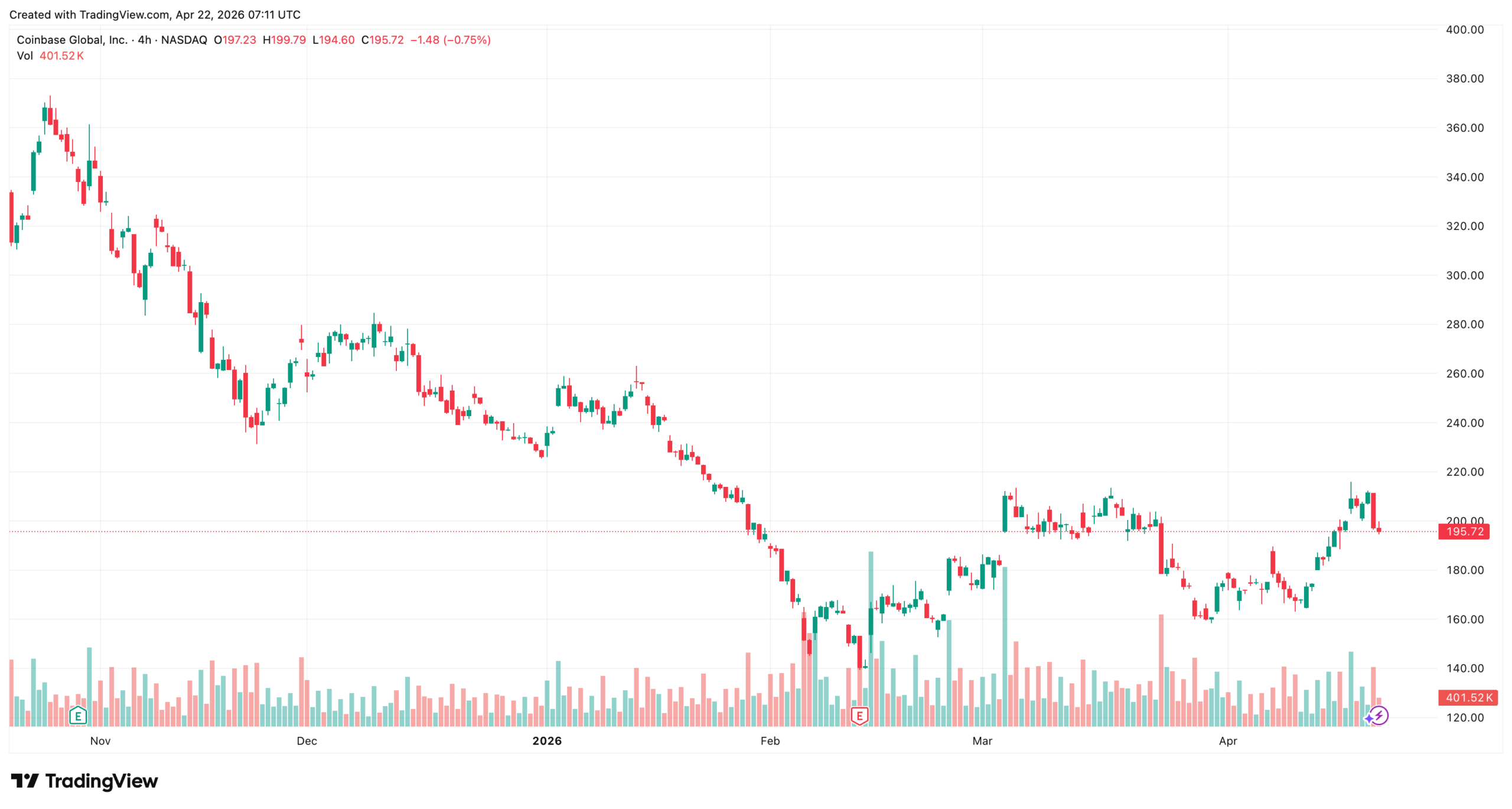
As a result, New York joins a growing coalition of states taking action against prediction market providers. Coinbase stock (COIN) fell roughly 6 percent after the lawsuit became public. According to the complaint, the New York State Gaming Commission has not granted Coinbase or Gemini a license, neither for sports betting nor for any other gambling activity.
The core allegation: gambling without a license
According to the complaint, both platforms allow users to bet on sporting events, entertainment events and political developments. In the view of New York prosecutors, this constitutes classic gambling, because the outcomes lie outside the control of participants. Without approval from the Gaming Commission, the prediction markets are therefore illegal.
In addition, a further allegation concerning youth protection looks sensitive. Both platforms admitted users aged 18 and over, while New York requires a minimum age of 21 for mobile sports betting. Moreover, Coinbase and Gemini allegedly accepted wagers on games involving New York college teams. Such bets violate separate provisions of state law. For this reason, James demands not only financial penalties, but also an access ban for people under 21 and a halt to all marketing on college campuses.
The civil claims reach far. The state is seeking disgorgement of all illegal profits, along with civil penalties equal to three times the revenue generated (treble damages), as well as compensation for affected customers. Furthermore, the 3.4 billion USD cited in the complaint explicitly counts as a minimum amount.
The defense: CFTC license as a shield
Coinbase rejected the allegations immediately. Paul Grewal, Chief Legal Officer of the company, took a public stance on X and pointed to the federal regulation of the platforms.
"Prediction markets are federally regulated national exchanges registered with the CFTC. This issue is currently being heard in a New York federal court. Coinbase will continue to fight for the federal oversight of these markets that Congress intended." - Paul Grewal, Chief Legal Officer, Coinbase
Gemini declined to comment. The Gemini Titan unit received its CFTC license as a Designated Contract Market only in December 2025, and the US platform launched a week later. Coinbase, for its part, went on the offensive back in December 2025 and filed suits against Connecticut, Michigan and Illinois to preemptively fend off state intervention.
The key question is not whether bets on sporting events take place, but who is allowed to regulate them. Coinbase and Gemini argue that prediction markets, as CFTC-registered derivatives platforms, fall under exclusive federal oversight and that state law gives way. New York counters that the products are effectively gambling and are therefore subject to state law.




Seven states, a circuit split and the road to the Supreme Court
New York is at least the seventh state to take legal action against prediction market providers. On 2 April 2026, the CFTC, together with the US government, filed suits against Illinois, Connecticut and Arizona to defend federal jurisdiction. Consequently, the conflict is developing into a classic federalism dispute between Washington and the individual states.
Furthermore, the legal situation is sharpening because of a looming circuit split. On 20 April 2026, one day before the New York lawsuit, the Third Circuit ruled in favor of Kalshi against New Jersey: sports betting contracts on CFTC-registered Designated Contract Markets preempt state gambling law. At the same time, a hearing on the Nevada suit is underway before the Ninth Circuit. If that court issues a state-friendly ruling, the path leads directly to the Supreme Court. Prediction market traders currently put the probability of a SCOTUS proceeding by the end of 2026 at 64 percent.
Fight over a multi-billion dollar market
The economic stakes explain the intensity of the dispute. Kalshi, the largest US prediction market operator, generated 25 million USD in fee revenue during four days of the March Madness tournament. Sports betting accounts for more than 85 percent of Kalshi's volume. In addition, current valuations underline the weight of the segment: Kalshi stands at 22 billion USD, Polymarket at 20 billion USD. For Coinbase and Gemini, the market is a strategically important growth channel that they are unlikely to surrender without a fight.
On the legislative front, US Senators John Curtis and Adam Schiff introduced the "Prediction Markets Are Gambling Act" on 23 March 2026, which would explicitly remove sports and casino event contracts from CFTC jurisdiction. Notably, individual states are mobilizing strongly against a federal derivatives oversight regime that Congress itself established. Therefore, only a Supreme Court decision or an act of Congress is likely to end the regulatory uncertainty.