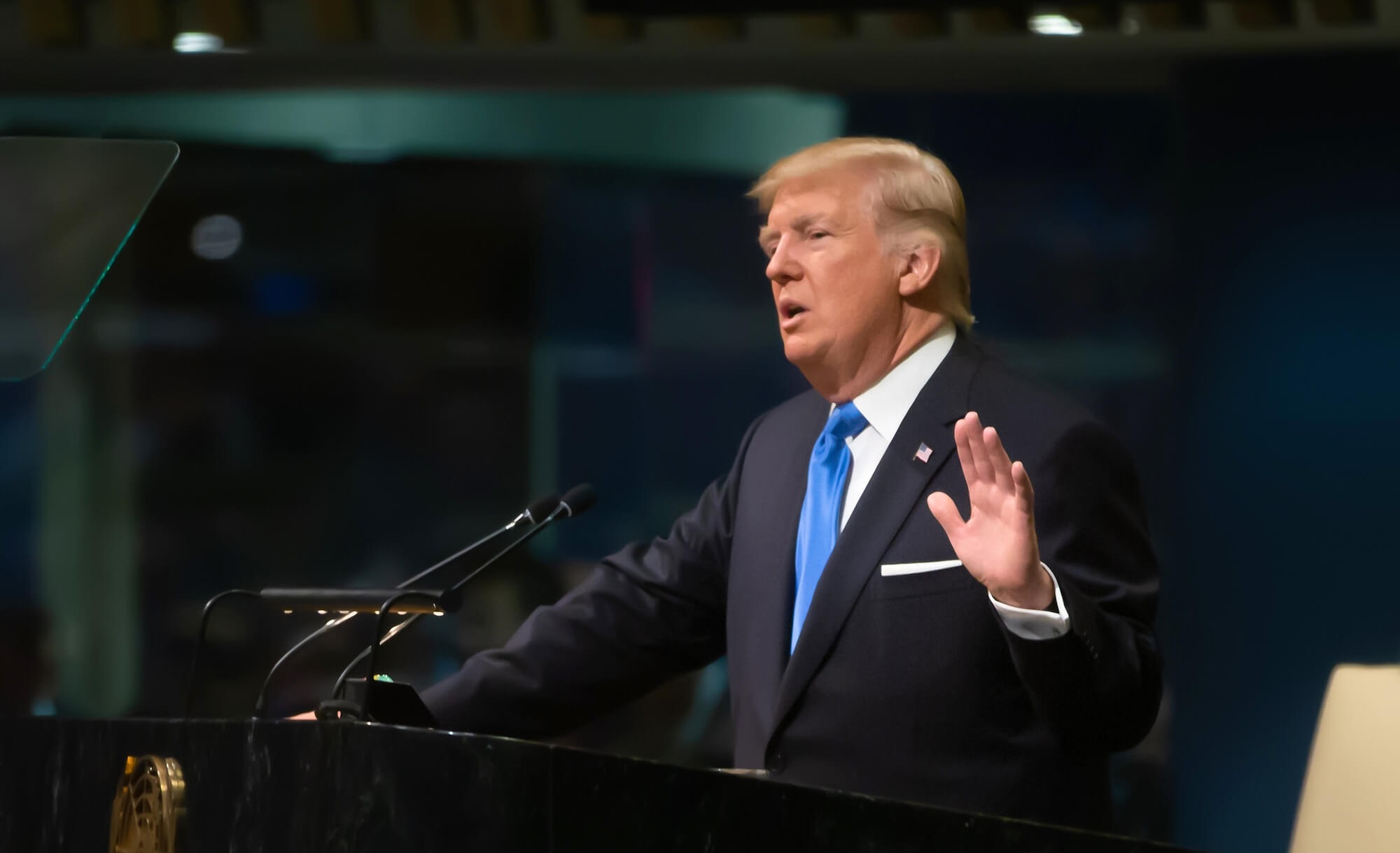
US President Donald Trump signed the executive order "Integrating Financial Technology Innovation into Regulatory Frameworks". The decree instructs the Federal Reserve and all US financial regulators to review non-bank access to the country's core payment infrastructure.
Specifically, the order targets Fed Master Accounts, the Fedwire wholesale system and the FedNow real-time settlement network. Moreover, it sets binding deadlines. Within 90 days, the SEC, CFTC, OCC, FDIC, CFPB and NCUA must review existing rules for barriers to innovation. In the same window, the Federal Reserve must establish a transparent application process and decide on complete Master Account applications within 90 days. After 120 days, the Fed must report to the White House on the legal obstacles standing in the way of opening the payment rails. As a result, regulators must initiate concrete steps no later than 180 days after the signing.
What Master Accounts mean
A Fed Master Account is an account held directly at a Federal Reserve Bank. It provides direct access to Fedwire, the central wholesale settlement system of the United States. Banks and authorised institutions use it to settle payments without intermediary banks. Without a Master Account, a crypto firm must route transactions through a correspondent bank. Such an arrangement carries per-transaction fees and can jeopardise the entire operating business if the banking relationship is terminated.
The order explicitly instructs the Fed Board of Governors to evaluate access to "Reserve Bank payment accounts and services" for uninsured depository institutions and non-bank financial companies as well. In doing so, the White House addresses precisely the category into which Wyoming Special Purpose Depository Institutions such as Custodia Bank and Kraken Financial fall. These institutions hold a state charter but no FDIC insurance, and therefore occupy a special status in previous Fed practice.
On the same day, Trump signed a second decree tightening the Bank Secrecy Act. It targets banking access for individuals without legal residency status and bears no direct substantive link to the crypto order.
Kraken as precedent
On 4 March 2026, the Federal Reserve Bank of Kansas City had already granted Kraken Financial a Master Account, the first crypto company ever to receive one. It is a so-called "Limited Purpose" or "Skinny" account at Tier 3: access to Fedwire settlement, but no access to the Discount Window, no overnight balances and no interest on reserves. According to its own statements, Kraken currently still operates in pilot mode.
The Fed Kansas City decision came before the conclusion of the "Skinny" framework, which the Fed had presented in draft form in December 2025. This angered the established banking lobby. Jaret Sieburg, Washington analyst at TD Cowen, told CoinDesk that this was the "first of many Federal Reserve approvals for crypto companies". According to industry reports, the list of aspirants includes Ripple, Anchorage Digital, Circle and, once again, Custodia Bank.




Operation Choke Point 2.0 as backdrop
The order marks the provisional endpoint of a confrontation that had escalated since the FTX collapse in November 2022. In the months that followed, FDIC regional offices instructed banks in 23 cases to "pause" crypto activities, according to documents that Coinbase obtained through FOIA. In parallel, the Federal Reserve classified stablecoin services, on-chain settlement and crypto custody as "high-risk innovation". As such it is subject to heightened supervisory review. The crypto industry labelled this coordinated approach "Operation Choke Point 2.0".
Custodia Bank became the test case. The Wyoming SPDI founded by Caitlin Long filed a Master Account application in October 2020. Typically, processing takes about a week. However, after 19 months of inaction, the formal rejection from Fed Kansas City arrived on 27 January 2023, citing "safety and soundness" concerns. Court discovery in the subsequent lawsuit showed that the Fed Board of Governors in Washington had participated in the rejection. In March 2026, the U.S. Court of Appeals for the 10th Circuit dismissed Custodia's appeal in a final 7:3 ruling.
With Trump's inauguration, the OCC and FDIC had already withdrawn their restrictive crypto guidance in 2025. The Fed scrapped its own policy as well. In addition, the leadership at the top changed. On 13 May 2026, the Senate confirmed Kevin Warsh as the new Fed Chair by a vote of 54 to 45, the narrowest such confirmation in recent Fed history. Warsh is the first Fed Chair with personal crypto exposure. He stakes in the Bitcoin payments startup Flashnet, in asset manager Bitwise and in the stablecoin project Basis. Furthermore, he positions himself against a US CBDC and supports privately issued stablecoins.
Executive order forces action
The 90-day deadline for the Fed mirrors exactly the processing time the decree is meant to guarantee crypto applicants going forward. Consequently, the order formally precludes a repeat of the 19-month Custodia stalemate. However, the order does not create an automatic right to a Master Account. Instead, it merely forces the Fed into procedural transparency and time discipline. At the same time, the substantive "safety and soundness" criteria remain in place.