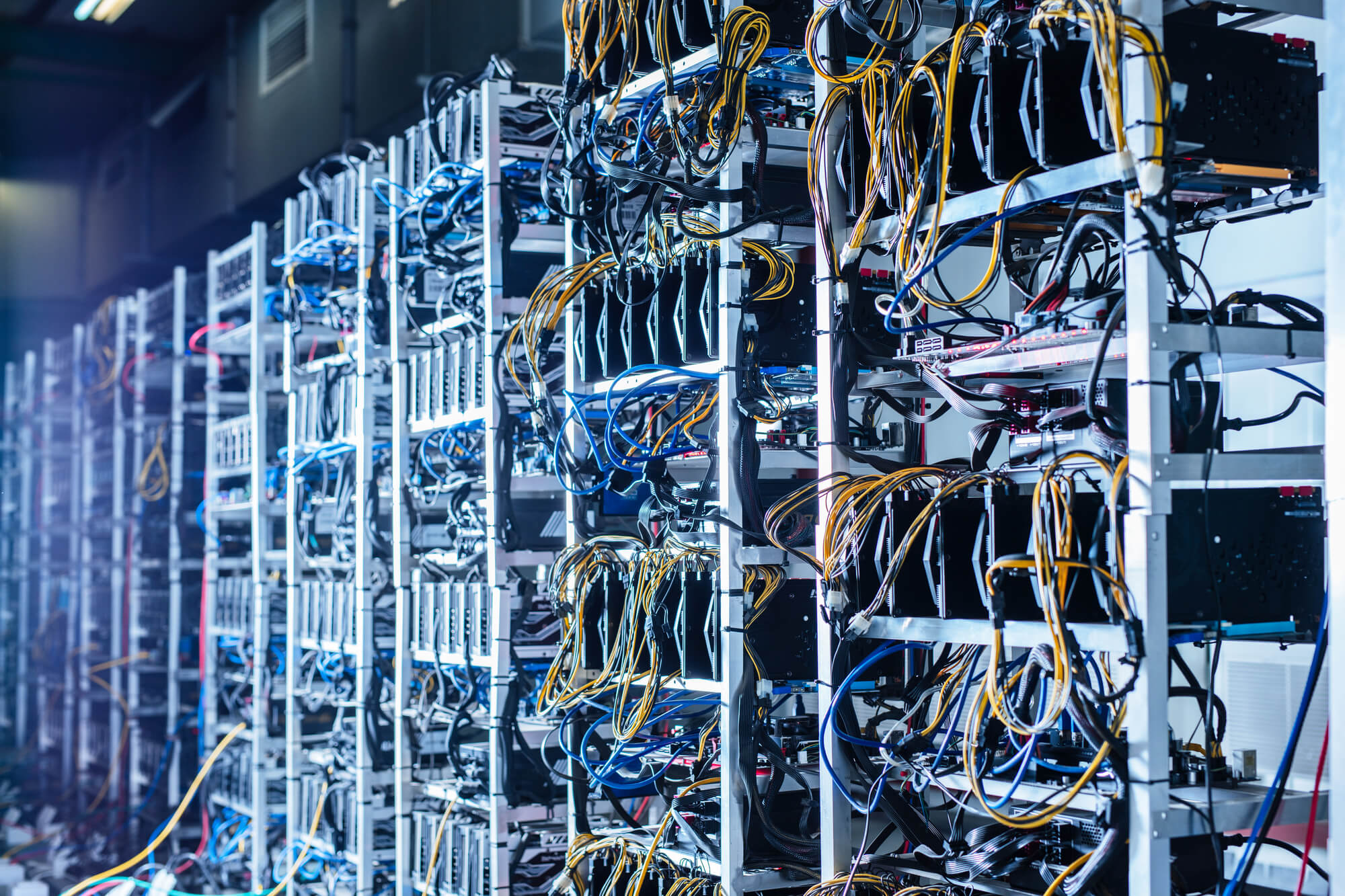
A mining pool is an association of multiple miners who combine their computing power in order to jointly find new blocks in a blockchain network. The resulting block rewards are then distributed proportionally among the participating miners.
Mining pools reduce income volatility for individual miners by paying out mining rewards regularly and in proportion to the contributed hash power. Today, they are a central component of proof-of-work networks.
Why mining pools exist
In the early stages of cryptocurrencies, individual miners could successfully find blocks using relatively modest hardware. As network difficulty increased and total hash rate grew, the probability of successful solo mining declined sharply. Mining pools emerged to solve this problem and enable more consistent revenue streams.
Miners connect their hardware to the pool and receive tasks to compute cryptographic hashes. When the pool finds a valid block, the block reward – consisting of newly minted coins and transaction fees – is distributed according to a predefined scheme. Distribution is typically proportional to the contributed computing power.
Payout models
Depending on the pool, different payout models are used, such as fixed payments per submitted share or participation in rewards from actually mined blocks. These models differ in terms of risk, predictability, and fees, but all pursue the same goal: stable income for participants.
Mining pools increase efficiency and lower the barriers to entry for miners. At the same time, large pools give rise to discussions about centralization, as a small number of actors can control a significant share of the total network hash rate.
For miners, pools offer predictable returns and reduced volatility. These benefits are offset by pool fees, dependence on the operator, and potential centralization risks. Choosing a trustworthy pool is therefore crucial. Mining pools have become indispensable to modern proof-of-work mining. They enable broader participation in the network while simultaneously reshaping the distribution of power within blockchain infrastructure.