Close Menu
Crypto Valley Journal
    Facebook X (Twitter) Instagram
    Crypto Valley Journal
    • Hot Topics
      • News
      • Minds
    • Focus
      • Background
      • Blockchain
      • Legal & Compliance
      • Non-Fungible Token (NFTs)
    • Investing
      • Markets
      • Financial Products
      • Decentralized Finance (DeFi)
      • Exchange overview
    • Education
      • Basics
      • Glossary
      • Politicians on crypto
    • Statistics
      • Bitcoin-ETF-Flows
      • Ethereum-ETF-Flows
      • Crypto market data
      • On-chain data
    • Academy
      • Overview
      • Part 1: Blockchain
      • Part 2: Money
      • Part 3: Bitcoin
      • Part 4: Cryptocurrencies
      • Part 5: Decentralized Finance
      • Part 6: Investing
    • English
      • Deutsch
    Crypto Valley Journal
    You are at:Home»Glossary»Mining pool
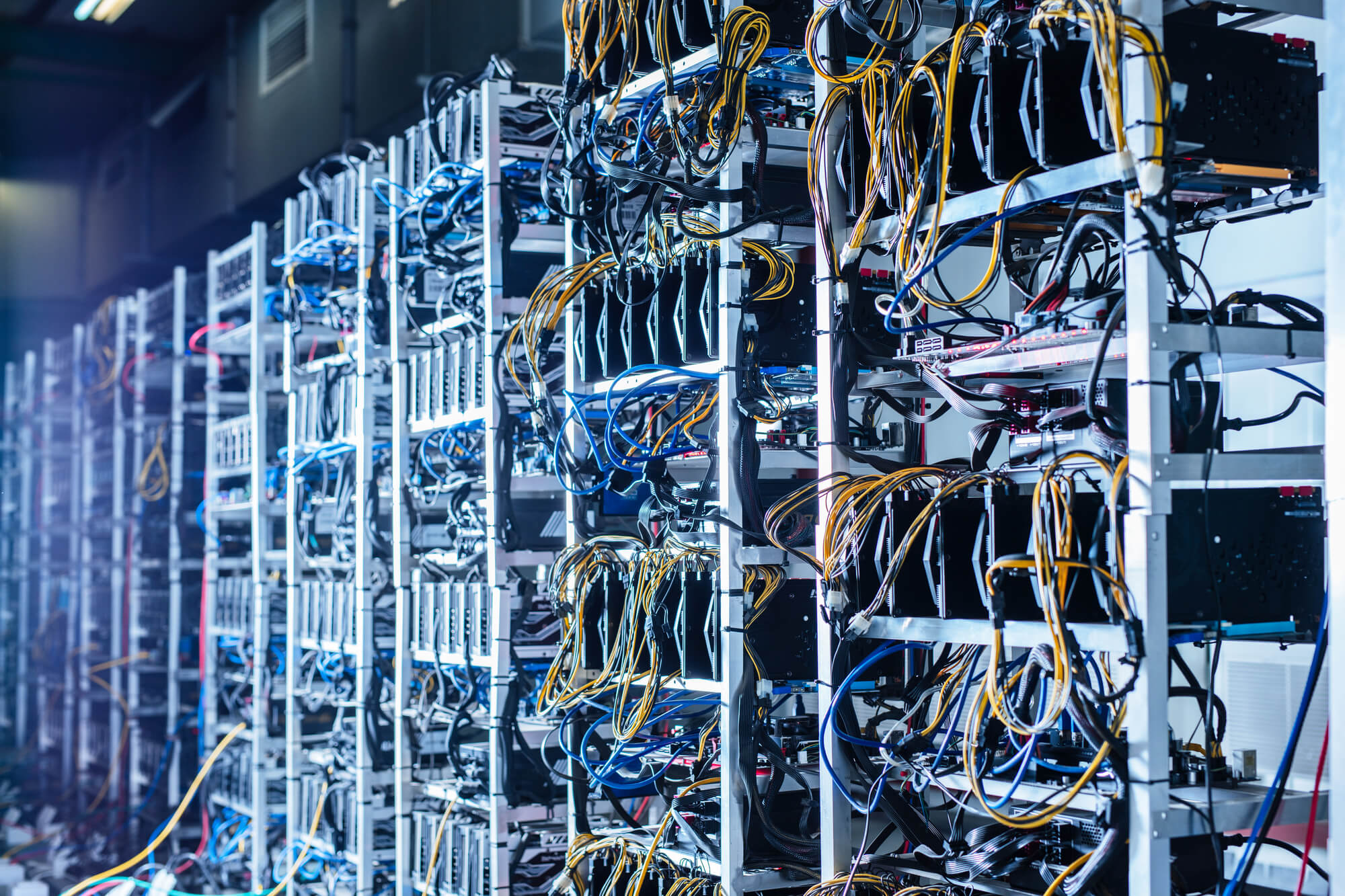
    Antminer

    Mining pool

    By Redaktion cvj.ch on 29. January 2026 Glossary

    A mining pool is an association of multiple miners who combine their computing power in order to jointly find new blocks in a blockchain network. The resulting block rewards are then distributed proportionally among the participating miners.

    Mining pools reduce income volatility for individual miners by paying out mining rewards regularly and in proportion to the contributed hash power. Today, they are a central component of proof-of-work networks.

    Subscribe to our newsletter

    The best articles of the week, directly delivered into your mailbox.

    Why mining pools exist

    In the early stages of cryptocurrencies, individual miners could successfully find blocks using relatively modest hardware. As network difficulty increased and total hash rate grew, the probability of successful solo mining declined sharply. Mining pools emerged to solve this problem and enable more consistent revenue streams.

    Miners connect their hardware to the pool and receive tasks to compute cryptographic hashes. When the pool finds a valid block, the block reward – consisting of newly minted coins and transaction fees – is distributed according to a predefined scheme. Distribution is typically proportional to the contributed computing power.

    Payout models

    Depending on the pool, different payout models are used, such as fixed payments per submitted share or participation in rewards from actually mined blocks. These models differ in terms of risk, predictability, and fees, but all pursue the same goal: stable income for participants.

    Mining pools increase efficiency and lower the barriers to entry for miners. At the same time, large pools give rise to discussions about centralization, as a small number of actors can control a significant share of the total network hash rate.

    For miners, pools offer predictable returns and reduced volatility. These benefits are offset by pool fees, dependence on the operator, and potential centralization risks. Choosing a trustworthy pool is therefore crucial. Mining pools have become indispensable to modern proof-of-work mining. They enable broader participation in the network while simultaneously reshaping the distribution of power within blockchain infrastructure.


    Analysis by Bitget Research on Bitcoin quantum computing risks, ECDSA exposure, NIST post-quantum standards, and BIP-360 migration paths. Background
    17. April 2026

    Bitcoin quantum computing: What recent developments mean for network security

    Analysis by Bitget Research on Bitcoin quantum computing risks, ECDSA exposure, NIST post-quantum standards, and BIP-360 migration paths.

    XRPL validator analyzes quantum risk: only 0.03% of XRP supply is exposed, compared to up to 35% for Bitcoin. Google sets 2029 deadline. Background
    14. April 2026

    Quantum risk: Is XRP more secure than Bitcoin?

    XRPL validator analyzes quantum risk: only 0.03% of XRP supply is exposed, compared to up to 35% for Bitcoin. Google sets 2029 deadline.

    13. April 2026

    Power Shift in Crypto Exchanges: Retail Overtakes Institutional

    Entdecken Sie die Vorteile von Bitcoin im Portfolio als Werkzeug zur Renditesteigerung und zum Schutz vor Inflation.
    9. April 2026

    Bitcoin’s role within an institutional portfolio

    AI agent security risks grow as autonomous systems shift from analysis to execution in crypto markets, a Bitget and SlowMist report warns.
    8. April 2026

    New research highlights security risks as AI agents shift to execution

    6. April 2026

    Crypto Myths 2026: Four Costly Mistakes Investors Make

    $500 million in minutes: Pump.fun writes ICO history
    3. April 2026

    Have launchpads like Pump.fun destroyed the altcoin market?

    2. April 2026

    Unit bias in crypto: Why cheap coins mislead investors

    Popular Posts
    About Crypto Valley Journal
    About Crypto Valley Journal

    On the pulse of the movement

    • Academy
    • Contact
    • Advertising
    • About us
    • Partner
    • Imprint
    • Privacy
    • Disclaimer
    Search

    Type above and press Enter to search. Press Esc to cancel.