Close Menu
Crypto Valley Journal
    Facebook X (Twitter) Instagram
    Crypto Valley Journal
    • Hot Topics
      • News
      • Minds
    • Focus
      • Background
      • Blockchain
      • Legal & Compliance
      • Non-Fungible Token (NFTs)
    • Investing
      • Markets
      • Financial Products
      • Decentralized Finance (DeFi)
      • Exchange overview
    • Education
      • Basics
      • Glossary
      • Politicians on crypto
    • Statistics
      • Bitcoin-ETF-Flows
      • Ethereum-ETF-Flows
      • Crypto market data
      • On-chain data
    • Academy
      • Overview
      • Part 1: Blockchain
      • Part 2: Money
      • Part 3: Bitcoin
      • Part 4: Cryptocurrencies
      • Part 5: Decentralized Finance
      • Part 6: Investing
    • English
      • Deutsch
    Crypto Valley Journal
    You are at:Home » Glossary » Mining pool
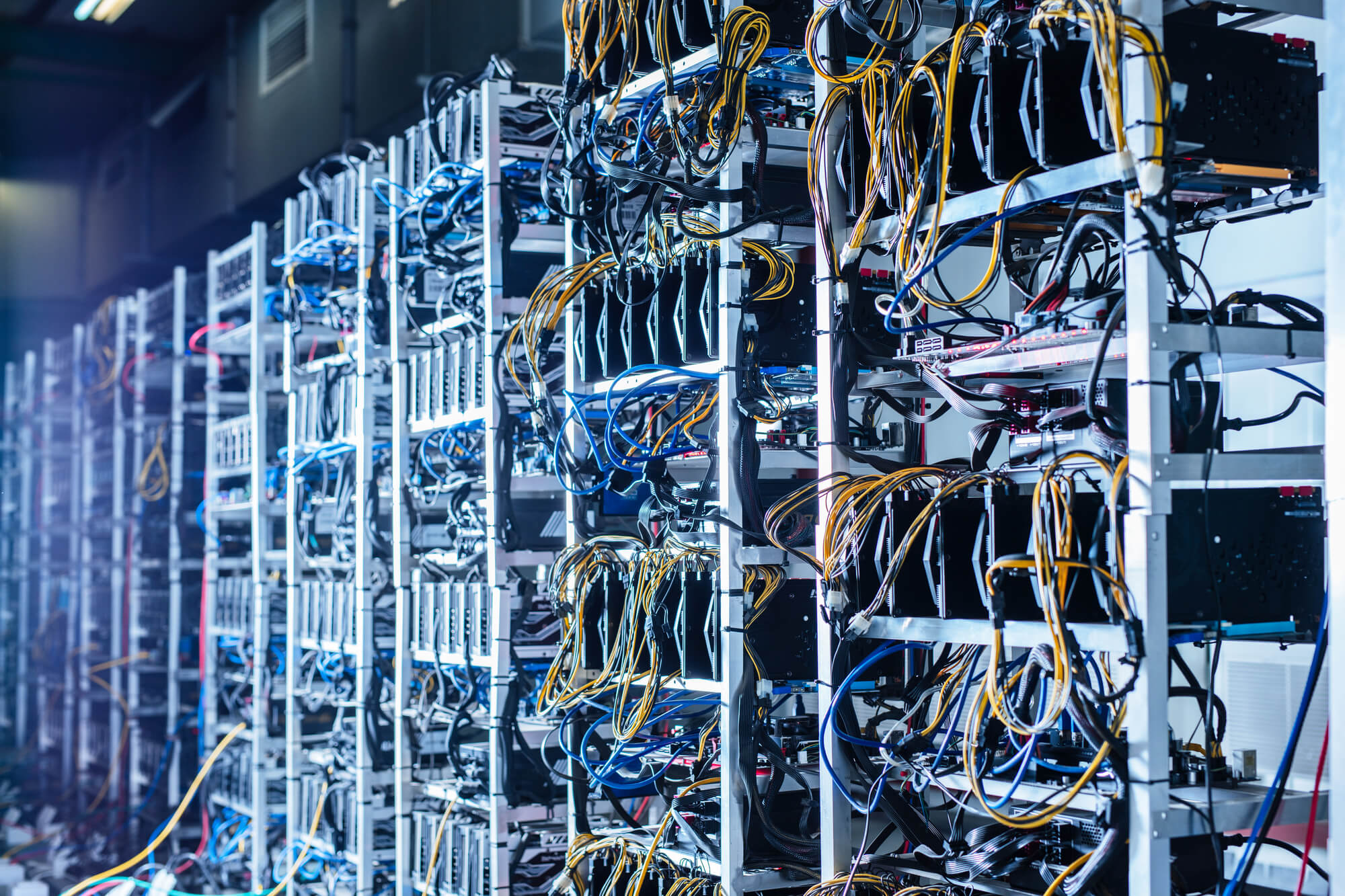
    Antminer

    Mining pool

    By Redaktion cvj.ch on 29. January 2026 Glossary

    A mining pool is an association of multiple miners who combine their computing power in order to jointly find new blocks in a blockchain network. The resulting block rewards are then distributed proportionally among the participating miners.

    Mining pools reduce income volatility for individual miners by paying out mining rewards regularly and in proportion to the contributed hash power. Today, they are a central component of proof-of-work networks.

    Subscribe to our newsletter

    The best articles of the week, directly delivered into your mailbox.

    Why mining pools exist

    In the early stages of cryptocurrencies, individual miners could successfully find blocks using relatively modest hardware. As network difficulty increased and total hash rate grew, the probability of successful solo mining declined sharply. Mining pools emerged to solve this problem and enable more consistent revenue streams.

    Miners connect their hardware to the pool and receive tasks to compute cryptographic hashes. When the pool finds a valid block, the block reward – consisting of newly minted coins and transaction fees – is distributed according to a predefined scheme. Distribution is typically proportional to the contributed computing power.

    Payout models

    Depending on the pool, different payout models are used, such as fixed payments per submitted share or participation in rewards from actually mined blocks. These models differ in terms of risk, predictability, and fees, but all pursue the same goal: stable income for participants.

    Mining pools increase efficiency and lower the barriers to entry for miners. At the same time, large pools give rise to discussions about centralization, as a small number of actors can control a significant share of the total network hash rate.

    For miners, pools offer predictable returns and reduced volatility. These benefits are offset by pool fees, dependence on the operator, and potential centralization risks. Choosing a trustworthy pool is therefore crucial. Mining pools have become indispensable to modern proof-of-work mining. They enable broader participation in the network while simultaneously reshaping the distribution of power within blockchain infrastructure.


    More than 50% of the bitcoin supply now sits at a loss. K33 sees parallels to earlier bear market lows that followed within weeks. Background
    11. June 2026

    Crypto winter: More than 50% of bitcoin supply at a loss

    More than 50% of the bitcoin supply now sits at a loss. K33 sees parallels to earlier bear market lows that followed within weeks.

    A Reuters analysis estimates the Trump family's crypto gains at $2.3 billion, while investors incurred book losses of the same amount. Background
    9. June 2026

    Trump family earns $2.3 billion from crypto projects

    A Reuters analysis estimates the Trump family’s crypto gains at $2.3 billion, while investors incurred book losses of the same amount.

    IC3 researchers refute three central promises of the AI and blockchain market narrative in a 155-page survey on crypto and AI.
    9. June 2026

    The synergy between AI and blockchain is overstated

    Strategy and BitMine are deep in the red: around USD 21 billion in unrealized losses. The Digital Asset Treasury (DAT) sector is wobbling.
    5. June 2026

    Strategy and BitMine underwater: USD 21 billion unrealized loss

    Crypto VC deals fell to around 50 in May 2026, a five-year low. Mega-rounds like Kalshi's Series F keep the dollar volume elevated.
    4. June 2026

    Crypto VC deals fall to five-year low in May 2026

    IBM is investing over USD 10 billion in quantum computing: What the roadmap to 2029 means for the Bitcoin risk.
    3. June 2026

    IBM’s quantum computing push shifts the timeline for Bitcoin risk

    Citi forecasts tokenized securities reaching 5.5 trillion USD by 2030, as DTCC, Nasdaq and ICE build out the underlying market infrastructure.
    1. June 2026

    Citi forecasts tokenized securities reaching 5.5 trillion USD by 2030

    Tokenization opens up new ways for companies to engage investors flexibly and structure financing efficiently.
    27. May 2026

    Tokenized equity shares: a tax-efficient alternative to traditional equity?

    Popular Posts
    About Crypto Valley Journal
    About Crypto Valley Journal

    On the pulse of the movement

    • Academy
    • Contact
    • Advertising
    • About us
    • Partner
    • Imprint
    • Privacy
    • Disclaimer
    Search

    Type above and press Enter to search. Press Esc to cancel.