Close Menu
Crypto Valley Journal
    Facebook X (Twitter) Instagram
    Crypto Valley Journal
    • Hot Topics
      • News
      • Minds
    • Focus
      • Background
      • Blockchain
      • Legal & Compliance
      • Non-Fungible Token (NFTs)
    • Investing
      • Markets
      • Financial Products
      • Decentralized Finance (DeFi)
      • Exchange overview
    • Education
      • Basics
      • Glossary
      • Politicians on crypto
    • Statistics
      • Bitcoin-ETF-Flows
      • Ethereum-ETF-Flows
      • Crypto market data
      • On-chain data
    • Academy
      • Overview
      • Part 1: Blockchain
      • Part 2: Money
      • Part 3: Bitcoin
      • Part 4: Cryptocurrencies
      • Part 5: Decentralized Finance
      • Part 6: Investing
    • English
      • Deutsch
    Crypto Valley Journal
    You are at:Home » Glossary » Wrapped Token
    Wrapped Token

    Wrapped Token

    By Redaktion cvj.ch on 1. September 2025 Glossary

    Wrapped tokens play a central role in today’s blockchain infrastructure. They allow assets to be used across blockchains that are otherwise not compatible - a crucial step toward interoperability and DeFi integration.

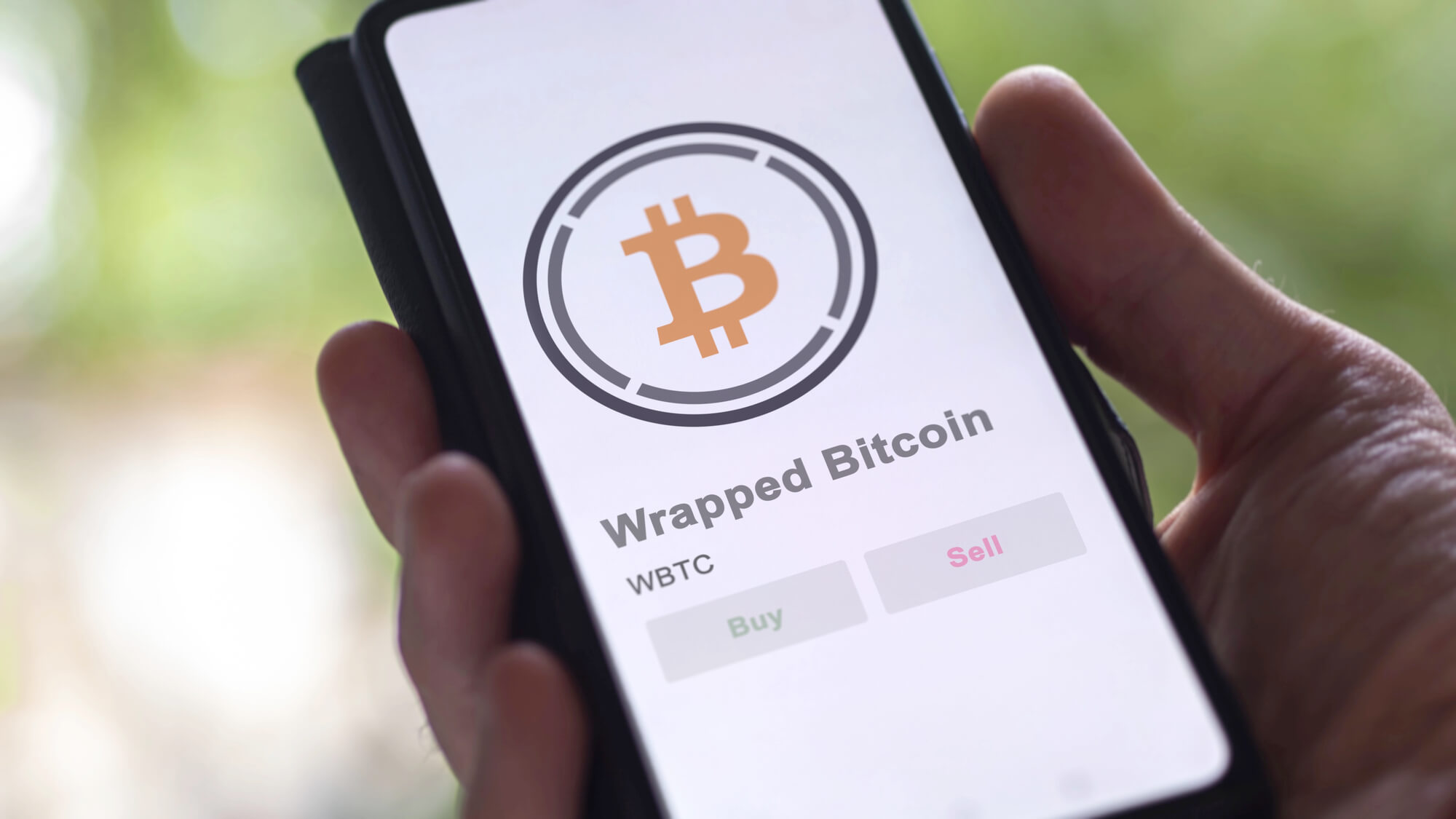
    A wrapped token is a digital asset that represents the value of another coin or token on a blockchain where it does not originally exist. The most well-known example is Wrapped Bitcoin (WBTC) - a tokenized version of Bitcoin on the Ethereum blockchain.

    In this process, real BTC is deposited with a custodian, and in return, an equivalent amount of WBTC is issued on Ethereum. The price of WBTC is generally pegged 1:1 to BTC.

    Subscribe to our newsletter

    The best articles of the week, directly delivered into your mailbox.

    How do wrapped tokens work?

    Wrapped tokens are typically based on smart contracts. The process usually works like this:

    • A user sends, for example, 1 BTC to a trusted custodian.
    • The custodian holds the BTC and issues 1 WBTC on Ethereum in return.
    • If the user wants their real BTC back, the WBTC is burned and the BTC is returned.

    The custodian can be organized either centrally (e.g., by BitGo) or in a decentralized way (via DAOs). What matters is that it can always be verified that enough real assets are deposited - transparency is essential here.

    Wrapped tokens make it possible to integrate otherwise incompatible assets into DeFi ecosystems such as Ethereum or Solana. BTC can therefore be used in liquidity pools, lent out, or deposited as collateral. This increases capital efficiency and significantly enhances the usability of existing assets.

    Wrapped tokens also carry risks - in particular trust risks with centralized custodians. If a custodian is compromised or becomes insolvent, the tokenized assets are at risk. Decentralized alternatives aim to minimize this risk but are still in their early stages.


    Bitcoin overtakes gold in the US: per River's report, 49.6 million Americans own Bitcoin, while just 28.8 million still hold gold. Background
    22. July 2026

    Bitcoin overtakes gold among US investors for the first time

    Bitcoin overtakes gold in the US: per River’s report, 49.6 million Americans own Bitcoin, while just 28.8 million still hold gold.

    Digital asset security faces a new gap: crypto losses topped USD 4.70 billion in 2025, up 63%, as fraud follows multi-asset users. Background
    22. July 2026

    Digital finance has gone multi-asset. Security needs to catch up.

    Digital asset security faces a new gap: crypto losses topped USD 4.70 billion in 2025, up 63%, as fraud follows multi-asset users.

    The Chainalysis Crypto Crime Report puts illicit activity below 1% of on-chain volume, countering the myth of Bitcoin as a criminal currency.
    21. July 2026

    Myth: Bitcoin and cryptocurrencies mainly serve criminal activity

    Falling qubit estimates bring the quantum computer threat to Bitcoin closer and spark a debate over freezing Satoshi's coins.
    20. July 2026

    Quantum computers put Bitcoin’s cryptography under pressure

    Most crypto cards hide who issues them. After mapping the licensed issuers, here is why Switzerland's self-issuing model reads differently.
    8. July 2026

    The bank you never chose: who really issues Switzerland’s crypto cards

    18 percent hold crypto assets in Switzerland, an IFZ and LUKB study shows. Banks see potential for up to 1 million advisory clients.
    29. June 2026

    HSLU and LUKB study: 18% of the Swiss population hold crypto assets

    29. June 2026

    The four-year Bitcoin cycle remains intact

    The EU Parliament's ECON committee has approved the legal framework for the digital euro and ordered trilogue negotiations to begin.
    23. June 2026

    EU Parliament approves legal framework for the digital euro

    Popular Posts
    About Crypto Valley Journal
    About Crypto Valley Journal

    On the pulse of the movement

    • Academy
    • Contact
    • Advertising
    • About us
    • Partner
    • Imprint
    • Privacy
    • Disclaimer
    Search

    Type above and press Enter to search. Press Esc to cancel.