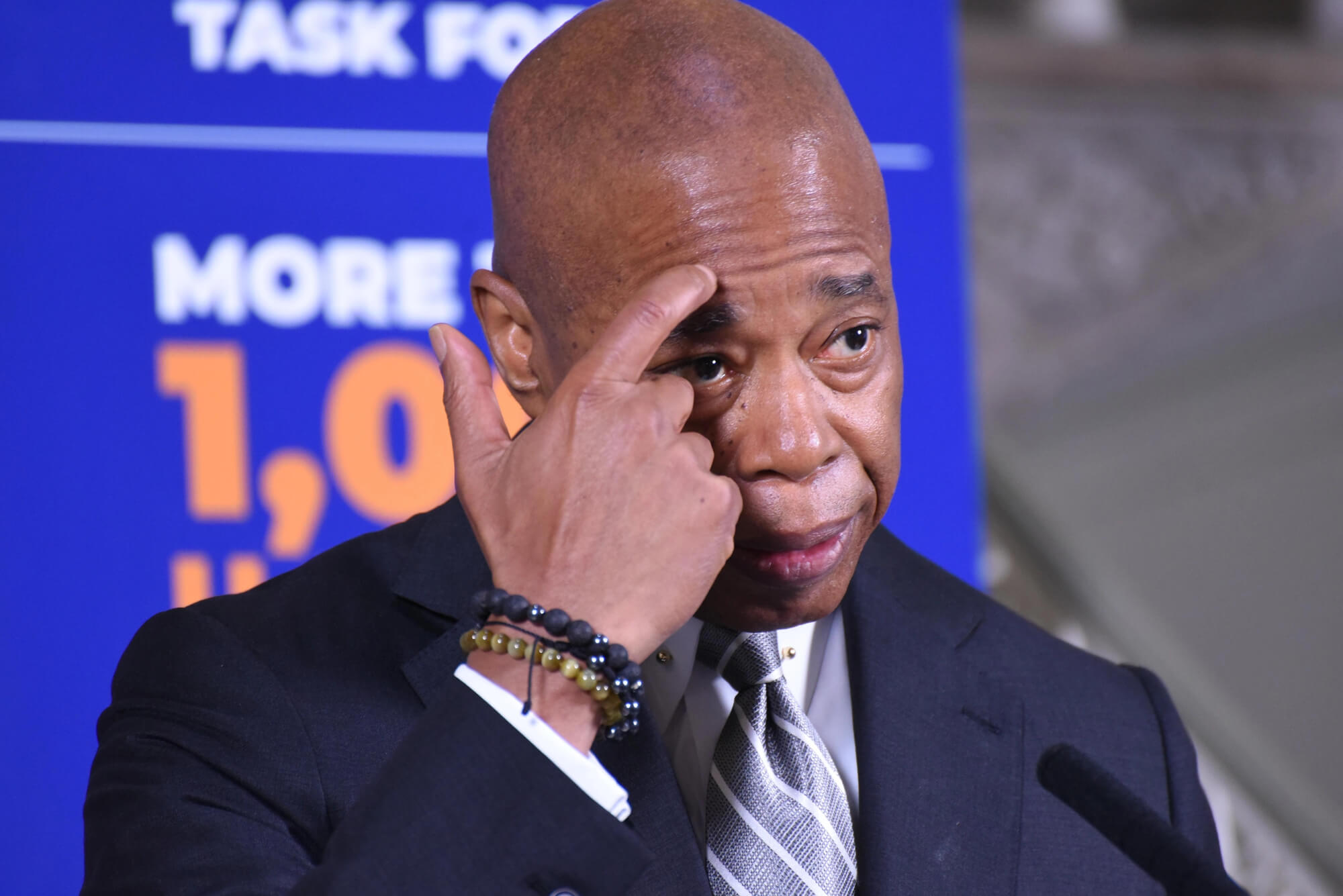
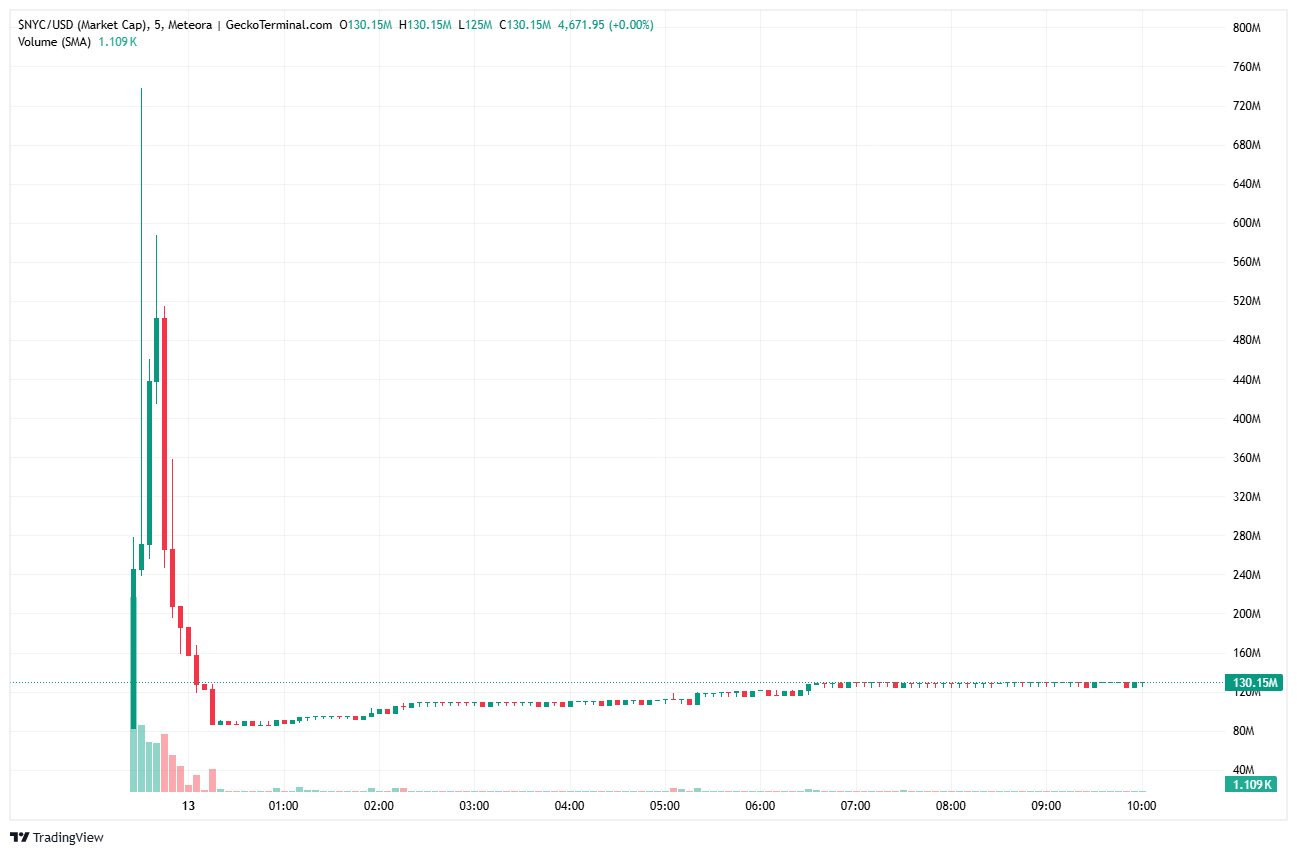
Former New York City Mayor Eric Adams unveiled the NYC token at Times Square on January 12, 2026. The Solana-based memecoin reached a market capitalization of $540 million before crashing over 80 percent to $87 million within 30 minutes.
Adams left office on December 31, 2025, and presented the token as a charitable project against antisemitism and anti-Americanism. On-chain data shows a different picture. The ten largest wallets control 98.73 percent of all tokens, with 70 percent held in a single address. Blockchain analysts documented a liquidity withdrawal of at least $2.5 million through a wallet connected to the token deployer.
Blockchain analysis documents liquidity withdrawal
Blockchain analytics firm Bubblemaps identified suspicious activities from wallet 9Ty4M. This address is connected to the token deployer. It created a one-sided liquidity pool on the Meteora platform. At the market peak, it withdrew around 2.5 million USDC. After a 60 percent price decline, the same wallet redeposited $1.5 million.
Crypto analyst Rune Crypto reported on X: At least $3.4 million was withdrawn from the project. Emperor Osmo, another on-chain analyst, reached the same conclusion. Both documented the pattern, which resembles the controversial LIBRA token launch. That project was criticized for liquidity manipulation.
The token launched with 80 million tradable units at a total supply of one billion. According to the project website, circulating supply was supposed to grow to 300 million. The tokenomics allocate 40 percent for community rewards, 25 percent for liquidity, 15 percent for development, and 10 percent each for marketing and team. But these figures contradict the documented centralization: a single wallet holds 70 percent.
Adams' crypto engagement: from Bitcoin salaries to memecoins
Eric Adams positioned himself as a crypto advocate since taking office. He converted his first three paychecks into Bitcoin and Ethereum. New York would become "the center of the cryptocurrency industry," he declared at the time. But labor regulations prevented direct payment in crypto. The city paid Adams in dollars first, after which he converted the amounts via Coinbase.
The FTX collapse in late 2022 dampened his public engagement with the industry. Adams largely avoided the topic. Still, he hosted a crypto summit at the mayor's residence Gracie Mansion in May 2025. At the Bitcoin 2025 conference, he promised Bitcoin-backed bonds for New York City. He never fulfilled this promise. In October 2025, Adams established the Office of Digital Assets and Blockchain Technology via executive order. His successor Zohran Mamdani reversed all Adams orders after taking office. The announced blockchain projects will not be continued.
His crypto enthusiasm earned Adams the nickname "Bitcoin Mayor." But the credibility of this positioning suffers under the NYC token debacle. Adams claims to have well-capitalized backers. At the press conference, he declined to name them. He explicitly excluded former child star and Bitcoin billionaire Brock Pierce, who had previously supported him financially.



Political memecoins: a high-risk pattern
The NYC token joins a series of political memecoins. Donald Trump's TRUMP token and Melania Trump's MELANIA token are also under suspicion of manipulation. A class action lawsuit accuses the MELANIA team of "using celebrity status to circumvent due diligence." Anonymous traders bought MELANIA tokens shortly before the public launch. They allegedly made a profit of $100 million.
The TRUMP token lost 86 percent of its value between inauguration day 2024 and the end of November 2025. MELANIA recorded a 99 percent decline in the same period. Democratic congressional representatives called on regulators to investigate the Trump memecoins.
Adams' token differs rhetorically through its charitable claim. The proceeds were supposed to fund educational programs against antisemitism. They were also supposed to promote blockchain education and provide scholarships for disadvantaged New York students. But the project website names neither partners nor a whitepaper. Adams stated he currently receives no salary from the project. But he left it open: "Later we will make a decision about that." The centralization contradicts the proclaimed "community-driven" approach. StarPlatinum warned on X: The token is "extremely centralized and high-risk." Bubblemaps compared the liquidity pattern to known fraud cases.
Regulatory gray zone and investor risks
Political memecoins operate in a regulatory gray zone. The U.S. Securities and Exchange Commission did not comment on individual tokens. Still, it repeatedly warned about celebrity-promoted crypto projects. The collapse of the NYC token illustrates the risks of such launches: lack of transparency, extreme token concentration, and opaque liquidity management.
Adams' legal situation complicates the assessment further. In late 2024, prosecutors charged him with corruption. He allegedly accepted gifts worth $100,000, including luxury trips. A federal judge dismissed the case in April at the request of the Department of Justice under President Trump. The dismissal was made "with prejudice." This means the charges cannot be renewed. The combination of political prominence, opaque governance, and documented liquidity withdrawal makes the NYC token a case study for memecoin risks. Investors who bought near the peak suffered losses exceeding 80 percent. Given the on-chain data, the promised charitable purposes remain questionable.
The transparency gaps contradict minimum standards for serious token launches: no named partners, no whitepaper, anonymous financiers. The rapid liquidity withdrawal immediately after the market peak suggests coordinated action. This corresponds to the classic mechanisms of a rug pull, though the presumption of innocence applies.