What has been happening this week in the world of blockchain and cryptocurrencies? Current events and background reports in our weekly review.
Selected articles of the week:
The US market structure bill CLARITY Act disappeared from the US Senate’s daily session calendar this week, failing once again to secure a markup date in the Banking Committee. The draft clarifies the division of responsibilities between the SEC and CFTC for digital assets. In July 2025, it passed the House of Representatives by 294 to 134 votes, but has been stuck in the Senate ever since. The sticking point remains the stablecoin yield question, where a compromise by Senators Thom Tillis and Angela Alsobrooks would prohibit passive interest payments while permitting activity-based rewards. An analysis by the Council of Economic Advisers quantifies the economic trade-off of a yield ban at USD 2.1 billion in additional bank lending but USD 800 million in higher costs for consumers. If no vote takes place by 25 April, the initiative is effectively dead for 2026.
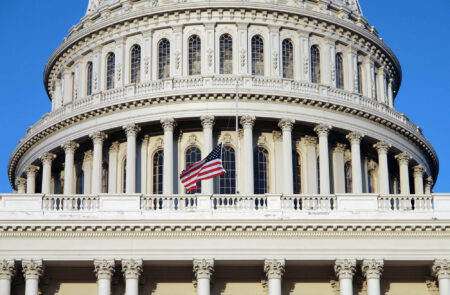
CLARITY Act removed from US Senate calendar on 15 April 2026: Stablecoin yield compromise in place since March, but markup blocked.
Kevin Warsh discloses crypto holdings ahead of Fed hearing
Kevin Warsh, nominated by Donald Trump in March as Jerome Powell’s successor, disclosed his wealth ahead of his Senate hearing. It ranges between USD 131 and 209 million, with over USD 100 million held in two Juggernaut Fund stakes with crypto exposure alone. His portfolio includes holdings in ETF provider Bitwise, the Ethereum Layer 2 Blast, Polymarket, Electric Capital, and the Bitcoin Lightning infrastructure Flashnet. However, Federal Reserve ethics rules prohibit FOMC members from holding cryptocurrencies and individual stocks. If confirmed, Warsh would have six months to divest all positions. Powell’s term ends on 15 May 2026, increasing the time pressure on the confirmation process.
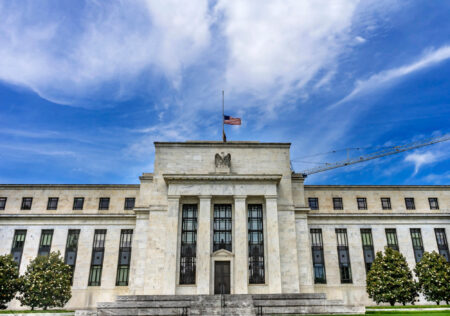
Kevin Warsh discloses over USD 100M in wealth with crypto and AI positions. He must divest if confirmed as Fed Chair.
Goldman Sachs enters Bitcoin ETF market with covered call product
US banking giant Goldman Sachs filed its first Bitcoin ETF with the SEC this week. The move is notable for a firm that as recently as 2020 compared Bitcoin to tulip mania. The Goldman Sachs Bitcoin Premium Income ETF holds at least 80% of its assets in spot Bitcoin ETPs and sells call options on them to generate ongoing premium income. The overwrite ratio can be flexibly adjusted between 40 and 100%, trading higher income against capped upside. Goldman is not targeting a price war with BlackRock’s IBIT (USD 55 billion in volume, 0.25% fee) or Morgan Stanley (0.14%), but rather income-oriented investors. The launch is expected for late June 2026.
Goldman Sachs files its first Bitcoin ETF with the SEC, a covered-call product offering premium income with a capped upside for investors.
Deutsche Börse acquires Kraken stake at sharply reduced valuation
Deutsche Börse is investing USD 200 million in Payward Inc., the parent company of crypto exchange Kraken, acquiring a 1.5% stake. The implied valuation of USD 13.3 billion is roughly 33% below the USD 20 billion sought in November 2025. Bitcoin has declined around 40% since October, and Kraken had paused its confidentially filed IPO plans. Since this is a secondary market purchase of existing shares, no fresh capital flows to Kraken. Strategically, the deal deepens a partnership in place since December 2025. Kraken is already integrated into the 360T FX platform, with further phases covering white-label solutions, exchange-traded crypto derivatives via Eurex, and tokenisation projects via Clearstream.

Deutsche Boerse invests $200 million in Kraken, acquiring a 1.5% stake in Payward Inc. The implied valuation stands at $13.3 billion.
Trump family extends WLFI lockup by two years
In addition: At World Liberty Financial (WLFI), the Trump family’s crypto project, 62.3 billion tokens are to remain locked for another two years, followed by multi-year linear vesting. Early supporters will only receive their 17 billion tokens after a two-year cliff, stretched over two further years. Insiders and founders must also immediately burn 10% of their more than 45 billion tokens. Particularly controversial is the sanctions mechanism, under which investors who reject the proposal remain locked indefinitely. Trump-affiliated entities control around 60% of all WLFI tokens and received an estimated USD 1 billion in sale proceeds. Tron founder Justin Sun, whose 544 million tokens WLFI had previously frozen, sharply criticises the move. A full investor release would be possible at the earliest in January 2029, after the end of Trump’s second term.
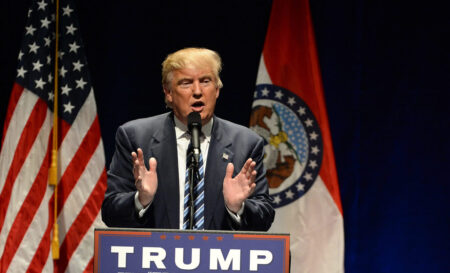
The Trump family’s crypto project plans to unlock 62 billion WLFI tokens. Those who refuse will have their tokens remain locked.