


What has been happening this week in the world of blockchain and cryptocurrencies? Current events and background reports in our weekly review.
Selected articles of the week:
This week, Swiss regulator FINMA approved the first exchange-traded fund that holds Bitcoin directly. Two days later, the provider came forward: Zurich-based BIT Asset Management, a subsidiary of Singapore’s BIT Group. BIT expects its “Bitcoin Fund ETF”, ticker BBIT, to start trading on SIX from November. Previous exchange-traded Bitcoin products are legally debt securities, giving buyers only a claim against the issuer. The new ETF, however, is a fund and is also open to retail investors. This required an exemption, because funds normally have to spread their risk across several investments. FINMA bases the exemption on Bitcoin’s long trading history and high trading volume. According to BIT, it is currently the only Bitcoin ETF in Europe that invests directly. At the same time, FINMA warns that the market risk remains very high. BIT has not yet disclosed fees. In addition, other providers are still awaiting approval.

FINMA has approved the first Bitcoin ETF in Switzerland, a retail fund that holds Bitcoin directly and is also open to private investors.
Deutsche Bank will soon hold crypto assets for corporate clients
Deutsche Bank will launch crypto custody for companies within weeks, says corporate bank co-head Gerald Podobnik. The bank holds the private keys that give clients access to their crypto assets. Clients therefore need no infrastructure of their own. At launch, the bank will safeguard Bitcoin, Ether and the stablecoins USDC, EURC and EURAU. The offering targets companies, asset managers, hedge funds and government bodies in Europe. Retail clients, by contrast, have no access. Initially, the bank is focusing on Germany, with Asia set to follow in 2027. However, the target cities there remain open. Moreover, the timeline is subject to regulatory approval, and the bank has not yet confirmed a license itself. In addition, the bank is late at home, where Commerzbank, LBBW, DZ Bank and DekaBank already hold licenses or are active. Podobnik, meanwhile, sees the new services as a complement to the traditional business.
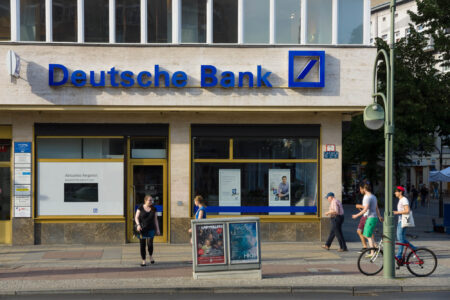
Deutsche Bank is close to launching crypto custody for corporate clients and plans to extend the service to Asian markets in 2027.
Stablecoin rewards: US regulator reviews each case individually
The OCC became the first federal US banking regulator to finalize a GENIUS Act rule. Part of the Treasury, the agency supervises national banks. The 2025 stablecoin law requires issuers to fully back tokens with dollars or similarly liquid assets. Moreover, they may not pay interest. From January 2027, the OCC’s binding rules govern licensing, reserves and token redemption. However, rewards paid by platforms such as Coinbase rather than the issuer remain controversial. The draft presumed blanket evasion in such partner models, whereas the final rule reviews each case individually. Yet the agency did not say whether existing programs comply. Banks fear such rewards will drain their deposits. The banking association ABA therefore argues that the rule cements the status quo for crypto platforms. Treasury Secretary Scott Bessent, by contrast, supports the rule. However, lawmakers have not responded, as the CLARITY Act market structure bill remains stalled in the Senate.

The OCC has published its final rule under the GENIUS Act, effective January 2027, and will review stablecoin rewards paid via partners case by case.
JPMorgan: agency rules are no substitute for a crypto law
US bank JPMorgan believes new agency rules only partly offset the CLARITY Act’s failure in the Senate. The bill aims to clarify which regulator oversees the US crypto market. In September, however, it failed a procedural vote, gaining only 49 of the required 60 votes. Instead, the SEC allows trading until 2031 in shares that exist as tokens on a blockchain. Moreover, the banking regulator OCC grants crypto firms federal licenses that let them safeguard assets, among other things. According to JPMorgan, these licenses are at least difficult to reverse. However, a new administration could reverse such agency steps in just two years, the analysts warn. Only Congress, by contrast, can change a law. Although a motion by Republican Senator Tillis keeps a new vote open, passage this year remains unlikely. Until a law passes, JPMorgan says, investors therefore continue to demand a premium for political and legal risk.

JPMorgan views recent US agency steps as only a partial substitute for the failed Clarity Act and expects elevated risk premiums to persist.
Solana changes its consensus mechanism while running
In addition: the Solana blockchain switched its consensus mechanism this week. These rules determine when the network finally confirms transactions. The new protocol, Alpenglow, took over on Wednesday in about 900 milliseconds, according to Solana. In total, 446 of the 654 validators, the operators who confirm blocks, signed the go-ahead. Roger Wattenhofer of ETH Zurich led the development of the concept. Previously, validator votes ran as ordinary transactions on the blockchain. Now they exchange votes directly and bundle them into certificates. As a result, the time to final confirmation should fall from around 12.8 seconds to about 150 milliseconds. However, Solana has not yet officially published measured values, so the 150 milliseconds remain a target. Moreover, Solana has so far reported no disruptions on its mainnet. Although the network can now withstand additional outages, its tolerance for attacks falls from 33 to 20% of voting power.

Solana Alpenglow replaces the TowerBFT consensus mechanism on October 21, after which validators pay 0.8 SOL per epoch instead of vote fees.