
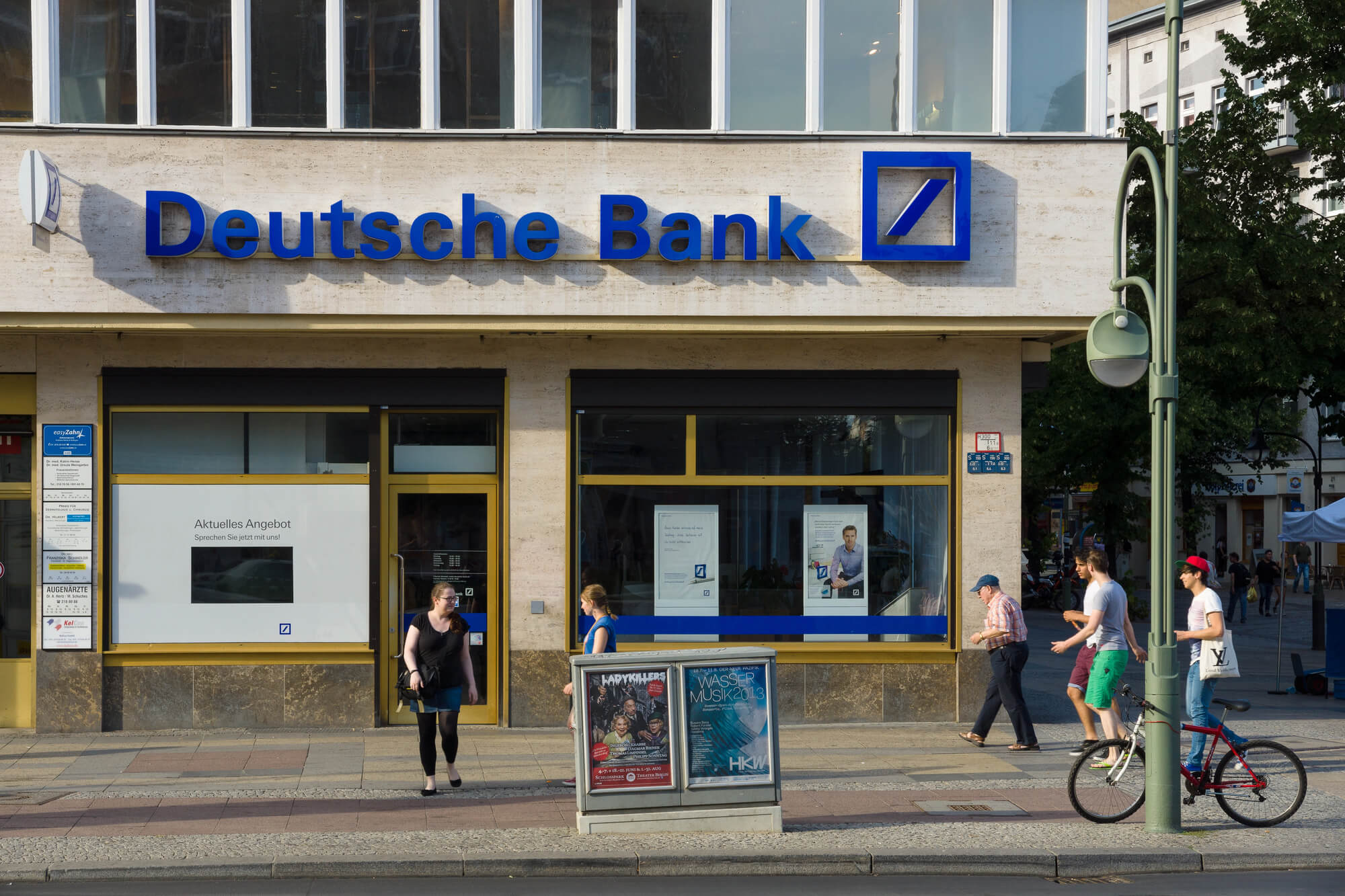
Deutsche Bank is only weeks away from launching crypto custody for corporate clients, says Corporate Bank co-head Gerald Podobnik. As early as 2027, the bank plans to extend the platform to financial centers in Asia.
Custody means safekeeping. The bank holds the wallets and private keys for its clients. Companies therefore do not have to build their own infrastructure. Deutsche Bank is Germany's largest lender, and Podobnik has worked for the institution for 23 years. On the sidelines of the IMF and World Bank meetings in Bangkok, he confirmed the imminent launch to Reuters. Before that, the bank officially announced the service for institutional clients in Europe in September. However, the groundwork goes back several years. In 2023, for example, it took a stake in Swiss custody provider Taurus. The move is part of a strategy to grow the corporate banking business by 8% a year through 2028.
What the bank holds and for whom
The service covers two functions. Clients can hold digital assets with the bank and transfer them to third parties. At launch, the offering includes Bitcoin and Ether as well as the stablecoins, or e-money tokens, USDC, EURC and EURAU. Further assets will follow depending on demand and internal approval processes, and the bank also plans tokenized financial instruments. EURAU comes from within the group. AllUnity, a joint venture of DWS, Deutsche Bank's asset manager, with Galaxy and Flow Traders, issues the euro stablecoin. In July 2025, AllUnity received an e-money institution license from BaFin and can therefore issue under MiCA. The token has been live on Ethereum since late July 2025. At the time, euro stablecoins made up around 0.2% of the total stablecoin market.
On security, the bank relies on hardware-based key generation, segregation of duties and multi-person approvals. Warm storage and cold storage run in separate environments. The setup also includes redundant infrastructure and controlled backup and recovery procedures. For defined technical components, however, the institution draws on external technology and infrastructure providers. It does not name them.
At launch, the service targets clients of the Corporate Bank and the Investment Bank in Europe. These include companies, asset managers, hedge funds, custodians, brokers and government institutions. Retail clients, by contrast, remain excluded. Moreover, the bank points out that no deposit guarantee protects crypto assets the way it protects qualifying bank deposits.
A phased launch with a regulatory caveat
The announced timeline comes with a caveat. In its September announcement, the bank already tied the launch with first clients to the applicable regulatory timetable. At the time, a spokesperson told Cointelegraph that the bank expected the license for the offering in October under MiCA. The October Reuters report, on the other hand, makes no mention of a license.
Specialist portal MiCAwatch reports an entry in ESMA's MiCA register. It lists Deutsche Bank as a crypto-asset service provider under BaFin supervision. According to MiCAwatch, the entry covers only custody and transfer and applies to Germany alone. The bank itself has not confirmed this so far. The MiCA transitional periods expired at the start of July 2026. Furthermore, a national authorization under the framework is valid across the entire EEA. Yet the reported entry shows no such passport.
In terms of content, the bank is rolling out the services in stages. First comes custody of major cryptocurrencies such as Bitcoin and Ether. Later, the bank wants to add services that let clients move money into and out of widely used stablecoins. Custody of USDC, EURC and EURAU is thus part of the launch. Deposits and withdrawals via these tokens only come at a later stage. In addition, the list includes tokenized deposits and support for issuing blockchain-based securities such as digital bonds. Podobnik says the bank is developing the service further based on client demand, regulatory requirements and its own risk appetite.


Four German banks beat Deutsche Bank to crypto custody
For Deutsche Bank, this is its first in-house custody service for clients, not its first crypto engagement. The bank originally made its crypto custody ambitions public back in 2020. In February 2023, it took part in Taurus's USD 65 million Series B round. Seven months later came a partnership with the custody and tokenization provider. At the end of 2024, reports emerged of a proprietary Ethereum layer-2 based on ZKsync. In June 2025, Sabih Behzad, head of digital assets, considered entering stablecoins, possibly with a proprietary token. Bloomberg reported in July 2025, citing anonymous sources, that the bank was building the service for 2026 with Bitpanda's technology unit. Taurus was said to be involved as well. Bitpanda would neither confirm nor deny this. Still, the official 2026 announcement names no partner.
In its home market, the institution is thus arriving relatively late. Commerzbank received a crypto custody license from BaFin as early as November 2023. LBBW has offered crypto custody based on the Bitpanda platform since April 2024. In December 2025, DZ Bank obtained MiCA authorization for its meinKrypto platform. DekaBank likewise holds a BaFin custody license and is building out crypto trading for Sparkassen clients. According to Bloomberg, Deka planned that launch by summer 2026. Consequently, Deutsche Bank faces competitors that already hold a license or are already in the market.
One gap stands out in the euro stablecoin space. Amsterdam-based banking consortium Qivalis has applied to the Dutch central bank for an e-money license. Its members include BNP Paribas, ING, UniCredit, DZ Bank and DekaBank, among others. Deutsche Bank is not one of them, although DWS, its asset manager, co-backs its own euro stablecoin through AllUnity.
Asia expansion without a fixed roadmap
After the launch in Germany, the bank plans to take the platform to Asian financial centers in 2027. Which cities the bank is targeting remains unknown. Nor has it presented a timetable for local approvals. For now, the Asia plan is therefore a goal rather than a fixed date. Strategically, it belongs to the Corporate Bank's growth program. Podobnik cites stablecoin holdings worth hundreds of billions of US dollars as a source of new value pools.
At the same time, he positions the blockchain offerings as a complement to the existing business. The September announcement likewise describes the solution as an addition to the traditional financial system. According to Podobnik, the new offerings will "not necessarily" replace today's business.
"I believe that we as a financial system need to offer our clients tokenized or blockchain solutions as additional services alongside our traditional ones." - Gerald Podobnik, co-head of the Corporate Bank, Deutsche Bank