South Korean crypto exchange Bithumb distributed roughly 620,000 Bitcoin to 695 users on Thursday evening due to an employee error. The total value of the erroneous transaction amounted to approximately USD 44 billion. The cause was a simple mix-up of the currency unit during a promotional campaign.
As part of a so-called "Random Box" promotion, winners were supposed to receive 2,000 Won (approximately USD 1.37) each. Instead, an employee entered Bitcoin as the payment unit. Each affected user consequently received 2,000 BTC, equivalent to roughly USD 142 million per person. Bithumb says it detected the anomaly within eight minutes and halted trading at 7:40 PM local time. The incident made headlines worldwide within hours.
Input error triggers price crash on Bithumb
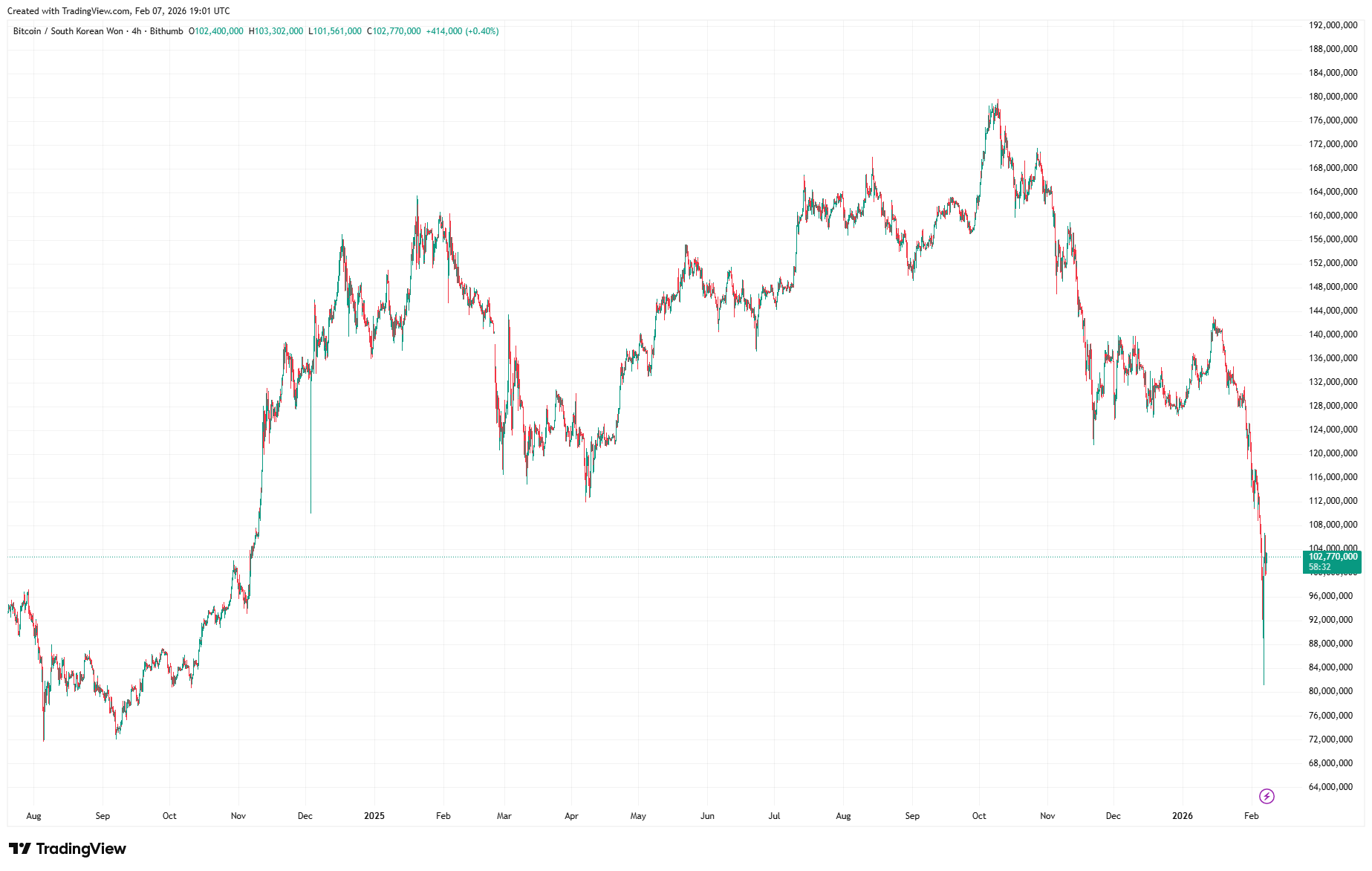
The Bithumb Bitcoin error had immediate consequences for the local market. Bitcoin's price on the platform plunged by 17 percent, falling from 98.29 million Won (USD 67,188) to 81.1 million Won (roughly USD 55,000). Users began selling the credited Bitcoin immediately. As a result, estimates suggest Bitcoin worth approximately USD 2 billion changed hands in the first five minutes.
However, all transfers took place exclusively on Bithumb's internal ledgers. Not a single transaction reached the blockchain. In fact, the erroneous credits were purely accounting entries, not actual on-chain movements. No user was able to withdraw Bitcoin from the platform. This limited the damage considerably. Bithumb's own liquidation prevention system prevented a chain reaction of forced liquidations, according to the exchange.
"The market price returned to normal levels within five minutes, and the domino liquidation prevention system worked properly, so there was no chain reaction of liquidations due to the abnormal Bitcoin price." - Bithumb statement
Bithumb recovers 99.7 percent of the Bitcoin
Of the 620,000 erroneously distributed Bitcoin, Bithumb says it was able to reverse 618,212 BTC. This corresponds to a recovery rate of 99.7 percent. Meanwhile, the remaining 1,788 BTC had already been sold by users. Of that amount, Bithumb says it recovered 93 percent in Won and digital assets.
For customers who sold at unfavorable prices during the incident, Bithumb is offering compensation of 110 percent of the loss incurred. The exchange estimates customer losses from panic selling at around 1 billion Won (over USD 680,000). In addition, all users who were active during the incident will also receive 20,000 Won (USD 15). Bithumb is additionally waiving trading fees for seven days.
A total of 700 users participated in the "Random Box" promotion. 96 percent of them were supposed to receive the minimum prize of 2,000 Won. Instead, 672 participants received the erroneous Bitcoin credits. The rest received correct payouts.




Three South Korean regulators investigating in parallel
South Korea's Financial Supervisory Service (FSS) launched an emergency on-site inspection on Friday under the chairmanship of Governor Lee Chan-jin. At the same time, the Financial Services Commission (FSC) is conducting a parallel review. And the Korea Fair Trade Commission (KFTC) is examining the exchange's promotional practices. As such, three agencies are now investigating a single incident simultaneously.
These investigations focus on the exact cause of the system error, potential regulatory violations, and the effectiveness of the recovery measures. South Korea is among the world's most active crypto markets. Both the FSS and FSC maintain strict oversight of licensed exchanges. An incident of this magnitude could therefore lead to tighter operational requirements.
The timing is particularly sensitive for Bithumb. The exchange had announced an IPO for the second half of the year. It recently grew its share of South Korean crypto trading from single-digit percentages to 25 percent. As South Korea's second-largest crypto exchange, Bithumb serves 2.42 million monthly users with a 24-hour trading volume of USD 383 million. Market leader Upbit still holds over 60 percent market share, but Bithumb had been closing the gap significantly. Whether the regulatory scrutiny will delay the planned IPO remains to be seen.
Crypto industry has a long history of human errors
Input errors and operational failures run through the entire history of the crypto industry. Crypto.com accidentally transferred AUD 10.5 million (roughly USD 7 million) to an Australian user in 2021. The intended amount was a mere USD 100 refund. In October 2025, Paxos accidentally minted 300 trillion PYUSD tokens, more than the entire global economy produces in value. Paxos destroyed the tokens within minutes.
Following the incident, Bithumb announced a comprehensive security package. It includes enhanced asset verification, multi-step payment approvals, and an AI-based monitoring system for abnormal transactions around the clock. The exchange plans to completely overhaul its entire payment process.