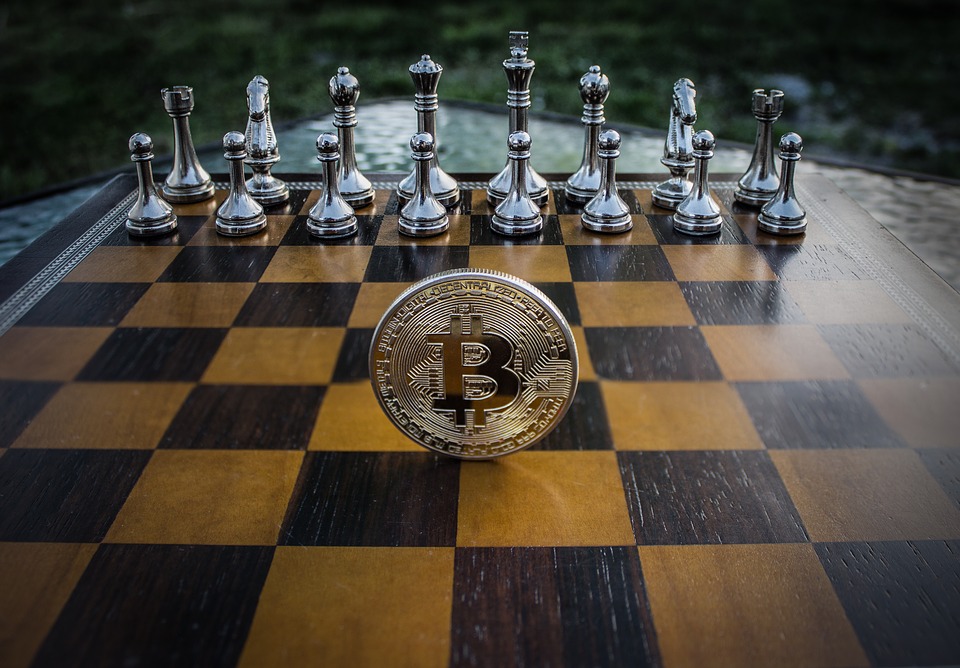
Bitcoin is the first developed and leading cryptocurrency. Unlike traditional money, Bitcoin is digital and does not exist in physical form. Instead, it consists of encrypted records that are irrevocably stored on the so-called blockchain technology. The decentralized Bitcoin network allows for the direct transfer of value between users.
The concept was developed by an individual or group under the pseudonym Satoshi Nakamoto. To this day, it is not clear who is behind the name. The Bitcoin white paper was published in October 2008 and describes how to transfer value directly between users (peer-to-peer) without a third party like the traditional banking system.
How Bitcoin works
Bitcoin or BTC is the currency of the Bitcoin blockchain and is often referred to as digital gold. Like gold, Bitcoin is scarce and durable. There are only 21 million Bitcoins that can ever be mined. This is in contrast to fiat currencies, which can be printed indefinitely by central banks. It is speculated that the scarcity of Bitcoin may lead to an increase in value over time. This makes Bitcoin an attractive investment for those looking to hedge against inflation.
The blockchain is a public, decentralized database that records all transactions on the Bitcoin network. Transactions are collected and stored in blocks. These blocks are validated approximately every 10 minutes (depending on network usage). Upon successful validation, the new block of data is linked to the previous chain of blocks to form the blockchain.
Steps required to validate transactions on the Bitcoin network:
- Transaction creation
A user initiates a transaction to send any amount of Bitcoin from one wallet address to another. - Transaction verification
Bitcoin miners verify the transaction. - Linking the transaction to the blockchain
The verified transaction is stored as a new block and linked to the previous blocks. - Completing the transaction
The transaction is completed and the Bitcoins are credited to the recipient.
Bitcoin mining is the process of adding new Bitcoins to circulation while securing transactions on the Bitcoin network. Miners use powerful computers to solve complex mathematical problems required to complete the transactions. The first miner to solve the problem receives Bitcoin as a reward for the committed work. This process is called Proof-of-Work (PoW).
Bitcoin Enables Global Value Transfer and Solves the Double Spending Problem
The Bitcoin blockchain is a decentralized network of computers that are not subordinate to a central authority. Thus, there is no direct controlling party of the system. This is in stark contrast to fiat currencies, which are controlled and issued by central banks. With Bitcoin, transactions can be made from anywhere in the world, as long as there is an Internet connection. Cross-border, global transactions are possible 24/7 at the fraction of cost of fiat transactions.
Before the development of blockchain technology, the problem of "double spending" blocked the adoption of digital currencies. The blockchain represents an immutable ledger that prevents double spending or the spending of funds that do not exist. By introducing the PoW system based on a cryptographic puzzle, it became possible to verify and process payments without a central authority.
The Bitcoin currency and its applications
Data shows that residents of more and more countries around the world are venturing into cryptocurrency. Acceptance is growing globally. In emerging markets, many are turning to cryptocurrencies to store savings in bitcoin, send and receive remittances, and conduct business transactions. However, adoption in North America, Western Europe, and East Asia has been largely driven by institutional investment in recent years.
Since September 2021, the first country has been using Bitcoin as legal tender. In doing so, El Salvador not only uses Bitcoin as a currency, but in addition the underlying network as an electronic payment system. Another positive impact is the progressive digitalization and democratization of finance. More than 70% of the adult population in El Salvador does not have a bank account. The easy access to electronic payments through a special Bitcoin wallet, has surpassed the number of bank accounts within 30 days.
The cryptocurrency is gaining popularity in other developing countries. Despite strict regulations and, in some cases, outright bans, Bitcoin use is growing rapidly in countries like Nigeria. Many citizens are turning to Bitcoin in no small part due to restrictions on international trade and the loss of value of their local currency. Nigeria, a country with an annual inflation rate of over 15%, ranks 8th on the 2020 Crypto Adoption Index. The country's young population in particular is looking for alternatives.