
Blockchains hold the promise for money for the internet, world computer, the future of finance, the metaverse and more. However, because of their decentralised architecture, they are struggling to support even a fraction of the user base of the older centralised systems. An overview of the scalability problem.
In the interplay between the blockchain trilemma, chains can usually achieve two of the three properties scalability, decentralisation and security. For a given security level, scalability is inversely proportional to decentralisation. Hence, a blockchain must make trade-offs. Scalability refers to a blockchain system's ability to support growth in terms of users and transactions without compromising performance.
Network congestion
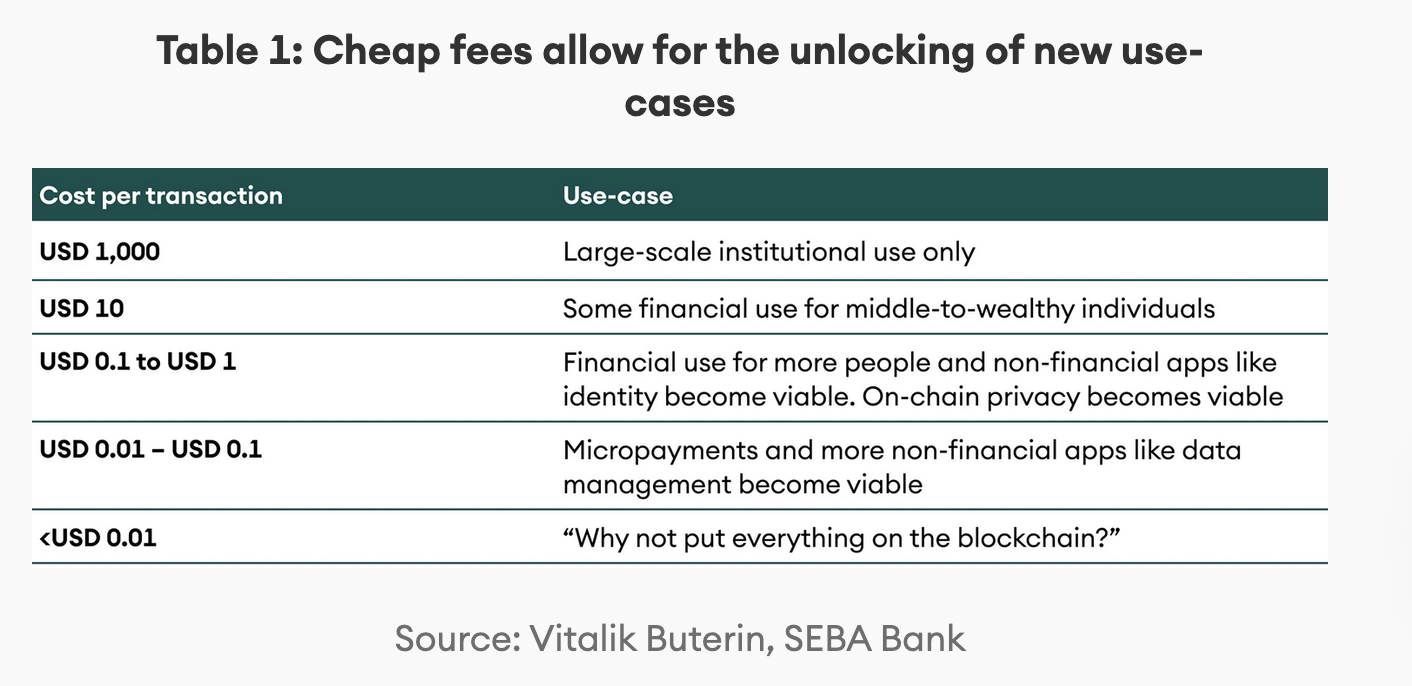
In most current blockchains, as the number of transactions increases, the network gets clogged with pending transactions forcing users to pay higher than usual fees to get their transactions included. Scalability is important as it allows for cheap fees and unlocking of new use-cases, finally helping onboard new users.
These issues are most prominent on older generation blockchains like Ethereum and Bitcoin. The following figures show the mean price of transaction fees of Bitcoin and Ethereum in USD and their capacity utilisation. Note that Ethereum's capacity utilisation has dropped to about 50% recently – the target level – because of the implementation of Ethereum Improvement Proposal 1559. Post EIP-1559, whenever block space utilisation is above 50%, fees increase and vice versa.
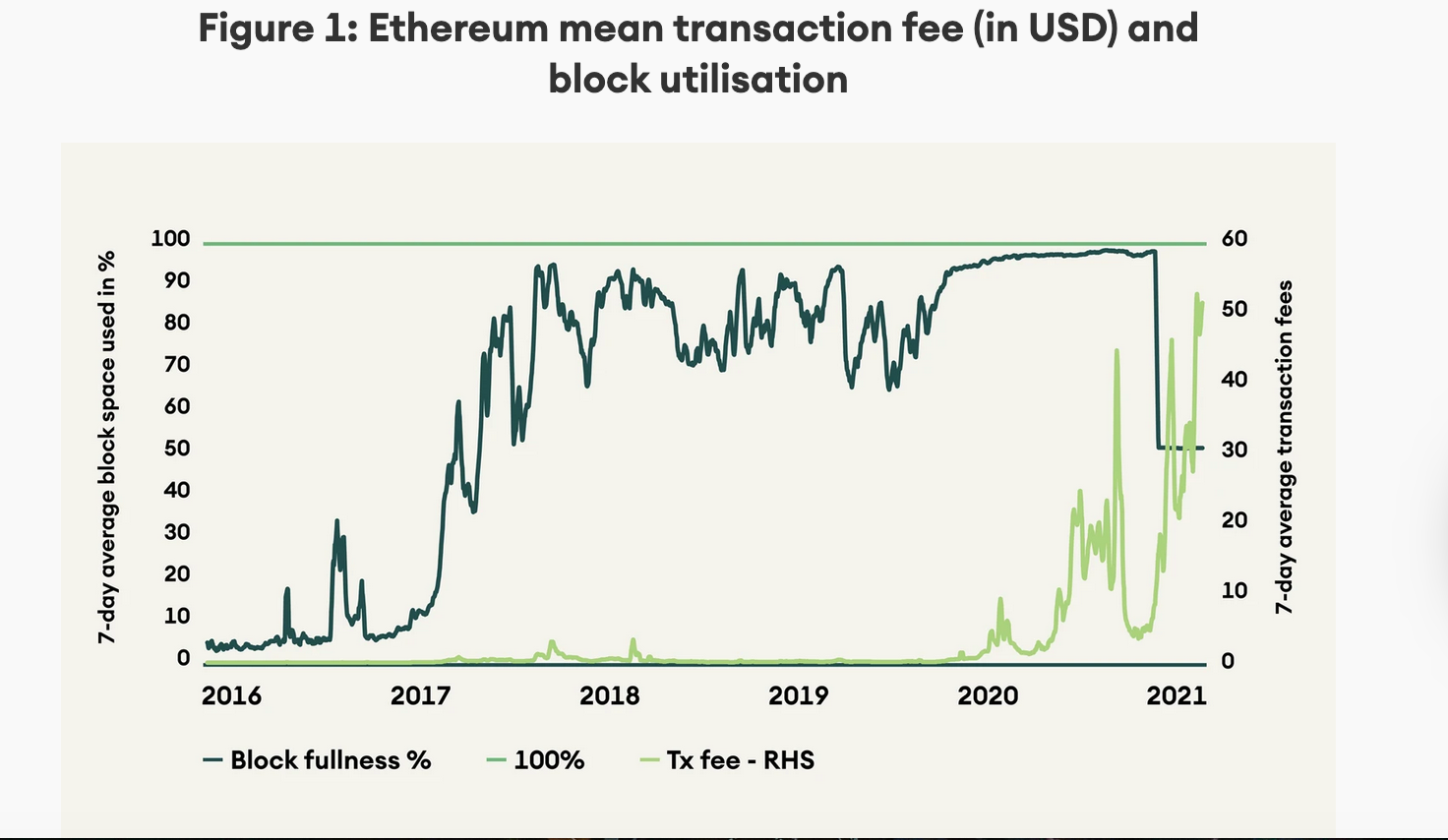
Regarding Bitcoin, the link between capacity constraint – lack of scalability – and the fee is direct. When the system is in high demand, congestion occurs and fees spike.
Traditional payment networks
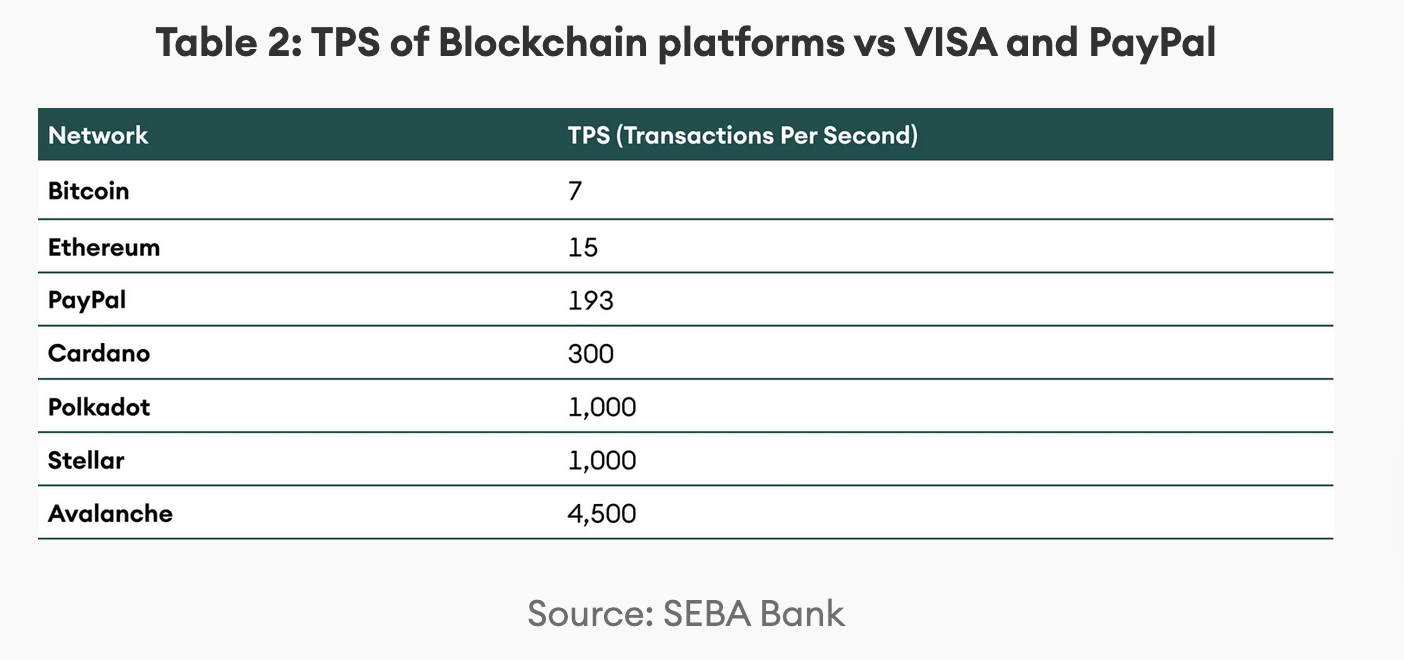
Compared to traditional financial solutions, the ratio of transaction speed to cost is unfavourable on older blockchain networks. Visa's payment processors execute around 1,700 transactions per second (TPS) and can scale up to 65,000 TPS. For comparison, a blockchain like Ethereum can process only 15 TPS. Because of this limitation, contenders such as Binance Smart Chain, Solana, Polkadot have emerged to provide higher TPS, often at the cost of higher centralisation. The following table shows the TPS comparison of various blockchains platforms versus VISA and PayPal.
While talking about the problem of scalability, Elon Musk tweeted about Dogecoin, quoting, “Ideally, Doge speeds up block time 10x, increases block size 10x & drops fees 100x. Then it wins hands down.” As enticing as it sounds, there is a price for it.
Can we do what Elon proposes?
One of the core tenets of blockchain is to minimise trust, as the saying often goes – “Don’t trust, verify”. A blockchain should strive to provide minimum hindrance if a user wishes to run a node and “verify” the blockchain themselves. This helps maximise decentralisation and allows the blockchain to remain censorship-resistant, providing security against attacks. Bitcoin overcame the ban on Chinese miners because it was decentralised enough to keep the network running even as the most significant contributor fell off.
To maximise decentralisation and trustlessness, a blockchain should be light enough to run on average consumer-grade hardware. The requirements for Bitcoin and Ethereum nodes are barely low enough to allow for consumer laptops to run them. For a higher throughput chain like Solana, the requirements are higher and only dedicated institutional validators can verify transactions. If we implement Elon's proposal, it will 10x the requirement from nodes, killing decentralisation and making the chain prone to censorship. Hence, there is a need to explore alternate solutions for scalability. To illustrate this path, we will take Ethereum as an example and understand how these solutions pan out and the trade-offs while selecting these alternatives.
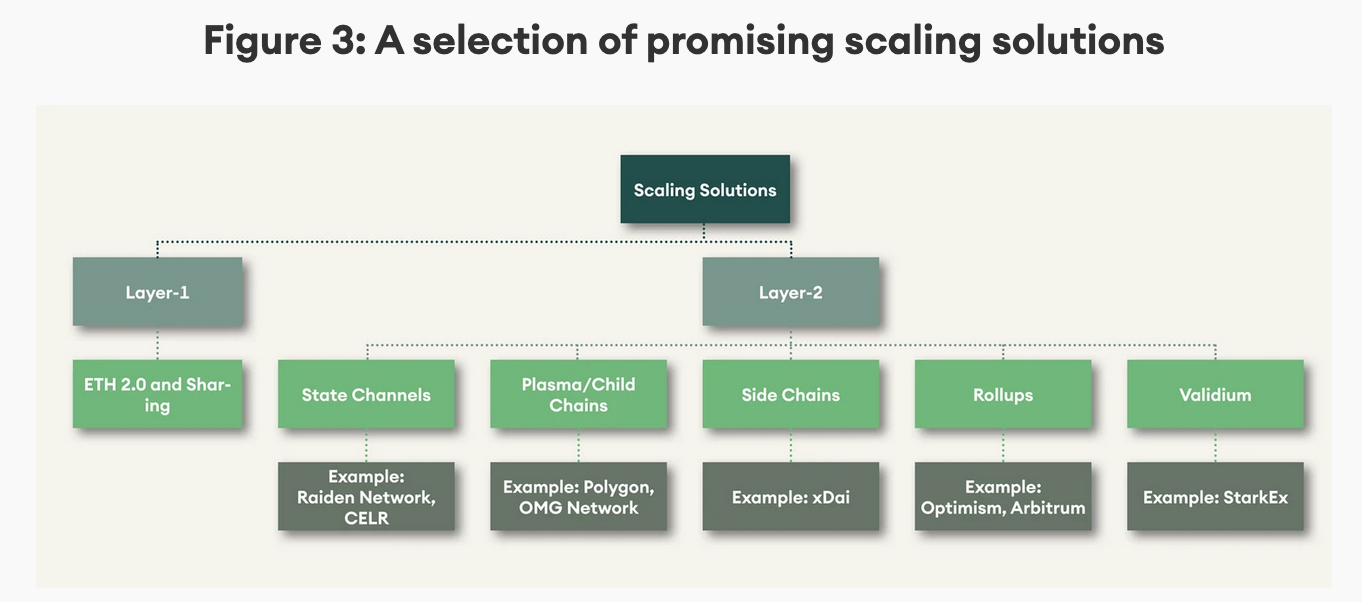
Fortunately, several different scaling solutions are emerging. Some are already live, in different stages of rollouts, while others are still under development. Each of these solutions provides unique trade-offs and can be fundamentally categorised as follows:
- Layer-1 or on-chain solutions: These solutions keep all the transactions on the main chain itself.
- Layer-2 or off-chain solutions: These solutions adopt an off-chain mechanism where transactions and computations occur outside the main chain.
To better understand the difference between layer-1 and layer-2 solutions, imagine a road known for traffic jams. The layer-1 solution is to upgrade the road, reduce intersections, widen lanes to "process" more cars. The layer-2 solution is to create a second road or a public transport infrastructure like a bus or metro service to reduce congestion.



Layer-1 solutions
To illustrate the layer-1 scalability solutions, we present the case of Ethereum, which has started its upgrade to Ethereum 2.0. The primary reason to move to ETH 2.0 is to increase the throughput of Ethereum to help it process more transactions and compete with newer layer-1 solutions. TPS should increase from ~15 today to ~100,000 once fully implemented along with rollups. This will be a significant improvement allowing more use-cases and lower transaction costs. To achieve such speed, the Ethereum architecture will be “sharded”. Sharding means splitting the main chain into multiple parallel chains to process transactions. This is similar to upgrading a single-lane road into a highway with many lanes, in the case of Ethereum, 64.
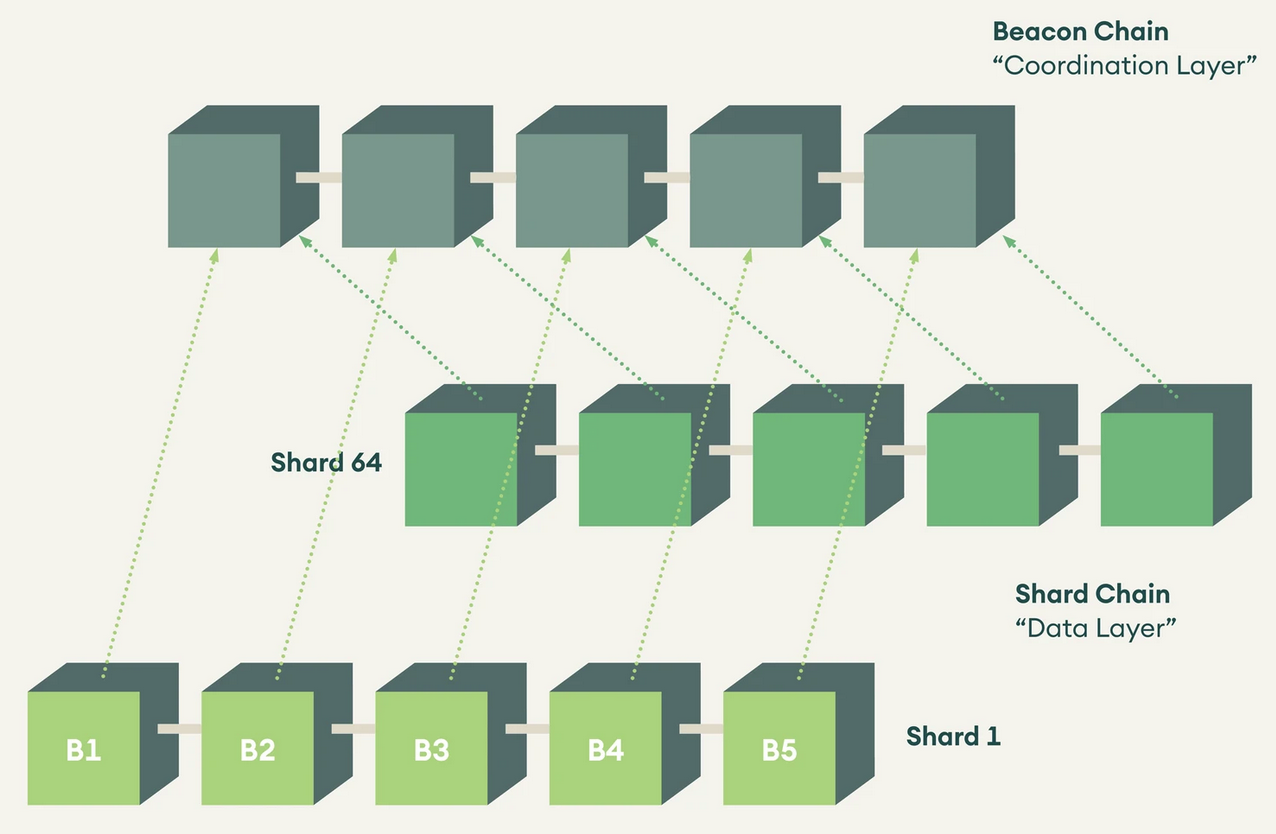
Through sharding, computing power and storage capacity can be distributed across multiple systems, lowering the requirement from node operators. Each shard will have its very own independent state and transactional history. So, there will be no need to run a full Ethereum node contrary to the current version. Among all the chains running in parallel, the Beacon Chain will function as a coordination layer to coordinate all system activities, storing and managing validators registry, choosing block producers, and applying the rules of consensus.
For blockchains and crypto assets to achieve their lofty promises of world computers and money for the internet, they must be able to scale sustainably. Solving scalability will not be a winner-take-all scenario, and different use-cases will require different scaling and security needs. While we have focused on the scalability problem and ideas for layer-1 blockchains, an upcoming article will shed light on different solutions built on top of them - so-called layer-2 platforms.