Solana has outpaced Ethereum by 100% over the past year, driven by soaring adoption, high-profile partnerships and surging growth of its ecosystem. Still, Ethereum's appeal to Wall Street and growing ETF inflows position it for a resurgence. A comparison of Ethereum vs. Solana.
In recent months, Solana has emerged as a leading platform, significantly influencing two of the most popular sectors: memecoins and AI agents. Its relevance in both areas can be attributed to two key factors: cost-effectiveness and superior throughput compared to established blockchains. This prominence was highlighted when President Donald Trump launched his memecoin on Solana just before his inauguration, sparking additional excitement in the memecoin space.
Additionally, Virtuals platform, a major launchpad for AI agents initially on the Base network, announced its expansion to Solana. Given these developments, it's an opportune moment to explore how Solana differentiates itself from Ethereum, examine their respective strengths, and discuss why, despite facing substantial criticism, Ethereum's future remains promising as the largest smart contract platform by market capitalization.
Technical performance: Solana's leading
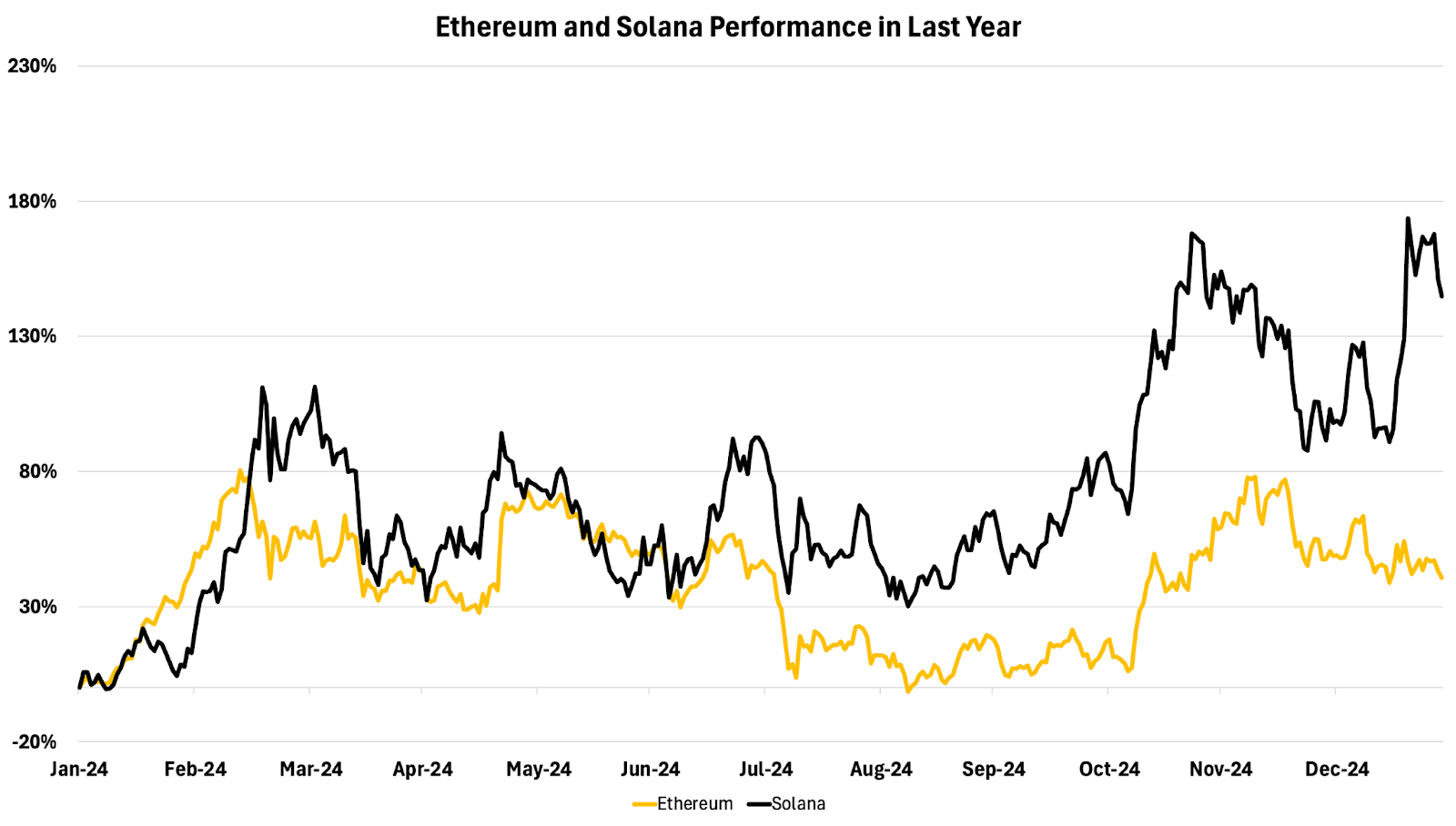
To begin with, Solana has significantly outperformed Ethereum over the past year, surpassing it by over 100% in performance. Solana's rise can be credited to its strategic partnerships and expanding ecosystem, but its performance has also benefited from setbacks in Ethereum's scaling roadmap, which have raised concerns about the latter’s long-term viability.
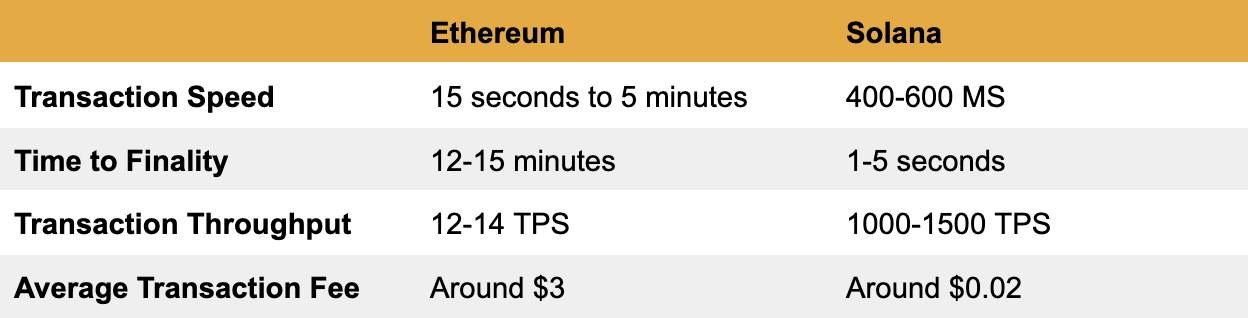
It’s important to remember that Ethereum features an additional layer built on top of it that helps it address its scaling limitations, thus the comparison shouldn’t just be between Ethereum and Solana. However, to contextualize, here’s how both settlement layers differ in terms of their technical performance:
Usage and adoption of the networks
Ethereum's technical constraints have hindered its ability to provide a scalable experience comparable to Solana. Consequently, Solana's Layer 1 architecture has given it a significant advantage not only over Ethereum itself but also over its entire ecosystem of Layer 2 solutions.
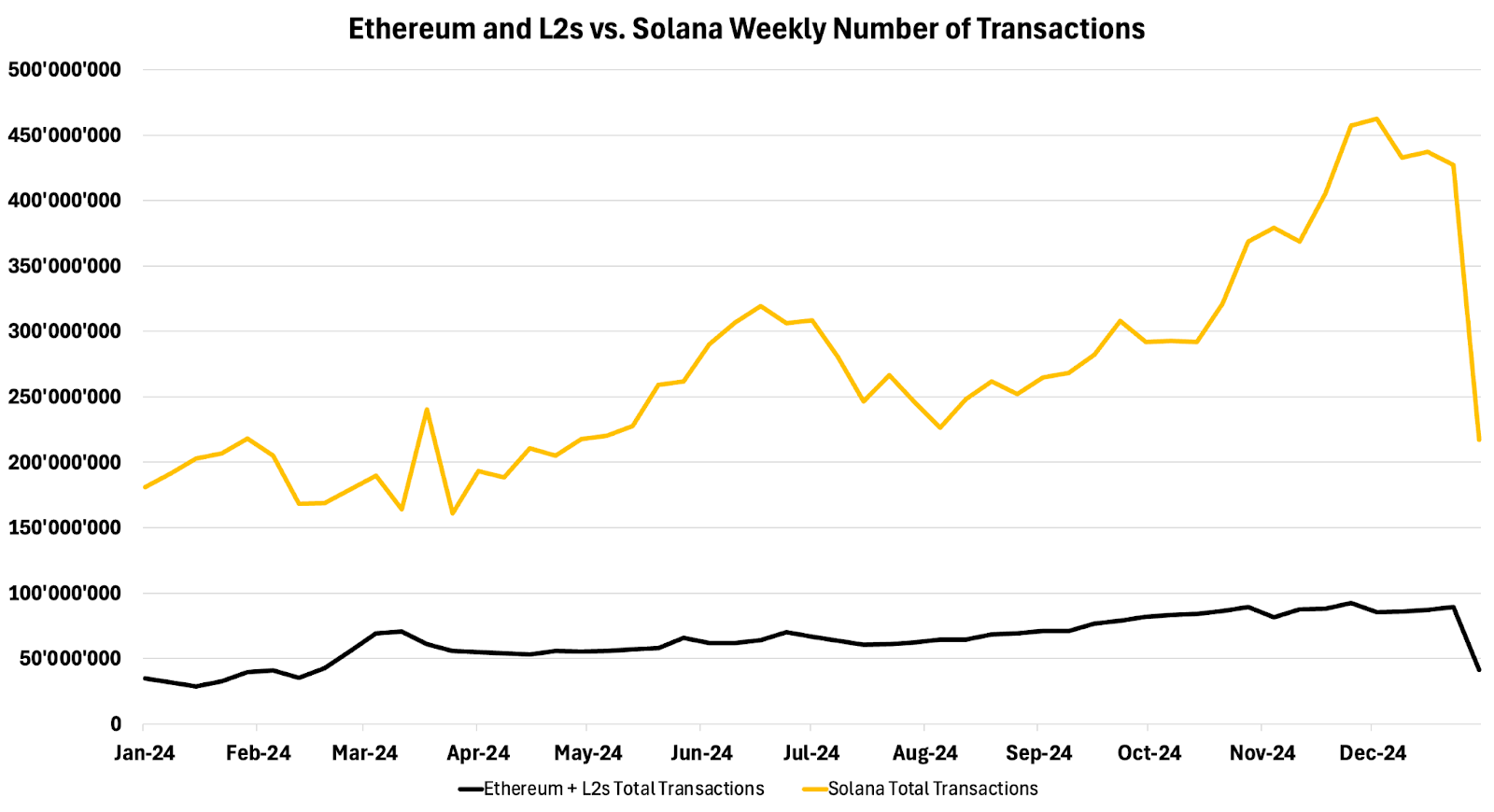
The weekly user count paints a similar picture, revealing that Solana also surpasses Ethereum and its L2s in overall activity.
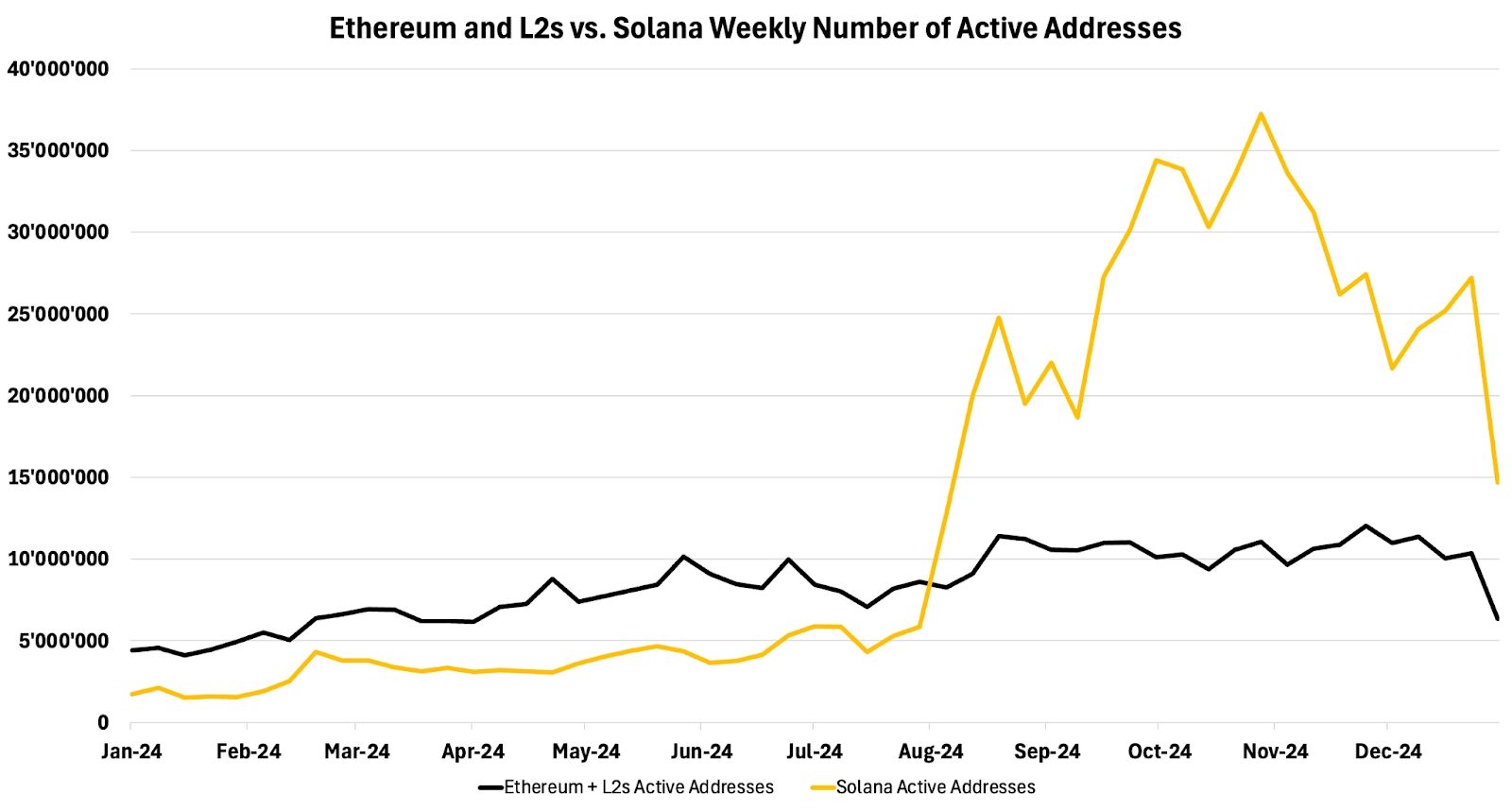
Clearly, Solana has been experiencing an unprecedented surge in user activity. In the past, Solana experienced significant network outages, which previously halted the blockchain for hours. However, these issues have been largely resolved since the last major incident in February 2024. While they varied in cause, most of the incidents highlighted a common issue: the need for diverse validator clients beyond the iterations initially developed by the Solana Foundation. To address this, Solana has implemented several solutions, including the development of alternative validator clients such as Jump Crypto's Firedancer, which we'll explore in detail later. This diversification strategy aims to bolster network resilience and minimize the risk of system-wide failures.



Solana DEXes processing half the volume of Nasdaq
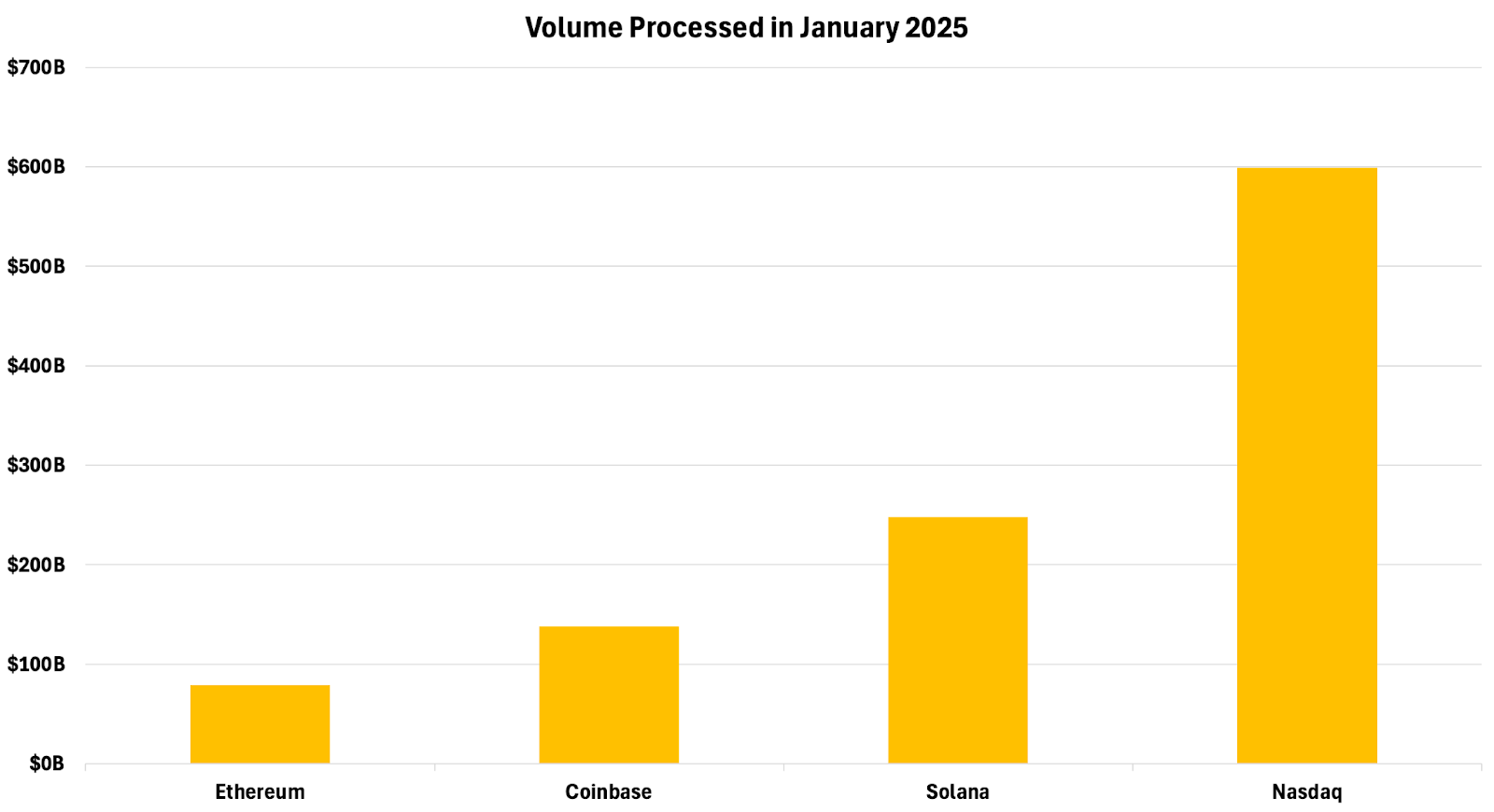
While the capital deposited into DEXs contributes a larger share on Ethereum, Solana’s DEX volume majorly outpaces the latter due to its cost efficiency and high transaction throughput, as seen in Figure 5. What’s more impressive is that Solana actually outpaced Coinbase’s monthly volume in January, while making up close to half of Nasdaq’s volume.
Emerging industries on Ethereum vs. Solana
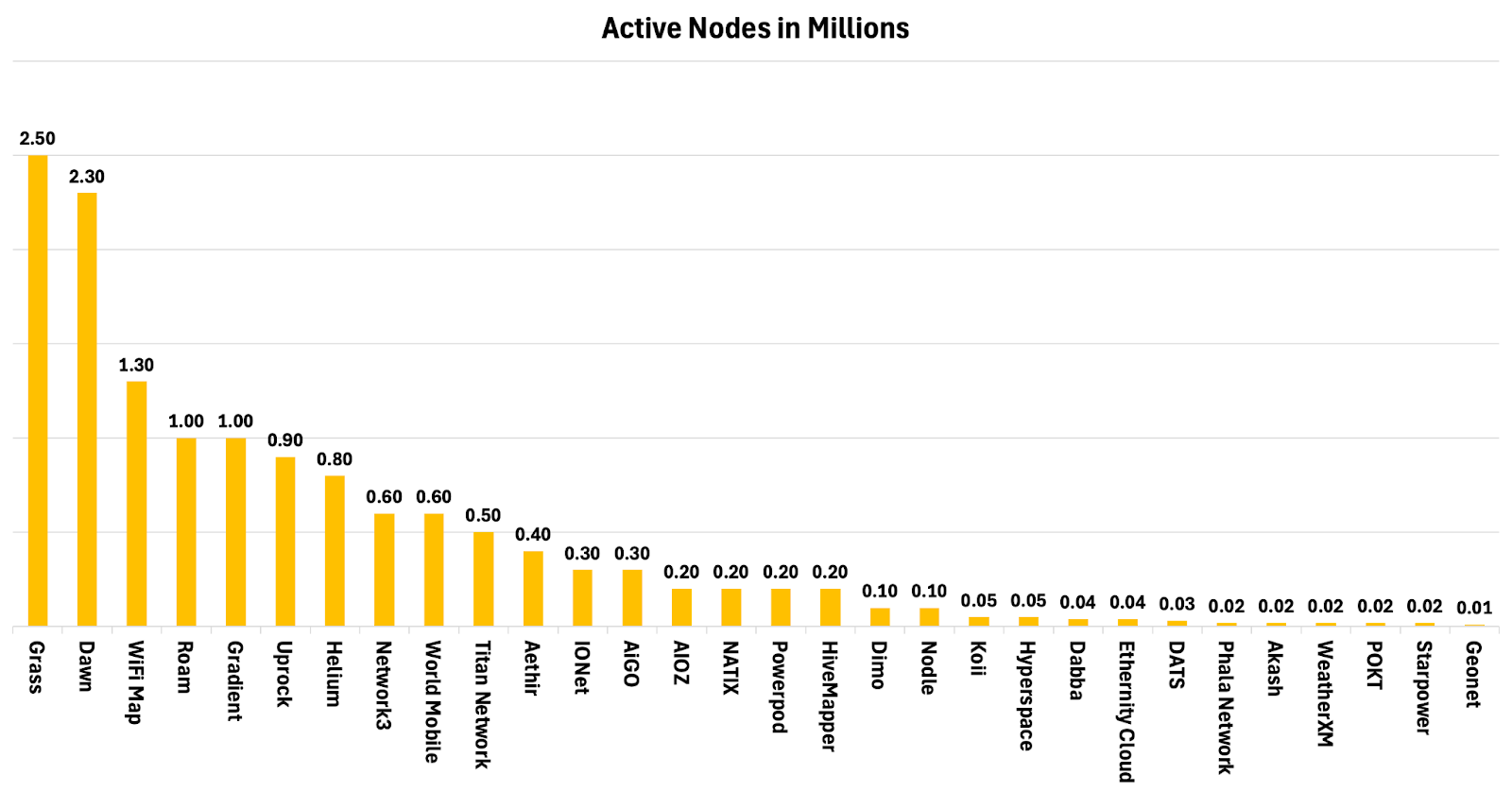
Overall, Solana has successfully captured both user interest and capital, as demonstrated throughout the report. This shift can be attributed to the network's improved sustainability and its resolution of past downtime issues, which had previously hindered broader adoption. Solana's enhanced reliability, coupled with its scalable architecture, has also positioned it as the go-to platform for emerging industries. A notable example is Decentralized Physical Infrastructure (DePIN), where 7 of the top 10 applications by active nodes are now operating on Solana, as shown below.
Solana has captured over 50% of the blockchain-based AI agent sector, which has surged in prominence over the past 9 months. This dominance stems from the same factors that made Solana ideal for DePIN: its high-performance, cost-effective architecture that enables microtransactions and reduces operational costs. Additionally, Solana boasts a thriving AI ecosystem, featuring key service providers like Render and IO.NET, alongside numerous distributed computing and AI-servicing applications. Consequently, Solana's infrastructure has proven exceptionally suitable for AI agent operations, establishing it as the premier platform for this innovative domain.
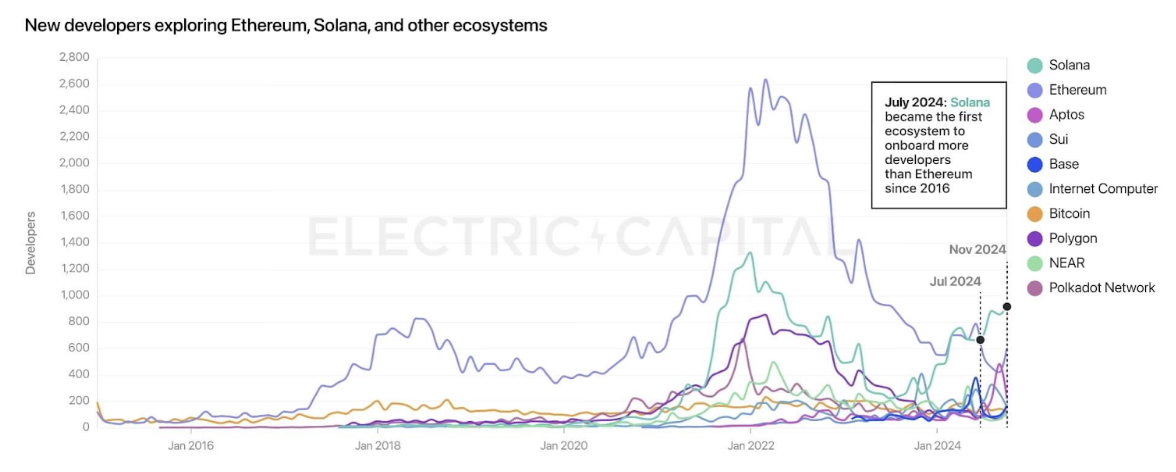
Looking ahead, while decentralized AI training and inference are still emerging concepts, 2025 is expected to witness significant advancements in these areas. This progression is likely to further reinforce Solana's status as the ecosystem of choice for AI experimentation and innovation within the industry, attracting more developers and capital to its expanding ecosystem. As a result, Solana has already emerged as the leading platform for attracting new developers, bypassing Ethereum for the first time ever, as shown below.
Ethereum: the institutional blockchain?
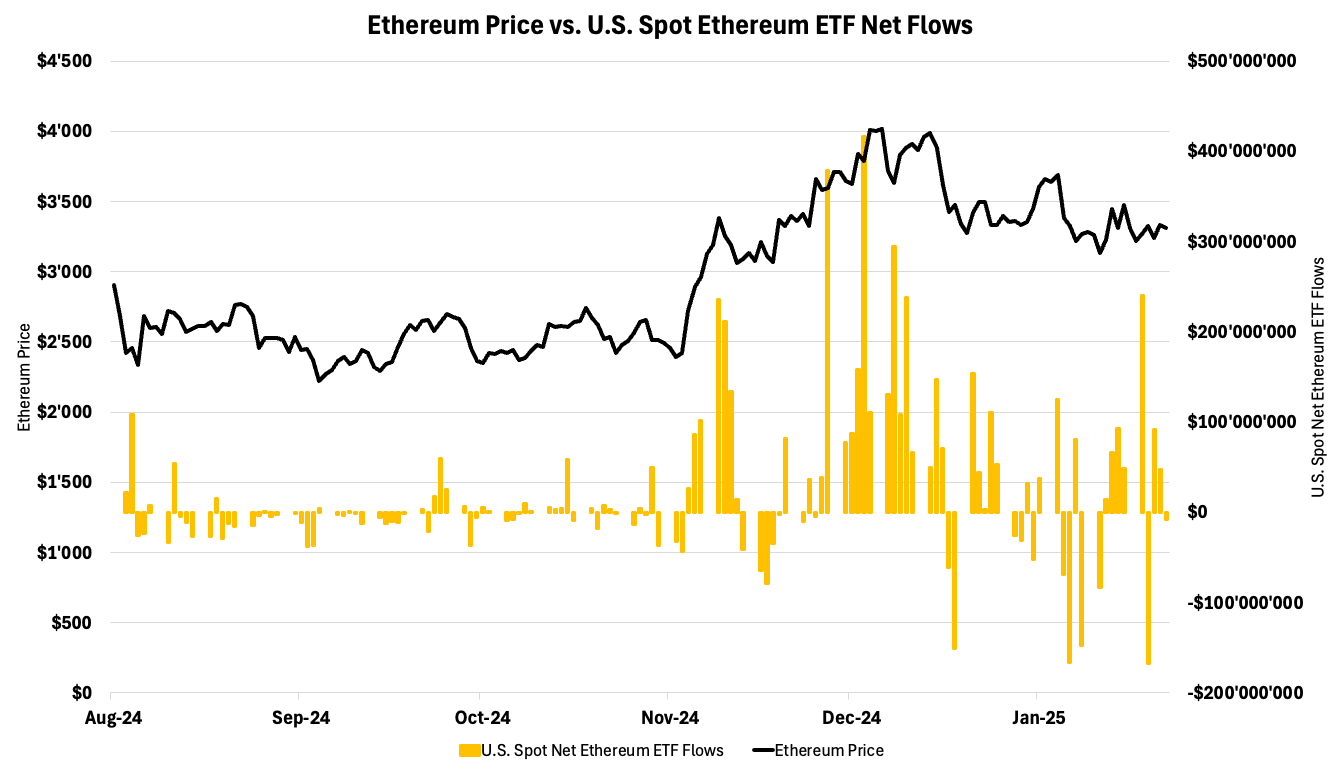
May that be, Ethereum has still solidified its position as the second-most institutionally accepted crypto asset in the US, following Bitcoin's lead in SEC-approved ETFs. Since their summer 2024 debut, Ethereum ETFs have attracted $2.26B in net inflows with a noticeable uptick in activity, as can be observed in Figure 8 below, which may suggest it is gaining more traction. However, In Europe, Solana has edged ahead, securing 13% market share ($2.6B AUM) versus Ethereum's 12% ($2.5B AUM). This shift reflects Solana's impressive trajectory, rebounding from the FTX setback to become a powerhouse in DeFi, DePIN, and AI innovation. As Solana awaits its potential US ETF approval, its European performance suggests a similar course for success in the American market.
All in all, Solana's remarkable ascent over the past year has been propelled by a series of high-profile partnerships, solidifying its position in the blockchain landscape. The network's integration with Shopify has unlocked crypto payment capabilities for millions of businesses, while collaborations with financial giants have brought institutional credibility:
- Franklin Templeton, which manages trillions in assets, plans to launch a mutual fund on Solana.
- Hamilton Lane, which oversees $900B, introduced the first institutional-grade private credit fund on the network.
- PayPal launched PYUSD and is leveraging Solana for stablecoin transactions, already driving nearly $30B in volume.
- Stripe adopted Solana for streamlining cross-border transactions, capitalizing on its high throughput and minimal fees.
- Visa successfully utilized Solana for cross-border USDC transfers.
- Citibank and Société Générale explored tokenized deposits and bond tokenization, respectively.
Solana's appeal extends beyond finance, with ongoing UI/UX developments like Solana Blinks enabling seamless payments through social media networks. The introduction of Solana's handheld devices, such as Solana Seeker, further simplifies user onboarding, making blockchain technology more accessible than ever. These strategic moves and innovations have collectively reinforced Solana's standing as an efficient, and user-friendly blockchain poised for growth.
While Solana is making significant strides in tokenization and payments, Ethereum remains a formidable force, particularly in the tokenization space. The network’s focus on decentralization has positioned it as "Wall Street’s Chain," attracting TradFi giants like BlackRock and UBS. These institutions leverage Ethereum's robust security infrastructure for tokenization, viewing its higher transaction costs as a worthwhile trade-off for unparalleled trust and reliability. Further, Ethereum dominates this sector, with $3.8B in tokenized assets (excluding stablecoins), accounting for over 80% of the market, as shown below.
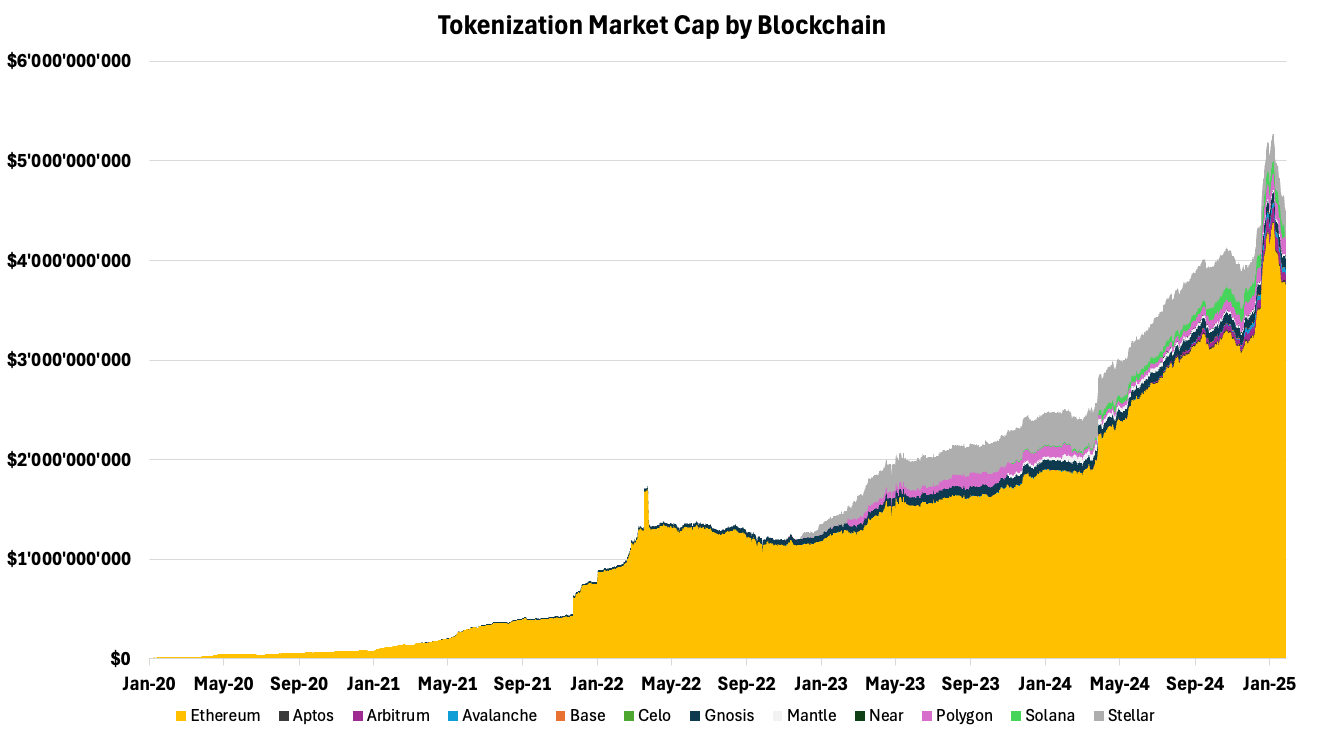
Its security, robust DeFi ecosystem, and first-mover advantage also make it the leader in fiat-collateralized stablecoins, boasting $115B in tokenized assets, which serve as a proxy for financial liquidity. Moreover, thanks to its first-mover advantage, Ethereum boasts unparalleled network effects, underpinning its dominance in DeFi, a sector we expect to see significant growth under the new administration, further evidenced by World Liberty Financial's recent acquisitions of ETH, which have cumulatively added up to $200M so far.
Conclusions: key upgrades and competitive landscape
- Ethereum's Pectra upgrade enhances staking efficiency and introduces Account Abstraction (AA), enabling gas sponsorship and payments in various tokens (with auto-conversion to ETH) to simplify user interactions.
- Solana's Firedancer upgrade targets over 1 million TPS through modular design and a third validator client, improving scalability and reducing single-point-of-failure risks.
- Competitive positioning: Solana dominates high-speed, low-cost sectors (AI/DePIN), while Ethereum leads in tokenization/DeFi via institutional trust and network effects.
- Industry outlook: Both chains coexist by specializing – Solana in high-throughput innovation, Ethereum in ecosystem depth and institutional adoption.
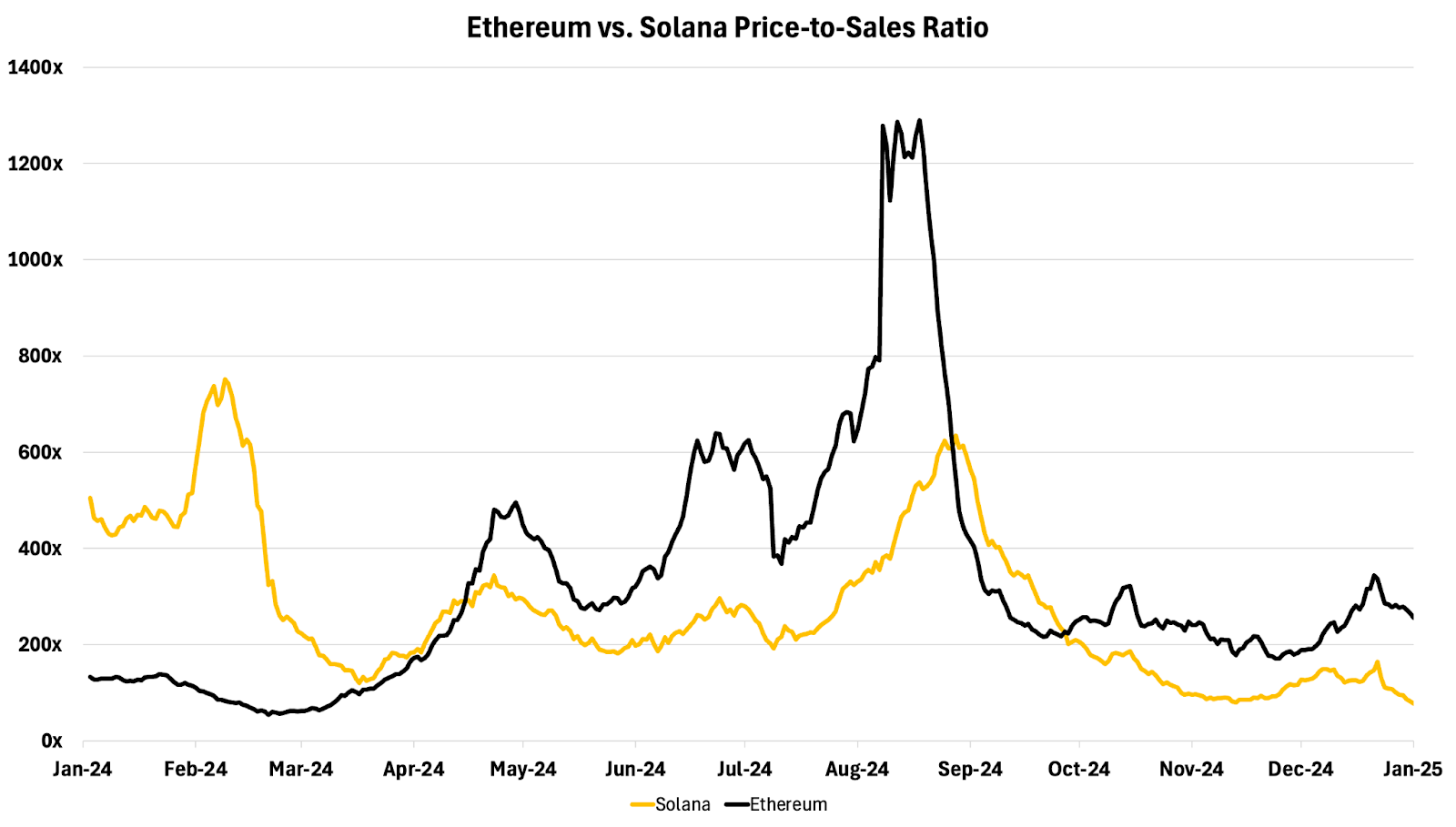
Given the future of crypto’s multichain trajectory, both networks will coexist while competing asymmetrically. Our analysis suggests Solana is positioned to capture greater market share, evidenced by its recent flip of Ethereum's price-to-sales ratio, as shown below in Figure 10. This shift reflects Solana's dominance in high-activity sectors like memecoins and AI agents, where its architecture enables cost-efficient innovation. While Solana currently presents a stronger valuation, both chains maintain distinct roles - Ethereum for institutional-grade finance and tokenization, Solana for scalable consumer applications - making them complementary holdings for strategic diversification.