

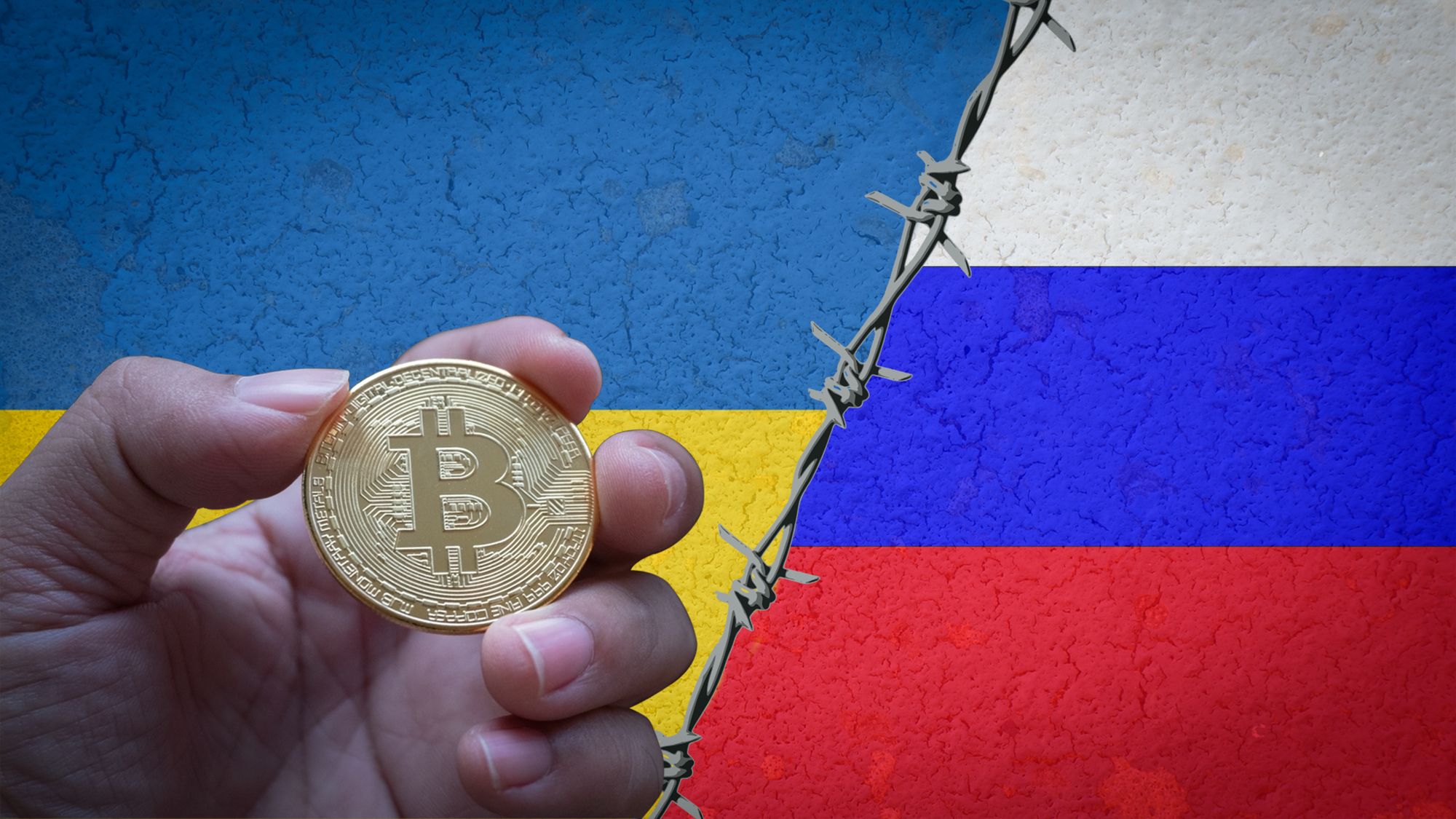
The conflict between Russia and Ukraine shows no signs of improvement, while further sanctions including a SWIFT exclusion of the major global power are being imposed. On both sides of the conflict, people are looking to cryptocurrencies as an alternative to the ailing banking system.
The latest wave of sanctions against Russia came over the past weekend, when the United States, the European Union, the United Kingdom and Canada announced they would exclude numerous Russian banks from the SWIFT global interbank system and "paralyze" the assets of Russia's central bank. The measures by Western powers are intended to limit the Russian monetary watchdog's ability to deploy $640 billion in foreign exchange and gold reserves. The ruble lost about 40% of its value in response and recovered somewhat only after the Russian central bank intervened. Trading in the currency was temporarily halted and the Russian population faces the potential freezing of their accounts. In both Ukraine and Russia, many people are now turning to blockchain technology and cryptocurrencies.
Intervention of the central bank
Russia's central bank more than doubled its benchmark interest rate and imposed some capital controls to protect the economy from unprecedented Western sanctions that sent the ruble plummeting to a record low. The "flight to safety" benefited gold, U.S. government bonds, the U.S. dollar and the Swiss franc, among others.
After the ruble fell to a historic low, the interest rate was raised from 9.5% to 20%, the highest level this century, to counter the risks of rapid ruble depreciation and higher inflation threatening Russians' savings. Government deputy Nikolai Arefiev said that all deposited funds of Russian citizens may be confiscated to cover government expenses in case of escalation of Western sanctions.
Bitcoin trading volume in Russia reaches all-time highs
In the wake of the sanctions, the trading volume of cryptocurrencies in rubles has surged. The economic restrictions ultimately affect not only those in power but all residents of Russia who are increasingly seeking protection from the traditional financial system. Trading volume between Bitcoin and Russian Ruble (BTC/RUB) reached a new high when the country's fiat currency fell to a record low after the invasion of Ukraine.

RUB-denominated bitcoin volumes reached around 1.5 billion - the highest level since the market crash in May 2021 - as investors sought to pull their money out of the ruble in anticipation of stricter sanctions. A similar trend was also seen in ruble-denominated Tether trading pairs, according to market data researcher Kaiko. Russia's Minister of Finance already announced their own digital currency to circumvent SWIFT sanctions, with some analysts speculating on the integration of the digital yuan.
Ukrainian government asks crypto community for support
On the other side of the conflict, the government has stepped in to receive donations through official crypto addresses. In addition, leading crypto exchange Binance has pledged $10 million to humanitarian efforts in Ukraine while launching a crypto crowdfunding campaign. Also, the non-governmental organization (NGO) Come Back Alive has received nearly $7 million through bitcoin donations after its Patreon account was closed to fiat donations.
Stand with the people of Ukraine. Now accepting cryptocurrency donations. Bitcoin, Ethereum and USDT.
BTC - 357a3So9CbsNfBBgFYACGvxxS6tMaDoa1P
ETH and USDT (ERC-20) - 0x165CD37b4C644C2921454429E7F9358d18A45e14
— Ukraine / Україна (@Ukraine) February 26, 2022
Another $25 million was raised through official donation addresses, which will be used to support Ukrainian civil society. Despite the generous donations from the crypto community, the Ukrainian Vice Prime Minister asked crypto exchanges to block addresses of Russian customers. Not only Russian officials should be affected, but also ordinary citizens of the country. Some advocates of decentralized currencies pointed out in response that censorship-resistant networks like Bitcoin are meant to protect the population of both sides of the conflict.
Bitcoin & Co. in a different light
With the recent events in Ukraine, Bitcoin in particular, but also other cryptocurrencies, appear in a new light for many. In Western countries often perceived only as a speculative object until now, they unfold their true qualities in these very situations. On both sides of the Ukraine conflict, cryptocurrencies now guarantee value storage and transaction opportunities for individuals without any barriers. Using them makes it possible to escape an imminent collapse in the value of the domestic currency and the partial collapse of the financial infrastructure. Donations and transactions find their way to the recipient uninterrupted and unmediated.
This brings to light the true characteristics on which permissionless and censorship-resistant blockchain payment networks like Bitcoin are based. In the event of a crisis, they guarantee financial sovereignty for every individual, regardless of political attitudes or origin. An Internet connection is all that is needed to participate in the global payment network. Of course, the new technology also brings with it the potential for abuse. However, used correctly and with accompanying regulation, as is currently taking place, cryptocurrencies have the potential to revolutionize our aging financial infrastructure and make it fairer.