
The European crypto market is well-positioned for growth in 2024 following a difficult year for the industry. With the passage of the landmark Markets in Crypto Asset Regulation (MiCA) framework in June 2023, EU regulators have distinguished the region as one of the world’s friendliest for crypto companies.
Already, several prominent U.S.-based firms have announced European expansions as a hedge against the murky U.S. regulatory regime, including Coinbase, Robinhood, Gemini and Circle. Trading activity has also rebounded, and exchanges catering for the region are capitalizing on the growth. This report will explore European crypto markets, identifying major trading trends, the leading exchanges, and areas for growth.
The euro's role in crypto
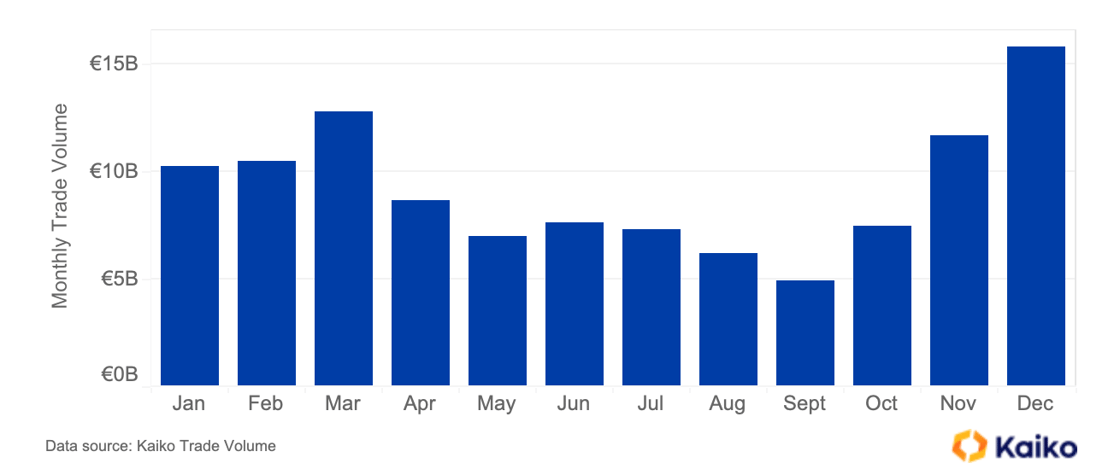
Historically, the euro has lagged other fiat currencies in usage on crypto platforms. Yet, given the significant headwinds that U.S.-based exchanges are facing we can expect a more prominent role for the euro in 2024. Already, we can observe an increase in euro-denominated volume from this summer’s lows, with December volumes hitting €16bn.
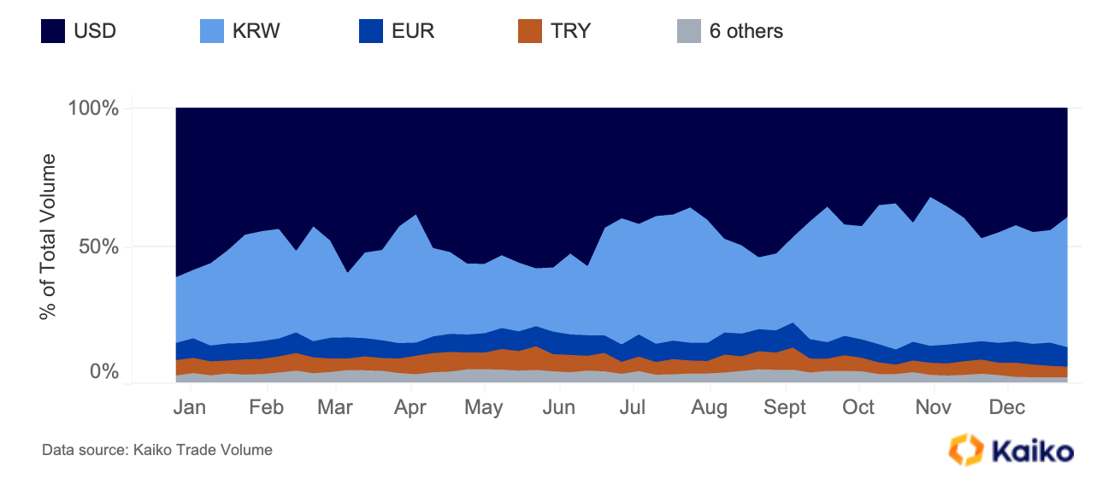
Today, the euro is the third most-used fiat currency on crypto platforms, lagging the dollar and Korean won. The dollar is dominant, with 49% market share, but is losing ground to the won, which climbed from 20% to 47% since the start of 2023. The euro has experienced slight growth, increasing from 6.2% to 7.7%.
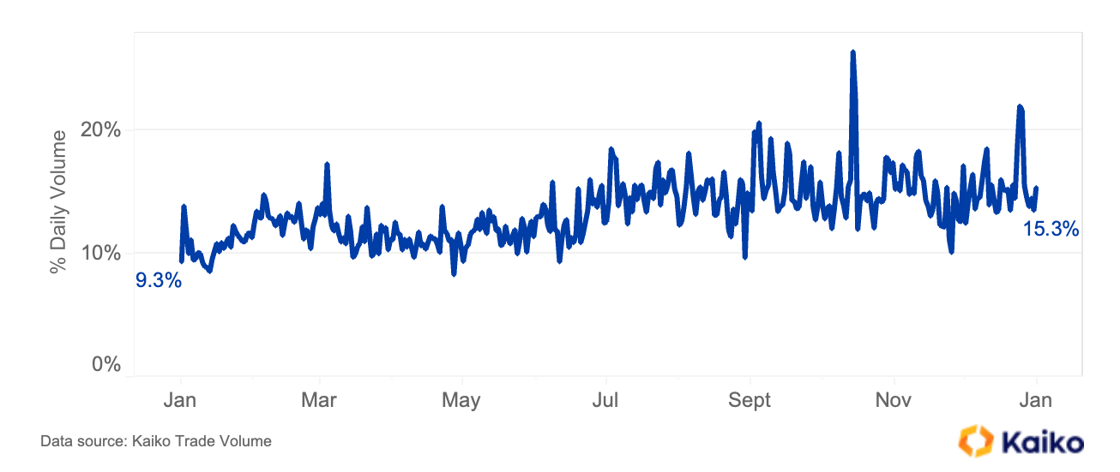
Comparing the euro to global fiat currencies doesn’t capture the full story, especially because Korean exchanges are isolated and operate in a distinct market environment. The dollar is the most analogous currency; since the start of 2023, market share of EUR volume relative to USD has nearly doubled, increasing from 9.3% to 15.3%.
Euro stablecoins enter the market
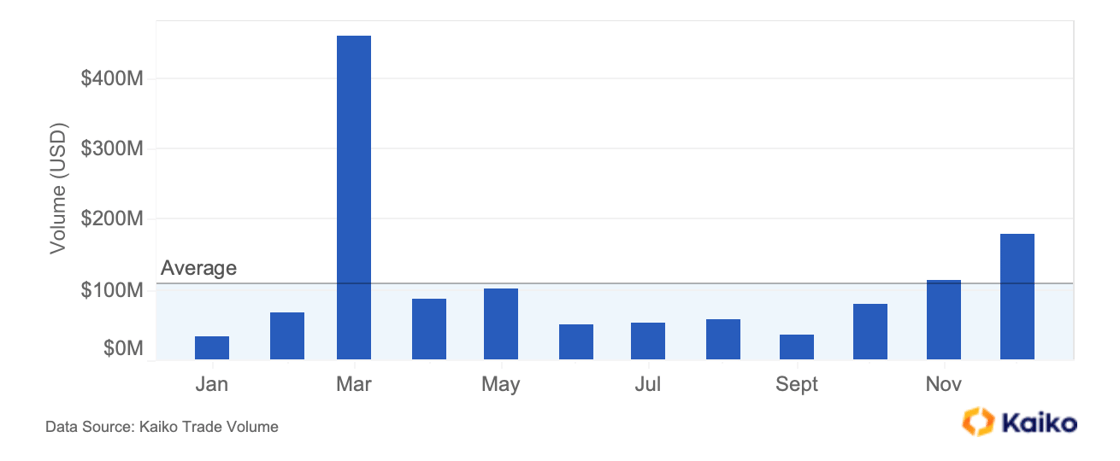
Euro-backed stablecoins experienced a steady increase in trade volume since September, but overall volumes remain relatively low. This chart aggregates the top euro stablecoins - Tether’s EURT, Stasis’s EURS, Société Générale’s EURCV, Anchored’s AEUR, and Circle’s EURC - and shows volumes have hovered between the equivalent of $50-$100mn a month, except for March which saw huge volumes amid the banking crisis.
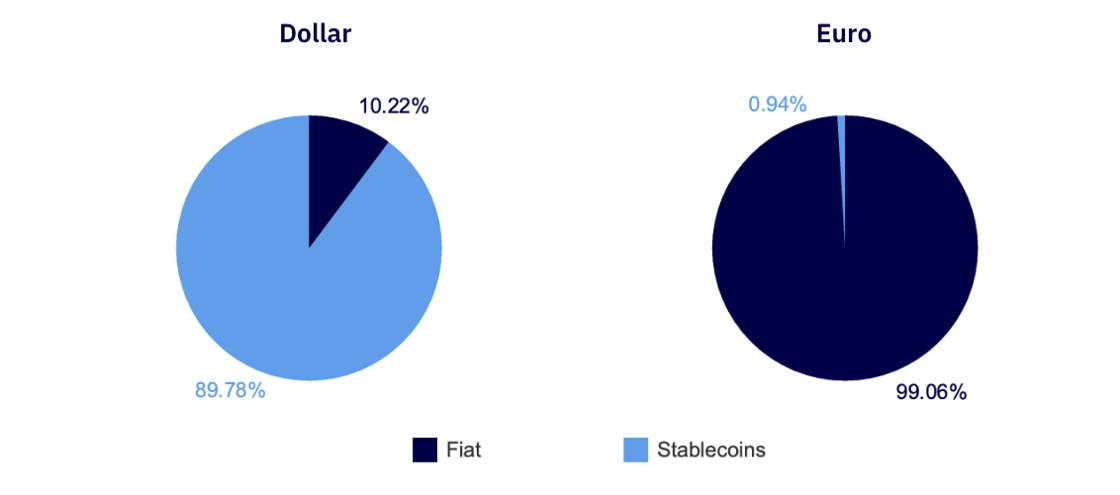
Ultimately, the euro is a much more important currency for crypto trading than euro-backed stablecoins, whereas the opposite is true for the dollar. Nearly 90% of all crypto transactions are done using a dollar-backed stablecoin relative to the dollar, whereas for the euro, less than 1% of trades are done using euro-backed stablecoins.
European token trading trends
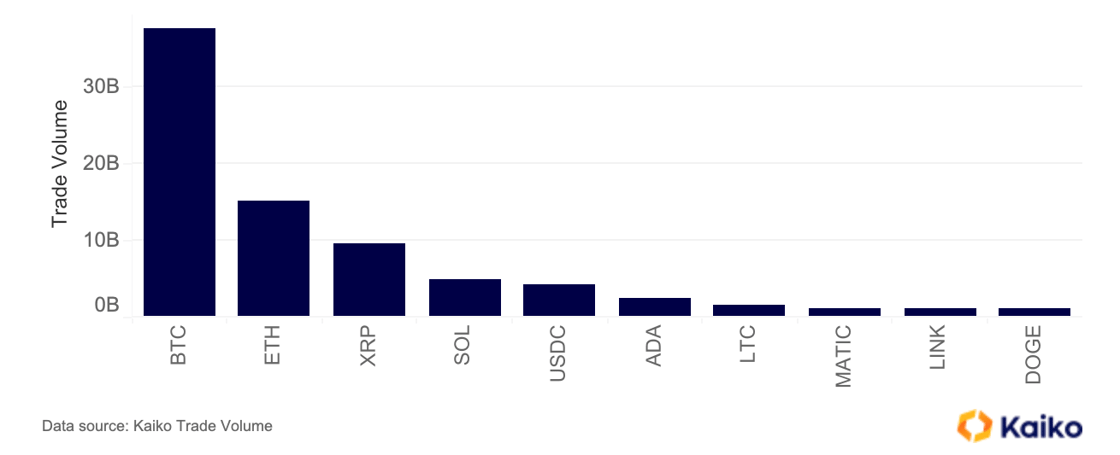
European traders by far favored bitcoin in 2023, which enjoyed significant gains throughout the final quarter of the year. More than €37bn in trades were done for BTC, compared with just €15bn for ETH and €9.5bn for XRP. The top 10 assets traded in Europe did not vary widely from global or U.S. trends in trading activity.
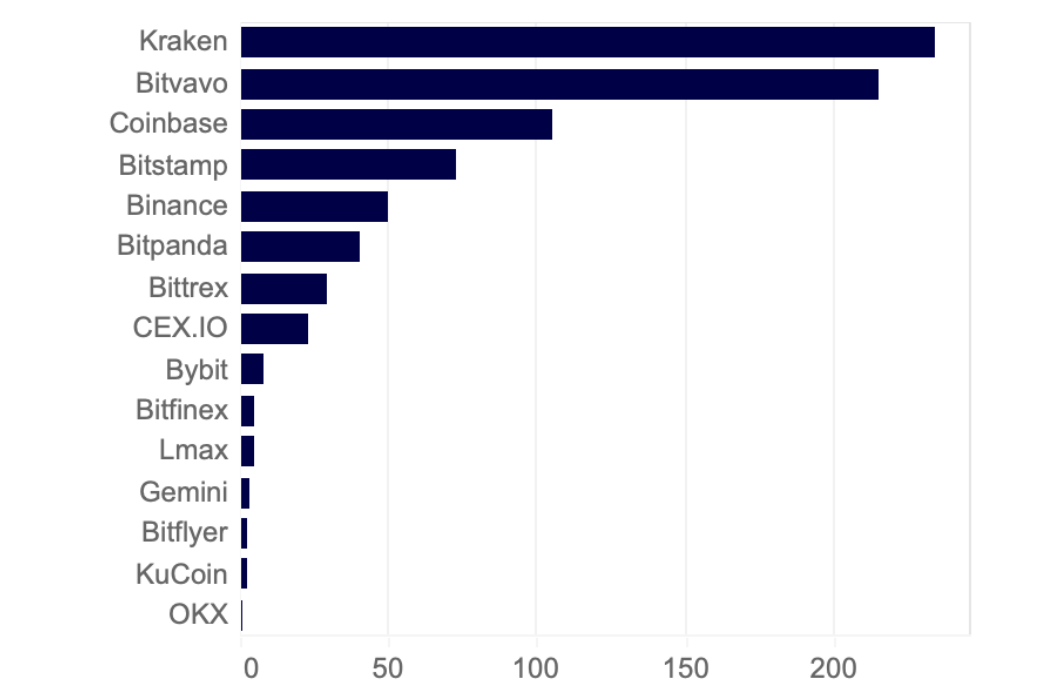
The quantity of euro volume is closely correlated to the number of euro-denominated trading pairs that each exchange lists. Kraken and Bitvavo each list more than 200 euro pairs, and both have the highest euro-denominated volume. Global exchanges such as Bitflyer or Bybit focus on other regions, in this case APAC.
The future of the European crypto market
While Europe has historically lagged the U.S. and APAC in crypto trading activity and investment, this trend is primed for reversal in 2024. A growing number of exchanges are opening headquarters in the region thanks to a clear regulatory regime, financial institutions are continuing to invest in digital asset initiatives, and trading activity is on the rise, suggesting a recovery in consumer sentiment.
With the Markets in Crypto-Assets (MiCA) framework set to take effect in 2024, the EU is well positioned to capitalize on a new bull market within a safer environment.