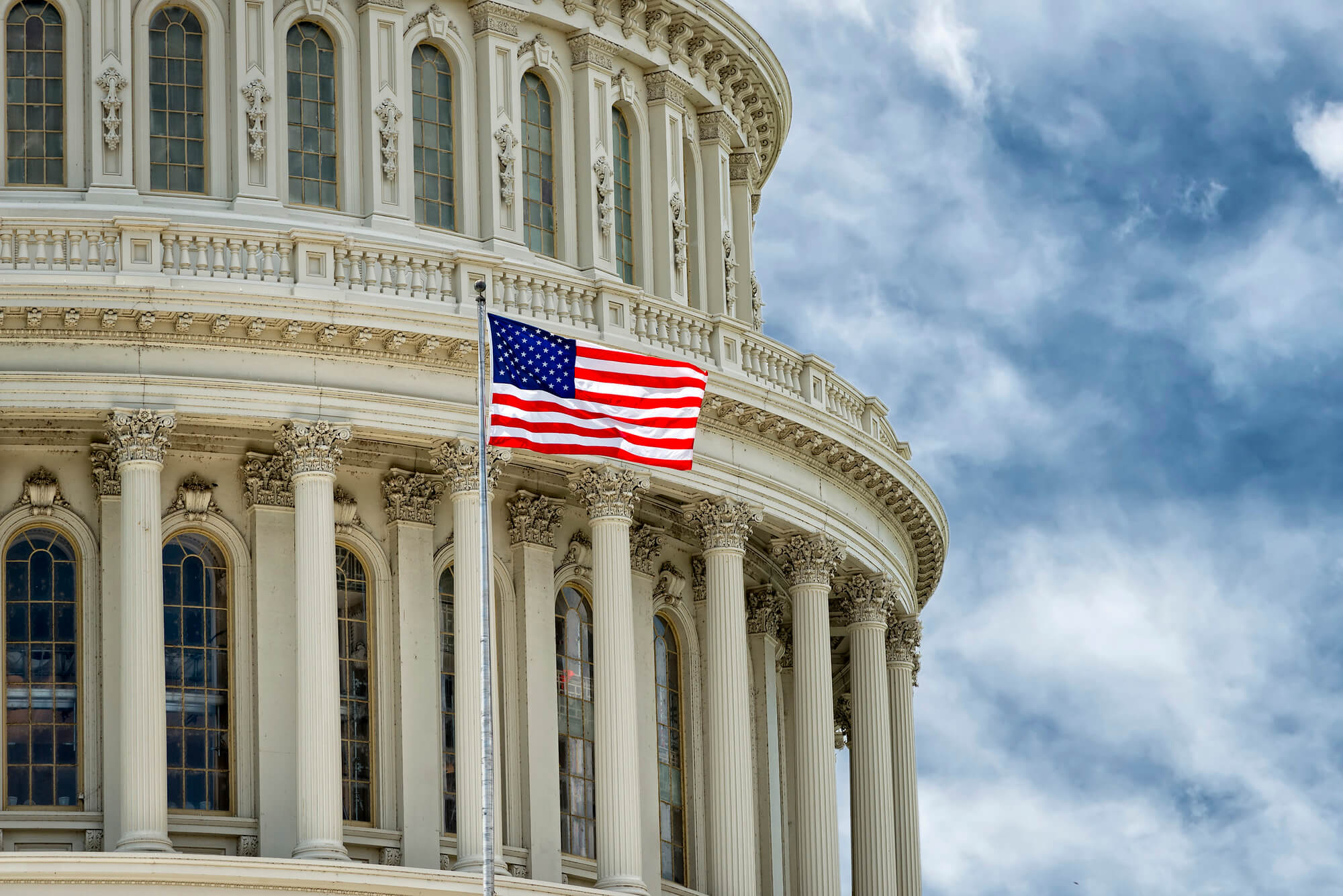
The US Senate has postponed the vote on the long-awaited crypto market structure legislation to 2026. A spokesperson for the Senate Banking Committee confirmed in mid-December that Chairman Tim Scott will not schedule a vote this year.
The delay comes despite months of bipartisan negotiations and leaves the industry facing another year of regulatory uncertainty. The postponement affects both the CLARITY Act, which passed the House of Representatives in July with bipartisan support, and competing drafts from the Banking Committee and the Agriculture Committee. Analysts now expect a full Senate debate no earlier than January 2026. However, the federal government funding crisis at the end of January could push crypto legislation even further back.
The CLARITY Act: regulatory framework in detail
The Digital Asset Market Clarity Act for the first time defines a clear jurisdictional division between the Securities and Exchange Commission (SEC) and the Commodity Futures Trading Commission (CFTC). The core question: which crypto assets are securities and which are commodities? The bill defines “digital commodities” as digital assets whose value is intrinsically linked to the use of a blockchain. This definition explicitly excludes securities, derivatives, and stablecoins. Bitcoin and Ethereum would fall under CFTC oversight, while tokens arising from securities transactions would remain with the SEC.
The CLARITY Act separates token-based transactions from the Howey Test - the legal standard established by the Supreme Court in 1946, which the SEC under Gary Gensler applied aggressively. The draft protects digital assets that were originally sold as investment contracts from being permanently classified as securities. Secondary market transactions would be exempt from the investment contract test.
The CFTC would receive exclusive regulatory authority over digital commodity transactions, including spot and cash markets. Digital commodity exchanges as well as brokers and dealers would be required to register with the CFTC. Token issuers would be subject to disclosure obligations, while trading platforms would have to meet comprehensive registration requirements.
Political trench warfare and institutional power struggles
The delay has concrete political causes. The Banking Committee (responsible for the SEC) and the Agriculture Committee (responsible for the CFTC) are fighting for control over lucrative crypto regulation. Both committees claim oversight of crypto spot markets. The balance of power in the Banking Committee has shifted dramatically. The new chairman Tim Scott described crypto as “the next world wonder” and publicly thanked the industry for helping push his predecessor Sherrod Brown out of office. Scott announced the creation of a Digital Assets Subcommittee - a historic step.
In early December, crypto attorney Jake Chervinsky warned that three issues are blocking progress: stablecoin yields, conflicts of interest, and decentralized finance. The core question: overly strict DeFi regulation criminalizes code development and kills innovation, while overly lax regulation creates loopholes in anti-money laundering enforcement. Some senators are calling for exemptions for decentralized protocols without controlling intermediaries. Others warn that broad exemptions would weaken enforcement and create regulatory gaps. The industry emphasizes: “There is no market structure legislation without developer protection, because without developers there is no crypto.”




Outlook for 2026: concrete scenarios
The legislation faces several hurdles. Congress returns from the winter recess in January and must immediately address federal funding - the current funding bill expires on January 30. Crypto legislation could therefore be sidelined. The 2026 midterm elections further complicate the situation. All 435 seats in the House of Representatives and 33 Senate seats will be up for election. Bipartisan legislation traditionally becomes more difficult in election years.
Chairman Scott is pushing for a bipartisan deal, but negotiations on DeFi exemptions and custody standards are not complete. Crypto investor Paul Barron expressed concerns: “The market structure bill collapsed in the Senate markup phase. Early 2026 could also be at risk.” Three scenarios are possible:
- First, a compromise on DeFi regulation could enable a quick breakthrough. In November, the Senate Agriculture Committee released a bipartisan discussion draft building on the CLARITY Act that would grant the CFTC exclusive jurisdiction over spot digital commodity trading.
- Second, separate legislation for different asset classes could emerge. The GENIUS Act for stablecoins already passed with broad bipartisan support (68-30 in the Senate, 308-122 in the House of Representatives) and was signed into law by President Trump in July. A similar approach could work for other digital assets.
- Third, there is the risk of a complete failure. If negotiations are not concluded by mid-2026, campaign dynamics will block any substantive legislation until 2027. The industry would operate in a regulatory gray area for another 18 to 24 months, with corresponding consequences for innovation and jobs.