Close Menu
Crypto Valley Journal
    Facebook X (Twitter) Instagram
    Crypto Valley Journal
    • Hot Topics
      • News
      • Minds
    • Focus
      • Background
      • Blockchain
      • Legal & Compliance
      • Non-Fungible Token (NFTs)
    • Investing
      • Markets
      • Financial Products
      • Decentralized Finance (DeFi)
      • Exchange overview
    • Education
      • Basics
      • Glossary
      • Politicians on crypto
    • Statistics
      • Bitcoin-ETF-Flows
      • Ethereum-ETF-Flows
      • Crypto market data
      • On-chain data
    • Academy
      • Overview
      • Part 1: Blockchain
      • Part 2: Money
      • Part 3: Bitcoin
      • Part 4: Cryptocurrencies
      • Part 5: Decentralized Finance
      • Part 6: Investing
    • English
      • Deutsch
    Crypto Valley Journal
    You are at:Home » Focus » Legal & Compliance » U.S. Treasury sees DeFi as a risk to financial markets
    US-Finanzministerium sieht DeFi als Risiko für die Finanzmärkte

    U.S. Treasury sees DeFi as a risk to financial markets

    By Editorial Office CVJ.CH on 12. April 2023 Legal & Compliance

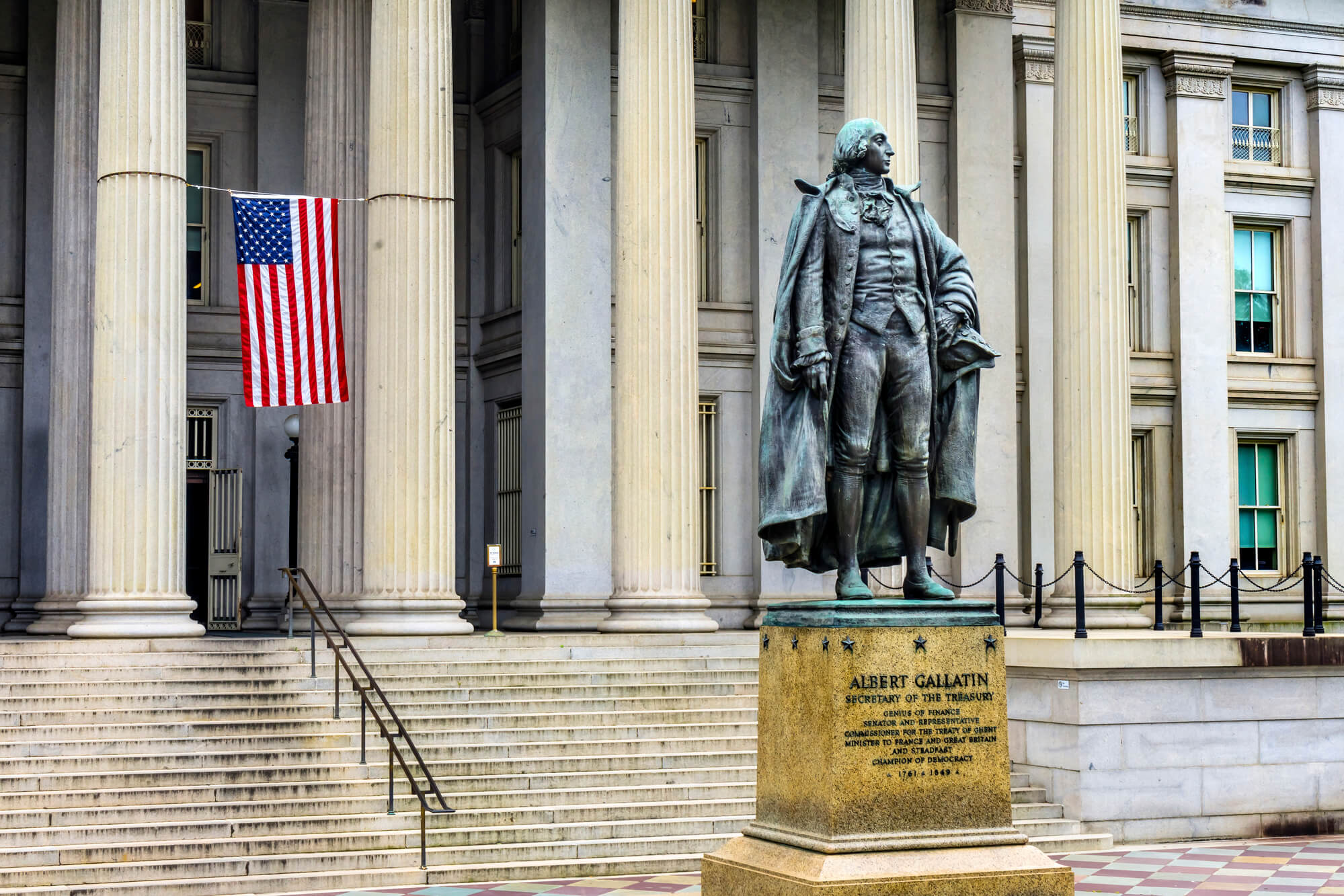
    The US Department of the Treasury has released a risk assessment of illegal financial flows through decentralized finance (DeFi). The agency takes a critical stance towards the sector and recommends that regulators implement stricter Know Your Customer (KYC) and Anti-Money Laundering (AML) requirements.

    According to the Treasury Department, the report analyzes the risks associated with services commonly referred to as DeFi. The risk assessment builds on other recent analyses published by the Treasury Department and is part of its work related to the implementation of President Biden's executive order. Specifically, the department calls for stricter regulations by US regulatory agencies.

    Treasury Department sees DeFi as money laundering vehicle

    Although there is no generally accepted definition of DeFi, the term generally encompasses protocols and services for digital assets that enable automated peer-to-peer transactions with self-executing code or "smart contracts" based on blockchain technology, according to the Treasury Department. The term is often used loosely in the private sector, sometimes even for services that are not operationally decentralized. While the agency acknowledges some benefits of these technologies, the risk assessment focuses solely on the downsides of the sector.

    Subscribe to our newsletter

    The best articles of the week, directly delivered into your mailbox.

    Actors such as the Democratic People's Republic of Korea (DPRK), cybercriminals, ransomware attackers, thieves, and fraudsters reportedly use DeFi services for transferring and laundering their illegal proceeds, according to the Treasury Department. Criminal organizations benefit from a lack of anti-money laundering and counter-terrorism financing (AML/CFT) measures, which many DeFi services do not implement despite being required to do so.

    "Our assessment has found that criminal actors [...] use DeFi services to launder illegal funds. To realize the potential benefits of DeFi services, these risks must be addressed. The private sector should use the findings of this assessment as a basis for their own risk mitigation strategies and take clear steps in accordance with existing regulations to prevent illegal actors from abusing DeFi services." - Brian E. Nelso, Deputy Secretary of the Treasury for Terrorism and Financial Crimes

    Decentralization not a valid pretext

    The largest vulnerability exploited by illegal actors is the non-compliance with obligations to combat money laundering and terrorist financing, as well as sanctions. DeFi services that engage in activities covered by the Bank Secrecy Act are also subject to AML/CFT obligations, according to the Treasury Department. This applies regardless of whether the protocols are allegedly decentralized or intended to be decentralized. A clear challenge to leading DeFi teams based in the United States.

    While risk assessments primarily serve to determine the extent of a problem, the Treasury Department's study also contains concrete recommendations for the government. After all, it is crucial to mitigate these risks of illegal financing through DeFi applications early on. The proposals include:

    • Strengthening AML/CFT supervision in the US
    • Considering additional guidelines for the private sector on the AML/CFT obligations of DeFi services
    • Assessing measures to close any AML/CFT legal gaps related to DeFi services

    Share. Facebook Twitter LinkedIn Email Telegram WhatsApp

    About the author

    Editorial Office CVJ.CH
    • Website
    • Twitter
    • LinkedIn

    Since 2018, the editorial team at Crypto Valley Journal has been reporting from Zug - the heart of Switzerland’s Crypto Valley - on Bitcoin, cryptocurrency, blockchain, and regulatory developments in digital assets. Behind the publication’s collective editorial voice is a team of writers with backgrounds in financial markets, law, and technology.

    Related Articles

    Trump's executive order directs the Federal Reserve to review crypto firm access to Master Accounts and Fedwire.

    Trump executive order opens Fed payment rails to crypto firms

    Die Bank of England prüft Alternativen zu Haltelimits für Sterling-Stablecoins. Branchenkritik trifft auf konservative Reservepflichten.

    Bank of England opens up to alternatives for stablecoin holding limits

    SEC plans Innovation Exemption for tokenized stocks in May 2026. DTCC pilot launches July, NYSE rules already active.

    SEC prepares “Innovation Exemption” for tokenized stocks

    Tether acquires SoftBank's stake in Twenty One Capital, taking sole control of the Bitcoin treasury company holding 43,514 BTC.
    20. May 2026

    Tether acquires SoftBank’s stake in Twenty One Capital

    JPMorgan, Ondo, Mastercard and Ripple tested the XRP Ledger. However, XRP itself played no role in the settlement.
    20. May 2026

    JPMorgan tests XRP Ledger without XRP as settlement currency

    Trump's executive order directs the Federal Reserve to review crypto firm access to Master Accounts and Fedwire.
    20. May 2026

    Trump executive order opens Fed payment rails to crypto firms

    twitter image button instagram image button linkedin image button youtube image button

    About Crypto Valley Journal
    About Crypto Valley Journal

    On the pulse of the movement

    • Academy
    • Contact
    • Advertising
    • About us
    • Partner
    • Imprint
    • Privacy
    • Disclaimer
    Search

    Type above and press Enter to search. Press Esc to cancel.