Close Menu
Crypto Valley Journal
    Facebook X (Twitter) Instagram
    Crypto Valley Journal
    • Hot Topics
      • News
      • Minds
    • Focus
      • Background
      • Blockchain
      • Legal & Compliance
      • Non-Fungible Token (NFTs)
    • Investing
      • Markets
      • Financial Products
      • Decentralized Finance (DeFi)
      • Exchange overview
    • Education
      • Basics
      • Glossary
      • Politicians on crypto
    • Statistics
      • Bitcoin-ETF-Flows
      • Ethereum-ETF-Flows
      • Crypto market data
      • On-chain data
    • Academy
      • Overview
      • Part 1: Blockchain
      • Part 2: Money
      • Part 3: Bitcoin
      • Part 4: Cryptocurrencies
      • Part 5: Decentralized Finance
      • Part 6: Investing
    • English
      • Deutsch
    Crypto Valley Journal
    You are at:Home»Glossary»Cryptokitties
    CryptoKitties pioneer NFTs dApp

    Cryptokitties

    By Redaktion cvj.ch on 2. April 2020 Glossary

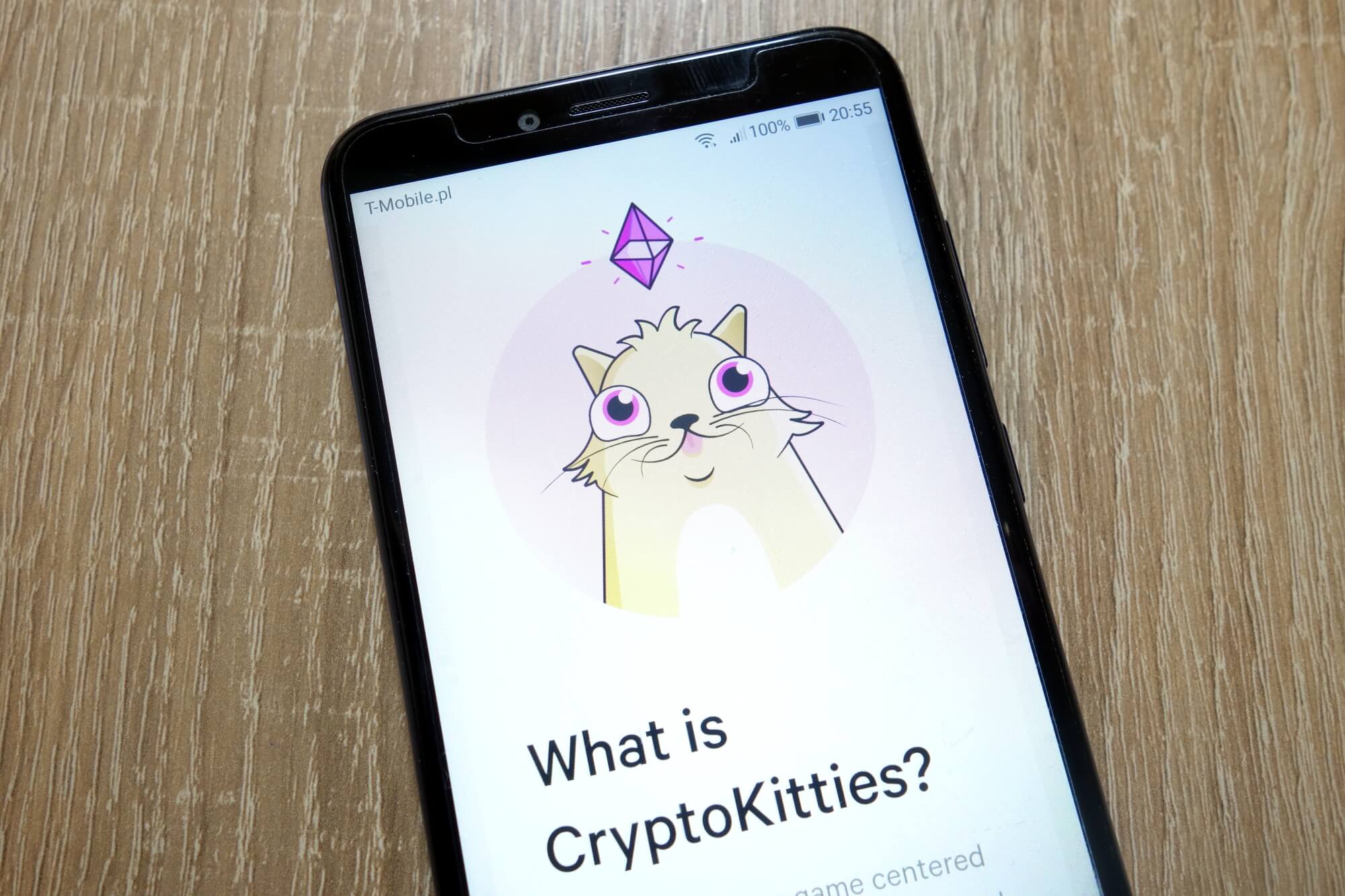
    CryptoKitties was launched November 28, 2017 by Vancouver-based technology company Axiom Zen. It is a pioneering project that introduced the concept of Non-Fungible Tokens (NFTs) to the mainstream. The blockchain-based virtual game allows players to adopt, raise and trade virtual cats.

    At its core, CryptoKitties is a game about breeding and collecting digital cats. Each CryptoKitty is unique, owned by the user and validated via the blockchain. Its value can increase or decrease depending on the market situation. CryptoKitties are not only digital pets, but also digital assets, as well as a unique piece of digital art.

    Game on Ethereum

    The game is based on the Ethereum blockchain, with each CryptoKitty represented as a unique ERC-721 token. This standard ensures that each CryptoKitty, like a real cat, has its own genetic makeup, appearance, and personality. The ERC-721 standard also guarantees the rarity and uniqueness of each CryptoKitty, making it a collectible, much like baseball cards or stamps.

    CryptoKitties gained a lot of attention due to its unique use of blockchain technology. It showed that blockchain can be used not only for cryptocurrencies like Bitcoin or Ethereum. It can also be used to create and manage unique digital assets, opening up a whole new world of possibilities for digital collectibles and online games.

    The game also introduced the concept of "breeding" digital assets. Players can breed two CryptoKitties to create a new, unique CryptoKitty. The appearance and characteristics of the offspring are derived from the 256-bit genome of each parent, resulting in 4 billion possible genetic combinations.

    Potential of blockchain demonstrated

    The popularity of CryptoKitties peaked in December 2017, when a CryptoKitty sold for over $100,000 USD. The game became so popular that it overloaded the Ethereum network, leading to a significant increase in transaction fees.

    Despite the initial hype, the popularity of CryptoKitties has waned over the years. However, its influence on the blockchain and gaming industries is undeniable. It paved the way for the NFT boom we see in the 20s, with artists, musicians, and content creators selling their work as NFT for millions of dollars.

    CryptoKitties demonstrated the potential of blockchain beyond finance and opened up avenues for its use in art, gaming, and other digital assets. It showed that the blockchain can create unique, indivisible and transferable representations of value that can range from digital cats to works of art.

    CryptoKitties is more than just a game about digital cats. It was, in its time, the groundbreaking project that played a critical role in the widespread adoption of NFTs and expanded the scope of blockchain technology. As we continue to explore the potential of NFTs and blockchain, CryptoKitties' contribution to this digital revolution cannot be overstated.


    Analysis by Bitget Research on Bitcoin quantum computing risks, ECDSA exposure, NIST post-quantum standards, and BIP-360 migration paths. Background
    17. April 2026

    Bitcoin quantum computing: What recent developments mean for network security

    Analysis by Bitget Research on Bitcoin quantum computing risks, ECDSA exposure, NIST post-quantum standards, and BIP-360 migration paths.

    XRPL validator analyzes quantum risk: only 0.03% of XRP supply is exposed, compared to up to 35% for Bitcoin. Google sets 2029 deadline. Background
    14. April 2026

    Quantum risk: Is XRP more secure than Bitcoin?

    XRPL validator analyzes quantum risk: only 0.03% of XRP supply is exposed, compared to up to 35% for Bitcoin. Google sets 2029 deadline.

    13. April 2026

    Power Shift in Crypto Exchanges: Retail Overtakes Institutional

    Entdecken Sie die Vorteile von Bitcoin im Portfolio als Werkzeug zur Renditesteigerung und zum Schutz vor Inflation.
    9. April 2026

    Bitcoin’s role within an institutional portfolio

    AI agent security risks grow as autonomous systems shift from analysis to execution in crypto markets, a Bitget and SlowMist report warns.
    8. April 2026

    New research highlights security risks as AI agents shift to execution

    6. April 2026

    Crypto Myths 2026: Four Costly Mistakes Investors Make

    $500 million in minutes: Pump.fun writes ICO history
    3. April 2026

    Have launchpads like Pump.fun destroyed the altcoin market?

    2. April 2026

    Unit bias in crypto: Why cheap coins mislead investors

    Popular Posts
    About Crypto Valley Journal
    About Crypto Valley Journal

    On the pulse of the movement

    • Academy
    • Contact
    • Advertising
    • About us
    • Partner
    • Imprint
    • Privacy
    • Disclaimer
    Search

    Type above and press Enter to search. Press Esc to cancel.