Close Menu
Crypto Valley Journal
    Facebook X (Twitter) Instagram
    Crypto Valley Journal
    • Hot Topics
      • News
      • Minds
    • Focus
      • Background
      • Blockchain
      • Legal & Compliance
      • Non-Fungible Token (NFTs)
    • Investing
      • Markets
      • Financial Products
      • Decentralized Finance (DeFi)
      • Exchange overview
    • Education
      • Basics
      • Glossary
      • Politicians on crypto
    • Statistics
      • Bitcoin-ETF-Flows
      • Ethereum-ETF-Flows
      • Crypto market data
      • On-chain data
    • Academy
      • Overview
      • Part 1: Blockchain
      • Part 2: Money
      • Part 3: Bitcoin
      • Part 4: Cryptocurrencies
      • Part 5: Decentralized Finance
      • Part 6: Investing
    • English
      • Deutsch
    Crypto Valley Journal
    You are at:Home»Glossary»ESG – Environmental, Social and Governance
    ESG

    ESG – Environmental, Social and Governance

    By Editorial Office CVJ.CH on 6. November 2023 Glossary

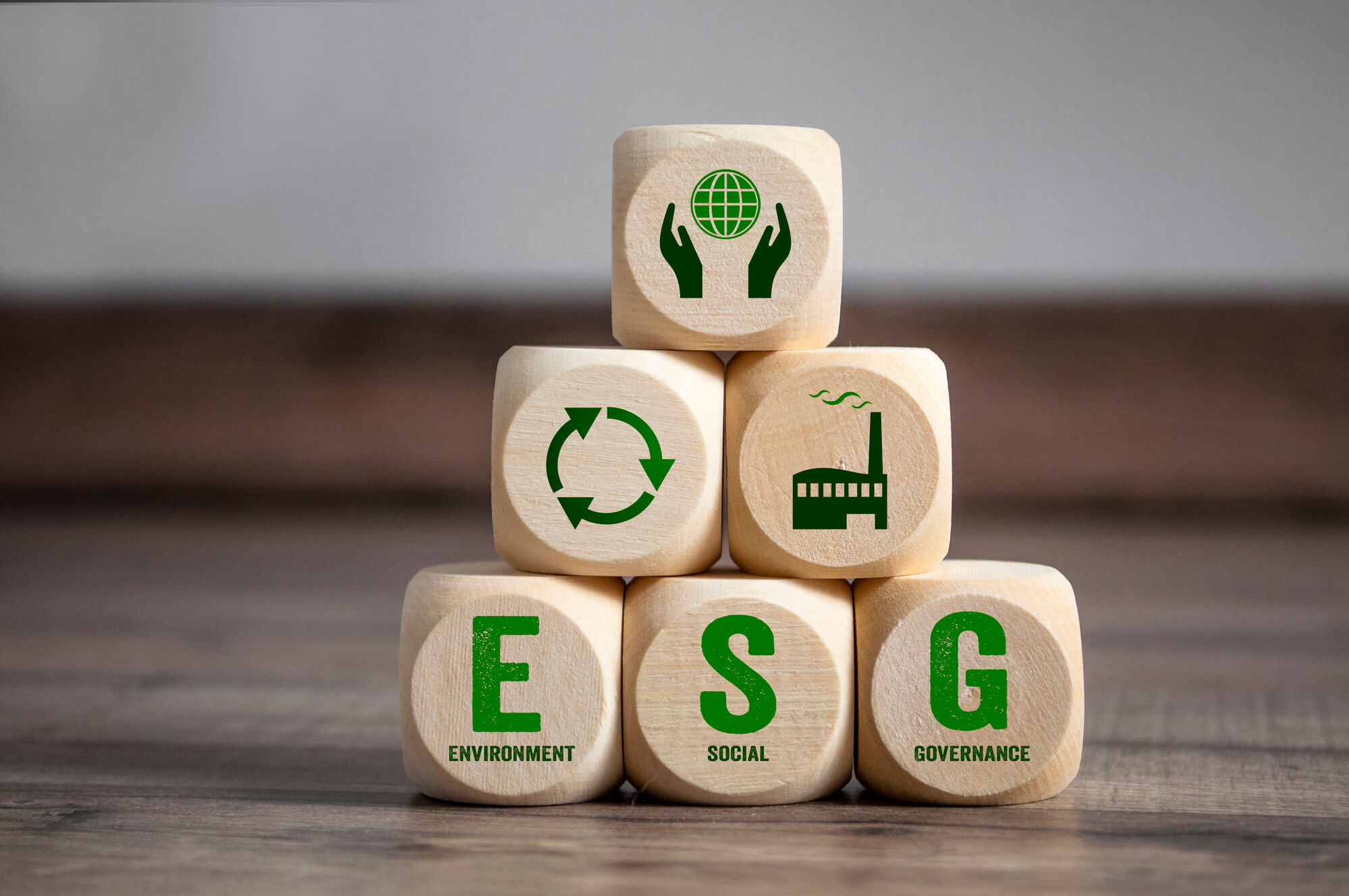
    ESG, which stands for environmental, social and governance, is an important framework for assessing the sustainability and ethical practices of companies and investments. The concept has become increasingly important in the financial world in recent years.

    Environmental criteria include how a company treats the environment. Social criteria examine relationships with employees, suppliers and customers. And governance looks at how a company is managed.

    How ESG is applied

    By integrating ESG principles into companies' business processes and investments, the aim is to create a more sustainable, fairer and more responsible global economy. As ESG continues to grow in importance, it serves as a tool to promote positive change in the corporate world and address pressing global challenges.

    The application of ESG principles is becoming increasingly important as companies, investors and governments become more aware of the environmental, social and economic impacts of their decisions.

    ESG and the environment

    ESG and the environment are closely linked. The principles can help reduce environmental impacts by encouraging companies to adopt more sustainable practices. Environmental criteria can include a company's energy use, waste, pollution, conservation of natural resources, and treatment of animals.

    These criteria can also be used to assess the environmental risks a company may face and how it is managing those risks. For example, this could include issues related to owning contaminated land, disposing of hazardous waste, managing toxic emissions, or complying with government environmental regulations.

    ESG in Society and Governance

    Social criteria relate to a company's business relationships. ESG principles can have a positive impact on society by helping to reduce social inequality, protect human rights and promote a more sustainable economy.

    Key social questions include:

    • Does the company work with suppliers that share the same values it claims for itself?
    • Does the company donate a percentage of its profits to the local community or encourage employees to volunteer in the community?
    • Does the company's working conditions take into account the health and safety of its employees?
    • Are the interests of other stakeholders taken into account?

    ESG in business

    ESG factors can help mitigate risk, enhance returns and improve competitiveness. By applying ESG principles, companies can help strengthen the economy and create a more sustainable future.


    In terms of the economy, investors may want to know that a company uses accurate and transparent accounting methods and that shareholders have the opportunity to vote on important issues. By applying ESG principles, companies can help strengthen the economy and create a more sustainable future.

    Analysis by Bitget Research on Bitcoin quantum computing risks, ECDSA exposure, NIST post-quantum standards, and BIP-360 migration paths. Background
    17. April 2026

    Bitcoin quantum computing: What recent developments mean for network security

    Analysis by Bitget Research on Bitcoin quantum computing risks, ECDSA exposure, NIST post-quantum standards, and BIP-360 migration paths.

    XRPL validator analyzes quantum risk: only 0.03% of XRP supply is exposed, compared to up to 35% for Bitcoin. Google sets 2029 deadline. Background
    14. April 2026

    Quantum risk: Is XRP more secure than Bitcoin?

    XRPL validator analyzes quantum risk: only 0.03% of XRP supply is exposed, compared to up to 35% for Bitcoin. Google sets 2029 deadline.

    13. April 2026

    Power Shift in Crypto Exchanges: Retail Overtakes Institutional

    Entdecken Sie die Vorteile von Bitcoin im Portfolio als Werkzeug zur Renditesteigerung und zum Schutz vor Inflation.
    9. April 2026

    Bitcoin’s role within an institutional portfolio

    AI agent security risks grow as autonomous systems shift from analysis to execution in crypto markets, a Bitget and SlowMist report warns.
    8. April 2026

    New research highlights security risks as AI agents shift to execution

    6. April 2026

    Crypto Myths 2026: Four Costly Mistakes Investors Make

    $500 million in minutes: Pump.fun writes ICO history
    3. April 2026

    Have launchpads like Pump.fun destroyed the altcoin market?

    2. April 2026

    Unit bias in crypto: Why cheap coins mislead investors

    Popular Posts
    About Crypto Valley Journal
    About Crypto Valley Journal

    On the pulse of the movement

    • Academy
    • Contact
    • Advertising
    • About us
    • Partner
    • Imprint
    • Privacy
    • Disclaimer
    Search

    Type above and press Enter to search. Press Esc to cancel.