Close Menu
Crypto Valley Journal
    Facebook X (Twitter) Instagram
    Crypto Valley Journal
    • Hot Topics
      • News
      • Minds
    • Focus
      • Background
      • Blockchain
      • Legal & Compliance
      • Non-Fungible Token (NFTs)
    • Investing
      • Markets
      • Financial Products
      • Decentralized Finance (DeFi)
      • Exchange overview
    • Education
      • Basics
      • Glossary
      • Politicians on crypto
    • Statistics
      • Bitcoin-ETF-Flows
      • Ethereum-ETF-Flows
      • Crypto market data
      • On-chain data
    • Academy
      • Overview
      • Part 1: Blockchain
      • Part 2: Money
      • Part 3: Bitcoin
      • Part 4: Cryptocurrencies
      • Part 5: Decentralized Finance
      • Part 6: Investing
    • English
      • Deutsch
    Crypto Valley Journal
    You are at:Home » Glossary » Federal Reserve
    Federal Reserve

    Federal Reserve

    By Redaktion cvj.ch on 1. December 2025 Glossary

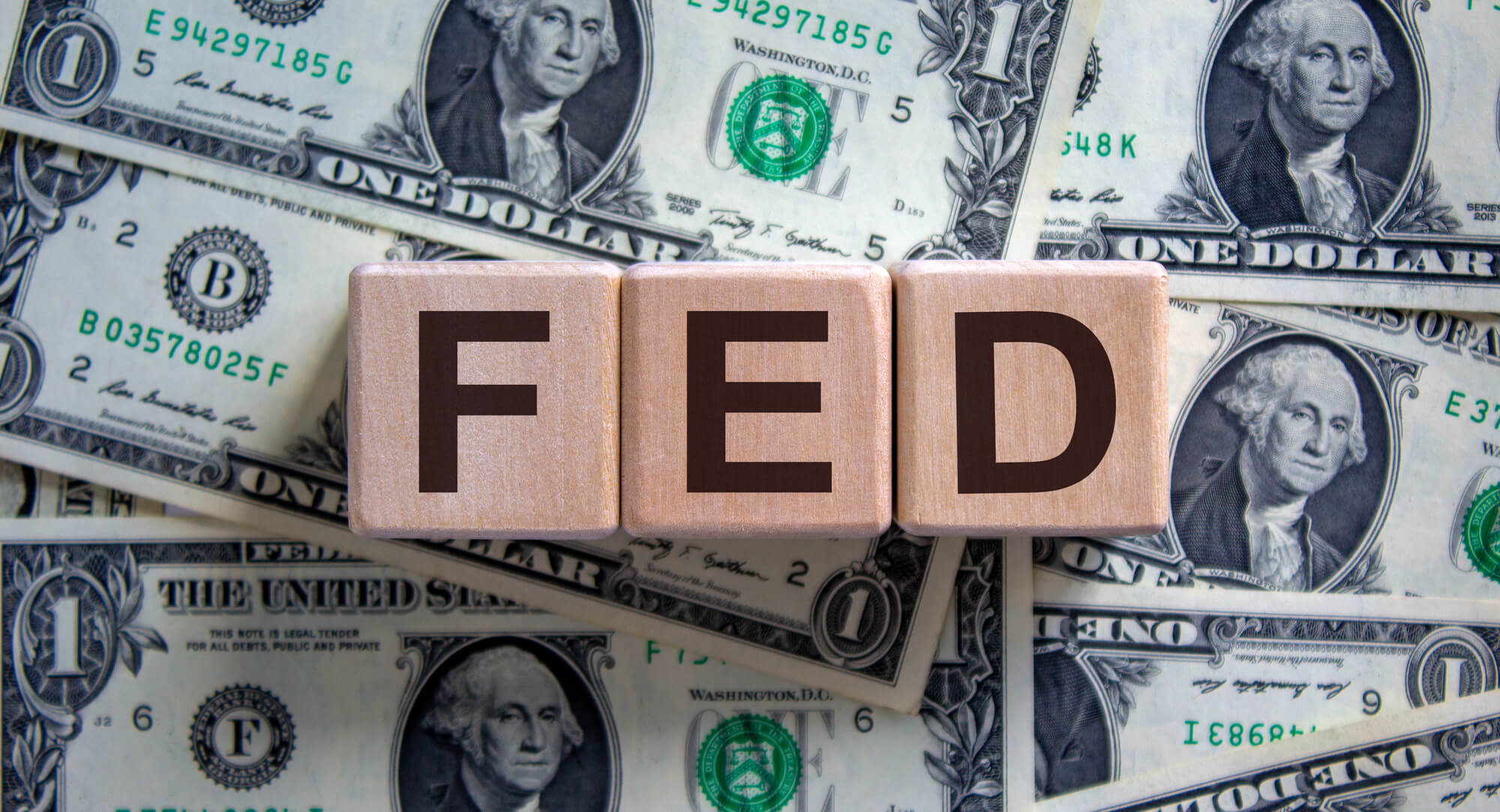
    Die Federal Reserve (Fed) ist die Zentralbank der USA und gehört zu den einflussreichsten Finanzinstitutionen der Welt. Ihre Entscheidungen bestimmen nicht nur die Geldpolitik des Landes, sondern beeinflussen globale Kapitalmärkte, Wechselkurse und Liquiditätsbedingungen über Staats- und Unternehmensgrenzen hinweg.

    Die Fed reguliert das Finanzsystem, kontrolliert die Geldmenge und setzt die Leitlinien der US-Währungspolitik um. Ihr Kernauftrag umfasst Preisstabilität, maximale Beschäftigung und die Sicherstellung eines stabilen Bankensektors.

    Subscribe to our newsletter

    The best articles of the week, directly delivered into your mailbox.

    Struktur und Auftrag der Fed

    Die Federal Reserve besteht aus drei Säulen: dem Board of Governors in Washington D.C., den zwölf regionalen Federal Reserve Banks und dem geldpolitischen Ausschuss FOMC (Federal Open Market Committee). Das Board legt regulatorische Rahmenbedingungen fest und überwacht Banken. Die regionalen Fed-Banken erheben Wirtschafts- und Kreditdaten, führen operative Aufgaben aus und bilden die föderale Struktur ab. Der FOMC entscheidet über Zinssätze und Anleiheprogramme, also über die zentralen Instrumente der Geldpolitik.

    Die Fed steuert wirtschaftliche Aktivität vor allem über den Leitzins (Federal Funds Rate). Eine Erhöhung verteuert Kreditkosten, dämpft Nachfrage und senkt Inflationstendenzen. Eine Senkung lockert die Finanzierung, stimuliert Investitionen und erhöht Konsum. Zusätzlich nutzt die Fed Quantitative Easing (QE) oder Quantitative Tightening (QT): Beim QE kauft sie Anleihen, erhöht Liquidität und senkt Renditen, beim QT reduziert sie ihre Bilanz und entzieht dem Markt Kapital. Notfallmassnahmen – z. B. Kreditfazilitäten – kommen bei Bankstress oder Marktpanik zum Einsatz.


    Ray Dalio’s Bridgewater Associates Minds

    Star investor Ray Dalio considers Bitcoin inferior to gold

    Bitcoin overtakes gold in the US: per River's report, 49.6 million Americans own Bitcoin, while just 28.8 million still hold gold. Background

    Bitcoin overtakes gold among US investors for the first time

    S&P and Pantera launch the S&P Pantera Index, a crypto benchmark of 18 constituents that excludes Bitcoin for lack of protocol revenue. Financial Products

    New S&P Pantera Index leaves Bitcoin out entirely

    The Chainalysis Crypto Crime Report puts illicit activity below 1% of on-chain volume, countering the myth of Bitcoin as a criminal currency. Basics

    Myth: Bitcoin and cryptocurrencies mainly serve criminal activity

    Ray Dalio’s Bridgewater Associates Minds

    Star investor Ray Dalio considers Bitcoin inferior to gold

    Bitcoin overtakes gold in the US: per River's report, 49.6 million Americans own Bitcoin, while just 28.8 million still hold gold. Background

    Bitcoin overtakes gold among US investors for the first time

    Rolle im globalen Finanzsystem

    Da der US-Dollar globale Leitwährung ist, wirken Fed-Entscheidungen weit über den US-Markt hinaus. Höhere US-Zinsen ziehen Kapital in Dollar-Assets, stärken den USD und belasten fremdwährungsverschuldete Staaten. Umgekehrt kann eine expansive Fed-Politik Risikoanlagen, Aktien und Kryptomärkte antreiben. In Krisenzeiten stellt die Fed Swap-Linien mit anderen Zentralbanken bereit, um Dollar-Liquidität zu sichern und internationale Zahlungssysteme zu stabilisieren.

    Die Fed beeinflusst traditionelle Vermögenswerte, aber auch Kryptowährungen. Niedrige Zinsen und hohe Liquidität fördern Risikokapital, spekulative Assets und wachstumsorientierte Projekte. Phasen erhöhter Zinsen dagegen bremsten 2022–2023 sowohl Tech- als auch Kryptomärkte aus. Für Stablecoins, digitale Dollar-Modelle und Tokenisierung arbeitet die Fed eng mit Regulierungsbehörden zusammen. Offizielle CBDC-Programme werden geprüft, jedoch vorsichtig und schrittweise.


    Bitcoin overtakes gold in the US: per River's report, 49.6 million Americans own Bitcoin, while just 28.8 million still hold gold. Background
    22. July 2026

    Bitcoin overtakes gold among US investors for the first time

    Bitcoin overtakes gold in the US: per River’s report, 49.6 million Americans own Bitcoin, while just 28.8 million still hold gold.

    Digital asset security faces a new gap: crypto losses topped USD 4.70 billion in 2025, up 63%, as fraud follows multi-asset users. Background
    22. July 2026

    Digital finance has gone multi-asset. Security needs to catch up.

    Digital asset security faces a new gap: crypto losses topped USD 4.70 billion in 2025, up 63%, as fraud follows multi-asset users.

    The Chainalysis Crypto Crime Report puts illicit activity below 1% of on-chain volume, countering the myth of Bitcoin as a criminal currency.
    21. July 2026

    Myth: Bitcoin and cryptocurrencies mainly serve criminal activity

    Falling qubit estimates bring the quantum computer threat to Bitcoin closer and spark a debate over freezing Satoshi's coins.
    20. July 2026

    Quantum computers put Bitcoin’s cryptography under pressure

    Most crypto cards hide who issues them. After mapping the licensed issuers, here is why Switzerland's self-issuing model reads differently.
    8. July 2026

    The bank you never chose: who really issues Switzerland’s crypto cards

    18 percent hold crypto assets in Switzerland, an IFZ and LUKB study shows. Banks see potential for up to 1 million advisory clients.
    29. June 2026

    HSLU and LUKB study: 18% of the Swiss population hold crypto assets

    29. June 2026

    The four-year Bitcoin cycle remains intact

    The EU Parliament's ECON committee has approved the legal framework for the digital euro and ordered trilogue negotiations to begin.
    23. June 2026

    EU Parliament approves legal framework for the digital euro

    Popular Posts
    About Crypto Valley Journal
    About Crypto Valley Journal

    On the pulse of the movement

    • Academy
    • Contact
    • Advertising
    • About us
    • Partner
    • Imprint
    • Privacy
    • Disclaimer
    Search

    Type above and press Enter to search. Press Esc to cancel.