
The Bitcoin block reward is halved every 210,000 blocks, which is roughly every 4 years, resulting in a lower inflation rate with each halving cycle. This halving (sometimes called " halvening") is written into the code of the Bitcoin protocol and cannot be changed. The number of minted Bitcoins is reduced with each block reward until the maximum amount of 21 million Bitcoins is reached, expected in 2140, after which no new Bitcoins can be minted.
Bitcoin operates on a decentralized network secured by a process called mining. Miners use computers to solve complex mathematical problems, adding new blocks to the blockchain and validating transactions. In return, they are rewarded with newly minted Bitcoins. However, in order to control the inflation of the cryptocurrency, the bitcoin protocol includes a mechanism known as halving.
The halving mechanism
Bitcoin is a limited digital asset, similar to silver or gold, with clear monetary rules. Like other assets, the price of bitcoin is determined by supply and demand. Due to halving, fewer Bitcoins are put into circulation and the supply becomes scarcer. The rate of issuance and the rate of inflation will decrease. In the medium term, this should have a positive effect on the price.
When Bitcoin was launched in 2009, the initial reward for mining was 50 BTC. In November 2012, it was 25 BTC, and in July 2016, it was 12.5 BTC. In the May 2020 halving, the fee miners receive for confirming new transactions will be halved to 6.25 Bitcoin per block (see chart below). The exact status until the next halving can also be tracked online here.
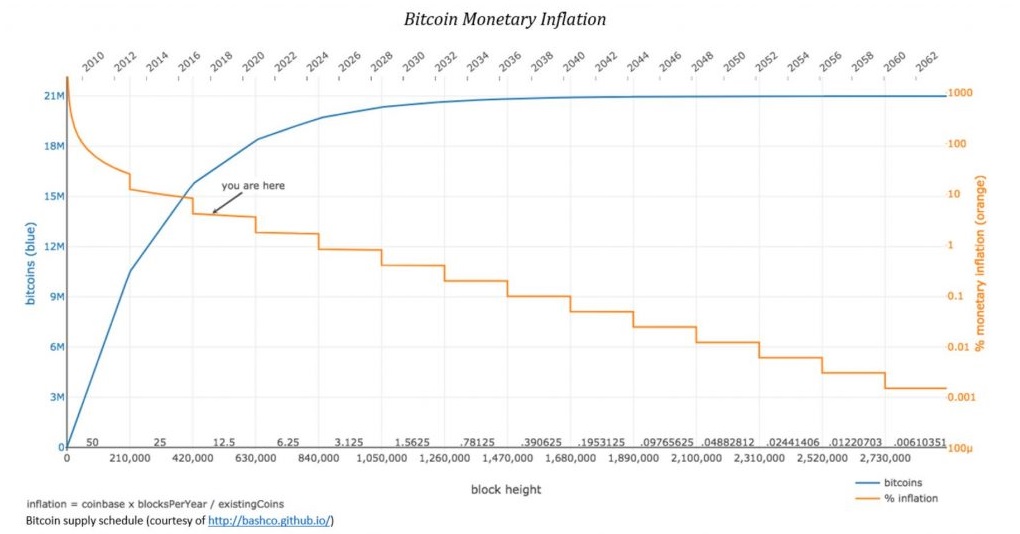
Bitcoin supply schedule / Source: Bashco
Impact of the halving on the bitcoin price
Investors closely monitor Bitcoin halving events as they historically correlate with significant price movements. In the months leading up to and following a halving, Bitcoin has experienced notable rallies or BTC price increases, such as the 2012, 2016 and 2020 halving events.
The fixed supply limit of 21 million Bitcoin creates a deflationary aspect, as the reduction in new supply with each halving contributes to the overall scarcity of Bitcoin. Bitcoin halving events often trigger heightened market sentiment and speculation. The anticipation leading up to the event and the narrative of reduced supply often creates a positive atmosphere among investors. However, it's important to note that past performance is no guarantee of future results, and the cryptocurrency market is inherently volatile.
How the halving cycle affects Bitcoin miners
As the reward decreases, miners face a dual challenge: reduced income and increased competition. Some miners may be forced to shut down their operations if they cannot cover their costs, resulting in a temporary decrease in the network's overall hash rate. This adjustment is a natural part of the Bitcoin ecosystem, as the network seeks equilibrium in response to changes in miners' incentives.
To mitigate the effects of halving, miners often engage in strategic planning. This includes upgrading hardware to more energy-efficient models, negotiating favorable electricity rates, or relocating to regions with abundant and cheap energy sources. In addition, some miners are taking a long-term investment approach, holding onto the bitcoins they mine with the expectation that their value will increase over time.