Close Menu
Crypto Valley Journal
    Facebook X (Twitter) Instagram
    Crypto Valley Journal
    • Hot Topics
      • News
      • Minds
    • Focus
      • Background
      • Blockchain
      • Legal & Compliance
      • Non-Fungible Token (NFTs)
    • Investing
      • Markets
      • Financial Products
      • Decentralized Finance (DeFi)
      • Exchange overview
    • Education
      • Basics
      • Glossary
      • Politicians on crypto
    • Statistics
      • Bitcoin-ETF-Flows
      • Ethereum-ETF-Flows
      • Crypto market data
      • On-chain data
    • Academy
      • Overview
      • Part 1: Blockchain
      • Part 2: Money
      • Part 3: Bitcoin
      • Part 4: Cryptocurrencies
      • Part 5: Decentralized Finance
      • Part 6: Investing
    • English
      • Deutsch
    Crypto Valley Journal
    You are at:Home » Glossary » Hardware Wallet
    Hardware wallet comparison 2026: Ledger and Trezor with new flagships. Quantum readiness, data breaches and IP67 as purchasing criteria.

    Hardware Wallet

    By Editorial Office CVJ.CH on 3. April 2020 Glossary

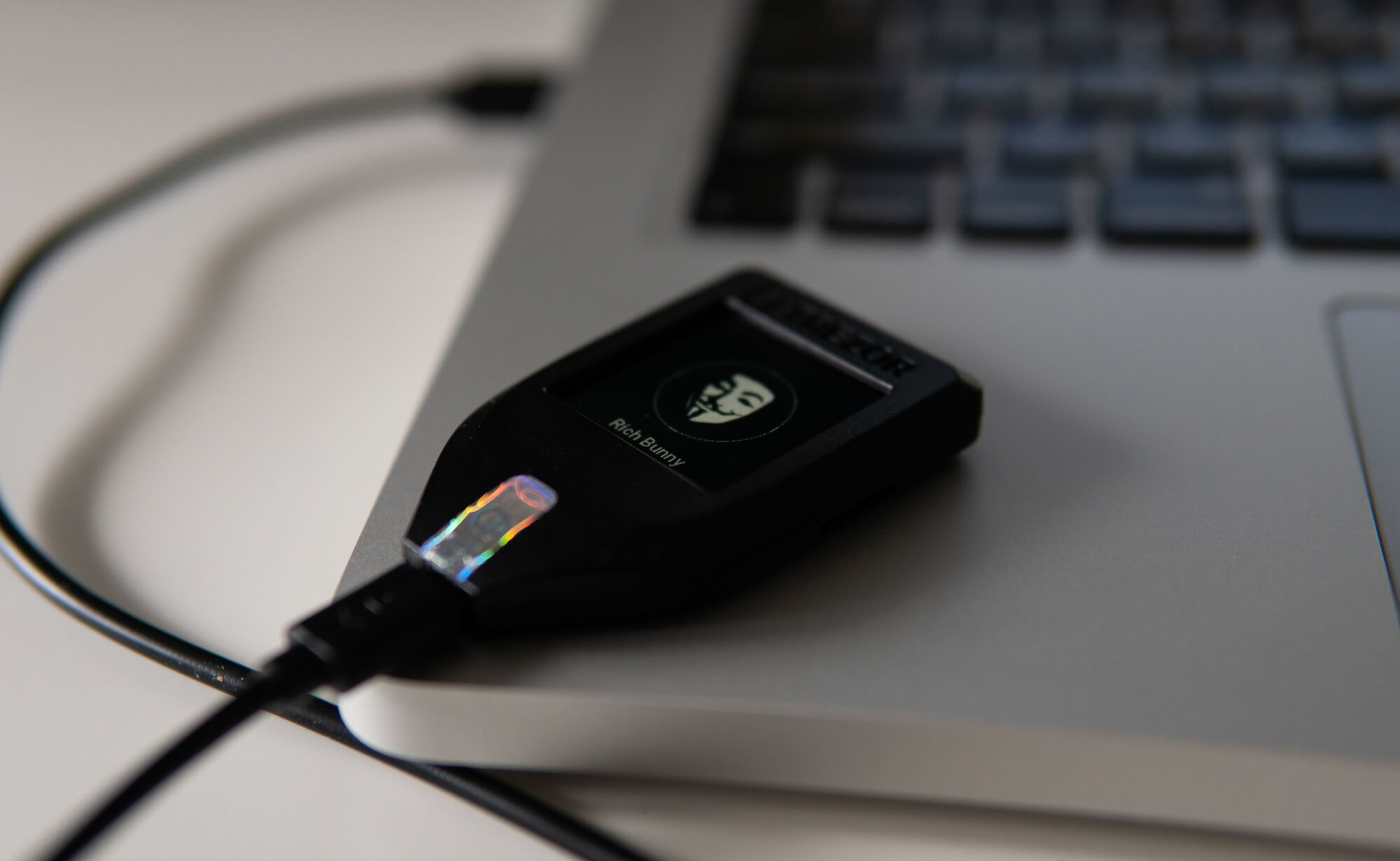
    A hardware wallet is a physical device that can store the private keys of crypto assets offline. In theory, this could be a simple USB flash drive, but this does not provide any additional functionality. Unlike software wallets, which are stored on your computer or smartphone, hardware wallets minimize the exposure of your private keys to the Internet and protect them from online attacks.

    Hardware wallets typically resemble a USB flash drive or small card and connect to your computer or mobile device via USB or Bluetooth. When you want to make a transaction, you connect your hardware wallet to your device and confirm the transaction on the hardware wallet's own screen.

    Benefits of Hardware Wallets

    1. Enhanced Security
      Hardware wallets offer superior security compared to software wallets that store private keys on internet-connected devices. By keeping your private keys offline, hardware wallets significantly reduce the risk of unauthorized access and theft.
    2. Cold Storage
      Hardware wallets effectively act as "cold storage" for your cryptocurrencies, meaning they are isolated from the online environment and less susceptible to cyber threats. This makes them particularly suitable for storing large amounts of cryptocurrency or for long-term investments.

    Well-known hardware wallets like Trezor, Ledger and Bitbox offer different web interfaces to online services. It should be noted that these devices do not support all crypto assets. More importantly, the seeds, or words for recovery in case of loss of the hardware wallet, must be stored securely. Hardware wallets offer the highest security standard for private users when used correctly.

    A word of caution

    Hardware wallets are an essential tool for cryptocurrency holders who value security and want to protect their assets from cyberattacks. By keeping your private keys offline and using a reputable hardware wallet, you can significantly increase the security of your cryptocurrency investments.

    Despite the increased security, it is still important not to let your guard down when using a hardware wallet. For instance Ledger’s library has suffered exploits in the past. The vulnerability allowed malicious code to be injected into the front-end of many Dapps, putting users and their assets at significant risk.

    More than 50% of the bitcoin supply now sits at a loss. K33 sees parallels to earlier bear market lows that followed within weeks. Background
    11. June 2026

    Crypto winter: More than 50% of bitcoin supply at a loss

    More than 50% of the bitcoin supply now sits at a loss. K33 sees parallels to earlier bear market lows that followed within weeks.

    A Reuters analysis estimates the Trump family's crypto gains at $2.3 billion, while investors incurred book losses of the same amount. Background
    9. June 2026

    Trump family earns $2.3 billion from crypto projects

    A Reuters analysis estimates the Trump family’s crypto gains at $2.3 billion, while investors incurred book losses of the same amount.

    IC3 researchers refute three central promises of the AI and blockchain market narrative in a 155-page survey on crypto and AI.
    9. June 2026

    The synergy between AI and blockchain is overstated

    Strategy and BitMine are deep in the red: around USD 21 billion in unrealized losses. The Digital Asset Treasury (DAT) sector is wobbling.
    5. June 2026

    Strategy and BitMine underwater: USD 21 billion unrealized loss

    Crypto VC deals fell to around 50 in May 2026, a five-year low. Mega-rounds like Kalshi's Series F keep the dollar volume elevated.
    4. June 2026

    Crypto VC deals fall to five-year low in May 2026

    IBM is investing over USD 10 billion in quantum computing: What the roadmap to 2029 means for the Bitcoin risk.
    3. June 2026

    IBM’s quantum computing push shifts the timeline for Bitcoin risk

    Citi forecasts tokenized securities reaching 5.5 trillion USD by 2030, as DTCC, Nasdaq and ICE build out the underlying market infrastructure.
    1. June 2026

    Citi forecasts tokenized securities reaching 5.5 trillion USD by 2030

    Tokenization opens up new ways for companies to engage investors flexibly and structure financing efficiently.
    27. May 2026

    Tokenized equity shares: a tax-efficient alternative to traditional equity?

    Popular Posts
    About Crypto Valley Journal
    About Crypto Valley Journal

    On the pulse of the movement

    • Academy
    • Contact
    • Advertising
    • About us
    • Partner
    • Imprint
    • Privacy
    • Disclaimer
    Search

    Type above and press Enter to search. Press Esc to cancel.